
America’s most iconic landmarks are more than famous attractions. They reflect history, identity, architecture, culture, and shared public memory. From national monuments to urban gathering spaces, these destinations continue attracting millions because they create emotional connections and memorable experiences. This article explores why certain landmarks remain timeless, how travelers engage with them today, and what makes them continue resonating across generations.
Why Certain Landmarks Never Lose Their Appeal
Every country has famous destinations, but only a small number become truly iconic. In the United States, landmarks like the Statue of Liberty, Golden Gate Bridge, and Grand Canyon National Park have become more than travel destinations. They represent ideas, emotions, and moments in American history that people continue returning to year after year.
According to the National Park Service, the most visited national parks collectively attract hundreds of millions of visitors annually. Similarly, destinations such as the Times Square and the National Mall remain central gathering places for both domestic and international travelers.
What separates a landmark from an iconic landmark is rarely just appearance. In most cases, iconic places combine several factors:
- Historical significance
- Cultural influence
- Architectural uniqueness
- Public accessibility
- Media visibility
- Emotional connection
- Generational familiarity
People may visit these places for different reasons, but the landmarks themselves become shared reference points across American culture.
The Role of History in Creating Iconic Status
History remains one of the strongest drivers behind landmark recognition. Americans consistently seek places that help them connect with defining national moments.
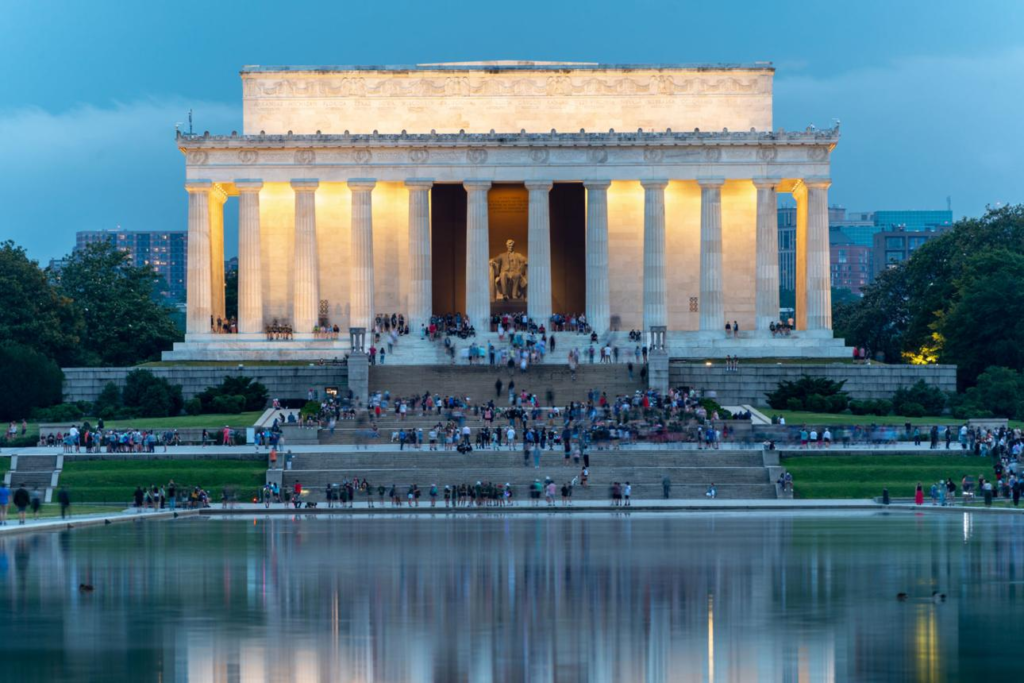
The Lincoln Memorial is one example. Architecturally, it is impressive, but its deeper meaning comes from the historical events associated with it. Visitors remember presidential speeches, civil rights demonstrations, and national commemorations tied to the site.
Similarly, Independence Hall continues attracting visitors because it represents foundational moments in American democracy. Travelers are not simply looking at a historic building. They are engaging with a narrative that shaped the country.
Modern tourism research consistently shows that experiential travel matters more to travelers than passive sightseeing. People increasingly want destinations that feel meaningful rather than purely photogenic.
That shift helps explain why historically layered landmarks continue outperforming newer attractions in long-term visitor interest.
Architecture That Creates Immediate Recognition
Some landmarks become iconic because their design is instantly recognizable.
The shape of the Gateway Arch, the scale of the Mount Rushmore National Memorial, and the skyline dominance of the Empire State Building create immediate visual identity.
Architectural distinction matters because iconic landmarks must remain memorable even outside their physical location. Americans recognize these places in films, photographs, advertisements, textbooks, and television broadcasts.
Several design characteristics commonly appear in iconic landmarks:
- Clear visual silhouette
- Strong geographic positioning
- Distinct scale or engineering achievement
- Easy photographic framing
- Public accessibility
- Adaptability across media formats
For example, the Space Needle became a defining image of Seattle largely because its design stood apart from surrounding structures and remained easy to identify from multiple viewing angles.
This visual simplicity often contributes to long-term cultural staying power.

Why Emotional Connection Matters More Than Size
Not all iconic landmarks are massive structures or globally famous monuments.
Some places achieve iconic status because they become emotionally meaningful to visitors. The Fenway Park, for instance, carries emotional significance for generations of sports fans. Likewise, the French Quarter creates powerful sensory memories through music, food, architecture, and atmosphere.
Travel behavior studies increasingly show that emotional resonance influences repeat visitation more than novelty does.
Visitors often describe iconic places using emotional language:
- “It felt historic”
- “It reminded me of childhood”
- “I finally saw it in person”
- “It felt bigger than expected”
- “I understood the place differently once I visited”
That emotional transition—from familiarity to personal experience—is one reason iconic landmarks continue attracting visitors despite decades of media exposure.
The Influence of Movies, Television, and Social Media
Popular media plays a major role in landmark recognition.
The Hollywood Sign became iconic partly because of entertainment industry exposure. Likewise, countless films featuring the Brooklyn Bridge or the Las Vegas Strip helped reinforce public familiarity.
Social media has expanded this effect significantly.
Today, landmarks must function both as physical destinations and digital experiences. Travelers increasingly evaluate destinations based on:
- Shareable photography opportunities
- Scenic viewpoints
- Walkability
- Visual uniqueness
- Crowd management
- Nighttime presentation
- Seasonal appearance
However, social media alone rarely creates lasting iconic status. Many heavily photographed locations experience temporary popularity without developing long-term cultural importance.
The landmarks that endure usually offer deeper context beyond visual appeal.
Accessibility Helps Landmarks Stay Relevant
Accessibility often determines whether a landmark remains culturally important over time.
Places that are easy to visit, navigate, and experience naturally maintain stronger public engagement. The National Mall remains one of America’s most visited destinations partly because it combines multiple landmarks within a walkable public area.
Accessibility includes several practical factors:
- Affordable entry costs
- Public transportation access
- Clear visitor infrastructure
- Safety
- Multigenerational appeal
- Educational resources
- Nearby accommodations and dining
Travelers increasingly value convenience alongside significance. Even historically important destinations may struggle to maintain visitation if logistics become difficult or visitor experience declines.
This is one reason many cities continue investing heavily in preservation, accessibility upgrades, and visitor services around landmark districts.

Natural Landmarks and the American Travel Identity
Natural landmarks hold a unique place within American tourism culture.
Unlike many countries where historic urban centers dominate tourism, the United States has a strong tradition of landscape-based travel. Destinations such as Yellowstone National Park, Yosemite National Park, and Niagara Falls remain iconic partly because they represent scale and geographic diversity.
The National Park Service reported record visitation in several park systems during recent years as Americans increasingly prioritized outdoor travel experiences.
Natural landmarks often create iconic status through:
- Geological uniqueness
- Scenic scale
- Conservation history
- Accessibility to families
- Recreation opportunities
- Seasonal variation
- Educational value
Many travelers also associate national parks with multigenerational traditions. Family road trips, camping experiences, and school vacations reinforce emotional familiarity over decades.
Why Some Famous Places Fade While Others Endure
Not every popular destination becomes timeless.
Some attractions experience temporary attention because of trends, marketing campaigns, or viral content. Others remain relevant for generations.
The difference often comes down to cultural integration.
Enduring landmarks usually become woven into:
- Education
- National identity
- Public rituals
- Media storytelling
- Family traditions
- Civic pride
- Historical memory
The Washington Monument remains iconic not because it constantly changes, but because Americans continuously reinterpret its meaning through national events and collective memory.
Meanwhile, trend-driven attractions may struggle to maintain relevance once novelty fades.
Long-term iconic status typically requires both historical continuity and ongoing public engagement.
How Travelers Can Experience Iconic Landmarks More Meaningfully
Many travelers make the mistake of treating landmarks as quick photo stops rather than full experiences.
A more rewarding approach often involves slowing down and understanding context.
Helpful strategies include:
- Visiting early in the morning to avoid crowds
- Taking guided historical tours
- Exploring surrounding neighborhoods
- Visiting associated museums or cultural centers
- Learning about local history before arrival
- Returning during different seasons or times of day
For example, visitors to the Golden Gate Bridge often gain a deeper appreciation by exploring nearby viewpoints, learning about its engineering history, or walking sections of the bridge instead of simply photographing it.
Similarly, visiting the Alamo becomes more meaningful when paired with broader exploration of Texas history and regional culture.
The most memorable landmark experiences typically involve context, pacing, and curiosity.
The Economic Importance of Iconic Landmarks
Iconic landmarks are not only cultural assets. They also drive major economic activity.
Tourism boards, hospitality businesses, transportation systems, restaurants, and local retailers all benefit from landmark visitation.
According to data from the U.S. Travel Association, domestic leisure travel continues contributing significantly to local economies across the country.
Landmarks often anchor broader tourism ecosystems by encouraging:
- Extended stays
- Regional exploration
- Repeat visitation
- Cultural tourism
- Event tourism
- Educational travel
Cities with iconic landmarks frequently invest heavily in preservation because these destinations contribute to long-term economic stability.
The challenge is balancing tourism growth with preservation and visitor quality. Overcrowding, commercialization, and infrastructure strain can reduce authenticity if not carefully managed.

FAQ: Iconic Landmarks in America
What makes a landmark iconic instead of simply famous?
An iconic landmark usually combines historical importance, cultural recognition, emotional resonance, and long-term public familiarity. Fame alone does not guarantee lasting significance.
Why do Americans continue visiting the same landmarks repeatedly?
Many iconic landmarks create emotional and cultural connections that remain meaningful across generations. Travelers often revisit them during family trips, milestone vacations, or educational experiences.
Are natural landmarks more popular than urban landmarks?
Both remain highly popular, though natural landmarks have seen increased interest in recent years because of growing demand for outdoor travel experiences.
Which US landmark receives the most visitors annually?
The Times Square is frequently cited among the most visited tourist areas in the United States.
Do social media trends influence landmark popularity?
Yes, but long-term iconic status usually depends on historical and cultural importance rather than temporary online attention.
Why are national parks considered iconic American landmarks?
National parks represent conservation history, natural beauty, and outdoor recreation traditions that are deeply connected to American identity.
How can travelers avoid crowds at famous landmarks?
Early morning visits, off-season travel, weekday scheduling, and advance ticket reservations often improve the experience significantly.
Are lesser-known landmarks becoming more popular?
Yes. Many travelers now seek regional landmarks and culturally meaningful destinations outside traditional tourism centers.
What role does architecture play in iconic status?
Distinctive architecture helps landmarks become instantly recognizable and culturally memorable across media and public imagination.
Why do some landmarks lose popularity over time?
Landmarks may decline if they lose cultural relevance, become overly commercialized, or fail to maintain visitor experience quality.
Why Iconic Places Continue Defining American Travel
Iconic landmarks remain powerful because they connect travelers to something larger than sightseeing. They preserve history, reflect national identity, create emotional memory, and provide shared cultural experiences across generations.
Whether standing at the rim of the Grand Canyon National Park or walking through the National Mall, visitors are participating in experiences that millions of others have also valued over time.
That combination of familiarity, meaning, and personal discovery is what transforms a landmark into something truly iconic.
Landmark Insights Worth Remembering
- Iconic landmarks combine history, culture, design, and emotional connection
- Historical significance often drives long-term visitor interest
- Architecture helps create immediate public recognition
- Emotional memory influences repeat visitation more than novelty
- Social media supports visibility but rarely creates lasting significance alone
- Accessibility plays a major role in continued popularity
- Natural landmarks remain central to American travel identity
- Meaningful experiences usually come from deeper exploration, not quick visits
- Landmark tourism contributes significantly to local economies
- Enduring landmarks evolve while preserving historical relevance