For millions of Americans and international visitors alike, iconic landmarks represent far more than tourist attractions. They preserve national memory, reflect cultural identity, support local economies, and connect generations through shared experiences. From the Statue of Liberty to the Grand Canyon, these places continue to shape how people understand American history, travel, architecture, and civic life in 2026.
Why Iconic Landmarks Continue to Matter in Modern America
America’s most recognizable landmarks remain deeply relevant because they function as cultural anchors. They provide historical context in a fast-changing society, create economic activity through tourism, and offer shared experiences that bridge regional and generational divides.
According to the National Park Service, hundreds of millions of recreational visits occur across national parks and landmark sites annually. These destinations continue attracting travelers not simply because they are famous, but because they represent stories Americans still care about: immigration, innovation, resilience, democracy, natural beauty, and cultural transformation.
In a digital world where experiences are often temporary and screen-based, physical landmarks offer something increasingly valuable: permanence. Standing beneath the Statue of Liberty or overlooking the Grand Canyon creates a tangible connection to history that photographs and online content cannot fully replicate.
Many Americans also increasingly plan trips around meaningful cultural experiences rather than traditional sightseeing alone. Historic landmarks fit naturally into this shift because they combine education, entertainment, architecture, and local identity in one destination.
The Statue of Liberty: America’s Symbol of Arrival and Opportunity
Statue of Liberty remains one of the most recognized landmarks in the world, but its deeper significance goes beyond tourism.
Gifted by France in 1886, the statue became closely associated with immigration during the late 19th and early 20th centuries as millions of newcomers entered the United States through nearby Ellis Island. For many families, the monument symbolized hope, stability, and the possibility of economic mobility.
Today, the landmark still resonates because immigration remains central to the American story. Visitors often describe the experience as emotional rather than purely educational, especially those tracing family histories connected to Ellis Island records.
The site also demonstrates how landmarks evolve over time. Originally viewed primarily as a diplomatic gift and engineering achievement, the statue gradually became a broader symbol of democracy and civic identity.
Key reasons the Statue of Liberty still matters today include:
- Its connection to immigration history
- Its role in American civic symbolism
- Its architectural and engineering significance
- Its continued relevance in discussions about identity and opportunity
- Its educational value for younger generations
The landmark also contributes significantly to New York’s tourism economy, supporting local hospitality, transportation, and cultural sectors.
The Grand Canyon: Why Natural Landmarks Carry National Importance
Grand Canyon demonstrates that iconic landmarks are not limited to monuments or buildings. Natural landscapes often hold equal cultural importance.
While the canyon formed over millions of years through geological processes involving the Colorado River, its national significance expanded dramatically after conservation efforts in the early 20th century. President Theodore Roosevelt strongly advocated for protecting the area, helping establish a broader American conservation ethic.
Today, the Grand Canyon remains important for several reasons:
- It supports environmental education
- It highlights Indigenous history and stewardship
- It contributes heavily to regional tourism economies
- It encourages outdoor recreation and conservation awareness
- It serves as a globally recognized symbol of American natural beauty
Many travelers are surprised by the emotional scale of the experience. Photos rarely capture the depth, silence, and visual complexity of the canyon itself. This disconnect between digital representation and real-world experience is one reason physical landmarks continue attracting millions of visitors annually.
The Grand Canyon also reflects a growing travel trend among Americans seeking experiences connected to wellness, nature, and unplugged exploration.
The Golden Gate Bridge and the Power of Engineering Identity
Golden Gate Bridge represents a different kind of American landmark: one rooted in engineering ambition and urban identity.
Completed in 1937 during the Great Depression, the bridge was considered a major technical achievement for its time. Beyond solving transportation challenges, it became a symbol of West Coast innovation and resilience.
Unlike historical monuments tied directly to war or politics, the Golden Gate Bridge illustrates how infrastructure can become cultural symbolism. Americans often associate the bridge with ideas such as:
- Innovation
- Progress
- Design excellence
- California identity
- Creative culture
Its visual impact has also made it one of the most photographed structures in the world. Yet the bridge’s continued relevance comes from functionality as much as aesthetics. It remains an active transportation corridor while simultaneously serving as a tourism centerpiece.
This dual role helps explain why some landmarks endure across generations: they remain integrated into everyday life rather than existing solely as preserved attractions.

Mount Rushmore and the Complexity of Historical Memory
Mount Rushmore highlights how landmark interpretation evolves over time.
Originally conceived as a patriotic monument honoring four American presidents, the site today exists within broader discussions about national identity, Indigenous history, and historical representation.
Modern visitors often approach the landmark with more nuanced perspectives than previous generations. Educational programming increasingly includes context about the Black Hills region and the significance of the land to Native American communities.
This shift reflects a broader trend in American tourism and education: people increasingly want fuller historical narratives rather than simplified presentations.
Why does this matter?
Because landmarks are not static objects. Their meaning changes as society changes. Sites that encourage thoughtful engagement often remain culturally relevant longer than those relying solely on nostalgia or spectacle.
Mount Rushmore demonstrates how iconic places can continue serving educational purposes even amid evolving public conversations.
The National Mall: America’s Civic Storytelling Space
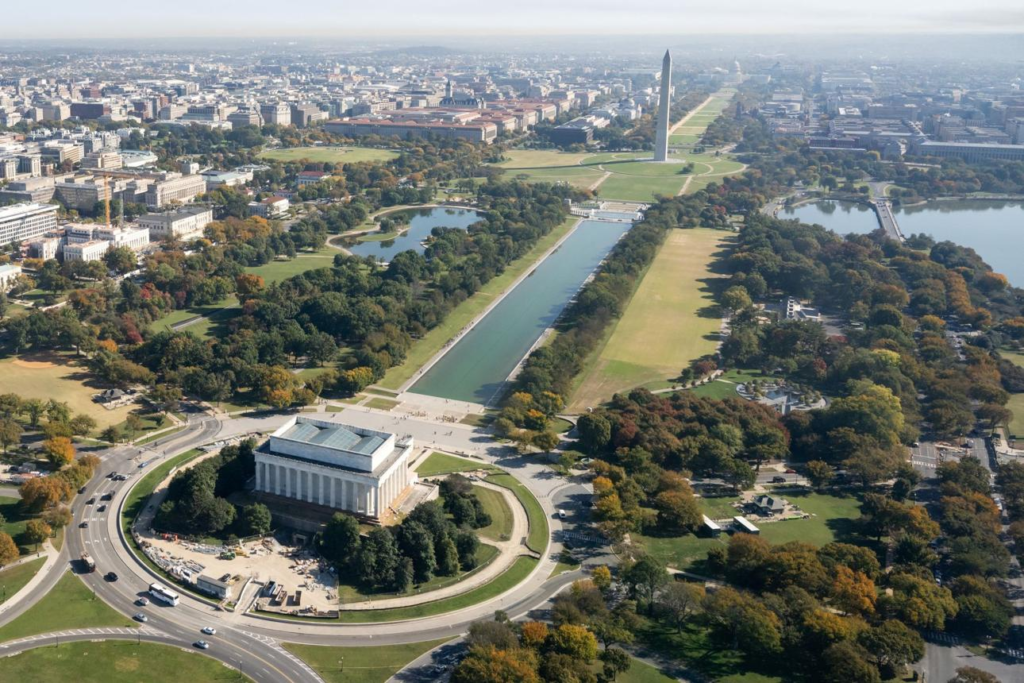
National Mall functions almost like a physical timeline of American history.
Stretching across central Washington, the area connects landmarks including:
- Lincoln Memorial
- Washington Monument
- Vietnam Veterans Memorial
- Martin Luther King Jr. Memorial
Together, these sites tell interconnected stories about leadership, sacrifice, civil rights, conflict, and national ideals.
The National Mall remains particularly important because it serves both ceremonial and democratic purposes. Americans gather there for protests, commemorations, inaugurations, and public events. Few landmarks function so directly within ongoing civic life.
Visitors frequently report that the emotional atmosphere changes dramatically depending on the memorial. The quiet reflection encouraged at the Vietnam Veterans Memorial differs significantly from the inspirational framing of the Lincoln Memorial.
These design choices matter because landmark architecture shapes how people experience history emotionally, not just intellectually.

Why Americans Are Increasingly Seeking Meaningful Travel Experiences
One reason iconic landmarks remain popular is that travelers increasingly prioritize meaningful experiences over purely recreational trips.
Several travel industry studies in recent years show growing interest in:
- Heritage tourism
- Educational travel
- National park visitation
- Local cultural experiences
- Multi-generational travel
Landmarks naturally support these goals because they combine storytelling with place-based experience.
For example, a family visiting Independence Hall may connect the trip to school history lessons, family traditions, and broader discussions about democracy. The experience becomes more layered than standard entertainment tourism.
This trend is especially visible among younger travelers who often seek experiences that feel authentic, educational, and socially shareable without appearing overly commercialized.
How Landmarks Influence Local Economies
Beyond cultural importance, landmarks play a major economic role across the United States.
Major landmark destinations support:
- Hotels and lodging
- Restaurants and local businesses
- Tour operations
- Transportation services
- Museums and cultural institutions
- Seasonal employment
Cities with strong landmark identities often benefit from year-round tourism stability. For example:
- New York City benefits heavily from landmark tourism tied to the Statue of Liberty and surrounding attractions.
- San Francisco maintains strong tourism branding connected to the Golden Gate Bridge.
- Washington relies substantially on museum and memorial visitation.
Importantly, landmarks also shape city branding and perception. Many destinations become globally recognizable because of one defining structure or site.
What Makes a Landmark Truly Iconic?
Not every historic building becomes a national symbol. The landmarks that endure typically share several characteristics.
Common Traits of Enduring American Landmarks
- Strong visual identity
- Historical significance
- Emotional or symbolic meaning
- Accessibility to the public
- Continued relevance across generations
- Association with major national narratives
- Cultural visibility through media and education
Importantly, iconic status usually develops gradually over decades rather than through marketing alone.
For example, Times Square became globally recognizable through film, television, advertising, and tourism culture. Meanwhile, Alcatraz Island gained cultural prominence partly through its layered history involving incarceration, activism, and popular media.
The Role of Preservation in Protecting National Memory
Preservation efforts remain essential because landmarks face ongoing threats including environmental damage, overcrowding, infrastructure aging, and climate-related risks.
Organizations such as the National Trust for Historic Preservation help protect historically significant sites through advocacy, restoration funding, and public education.
Preservation matters not only for tourism but also for education. Physical places help people understand history in ways textbooks alone often cannot.
For example:
- Visiting battlefields provides geographic context for historical events.
- Touring historic homes reveals details about everyday life in earlier eras.
- Experiencing memorial architecture creates emotional understanding that digital content may not replicate.
As urban development accelerates across many regions, preservation conversations are becoming increasingly important for balancing modernization with cultural continuity.

How Social Media Changed Landmark Tourism
Social media has dramatically reshaped how Americans interact with landmarks.
Platforms such as Instagram and TikTok increased visibility for famous destinations while also influencing visitor behavior. Certain landmarks now attract travelers partly because of their visual recognizability online.
However, this shift created both benefits and challenges.
Positive Effects
- Increased interest in domestic travel
- Greater awareness of historic sites
- Expanded tourism revenue
- Broader educational exposure
Challenges
- Overcrowding
- Environmental strain
- Shortened visitor attention spans
- Increased emphasis on photography over learning
Many landmark organizations now balance social-media visibility with preservation goals and educational programming.
Why Physical Places Still Matter in a Digital Era
Despite advances in virtual reality, online archives, and digital tourism, Americans continue valuing in-person experiences at historic sites and landmarks.
Physical places create sensory and emotional experiences difficult to duplicate digitally:
- Scale
- Atmosphere
- Sound
- Environmental context
- Shared public experience
Walking through Gettysburg National Military Park or standing inside The Gateway Arch creates spatial understanding that videos alone cannot provide.
This explains why landmark tourism remains resilient even as digital media consumption grows.
Frequently Asked Questions
Why are American landmarks important?
American landmarks preserve historical memory, support tourism economies, encourage education, and help define national and regional identity.
What is the most visited landmark in the United States?
Several landmarks attract massive visitation annually, including the National Mall, the Grand Canyon, and Times Square.
Why do people visit landmarks?
People visit landmarks for education, recreation, emotional connection, cultural identity, photography, and shared family experiences.
Are landmarks important for local economies?
Yes. Landmark tourism supports hospitality industries, transportation services, restaurants, museums, and small businesses.
What makes a place become a landmark?
Historical significance, strong symbolism, visual recognition, cultural relevance, and public accessibility all contribute to landmark status.
How are historic landmarks protected?
Government agencies, nonprofit organizations, preservation societies, and local communities help maintain and restore historic sites.
Why is the Statue of Liberty still relevant today?
The monument continues symbolizing immigration, democracy, opportunity, and national identity for many Americans and visitors.
How has social media changed tourism at landmarks?
Social media increased landmark visibility and tourism but also contributed to overcrowding and more photography-focused visitation habits.
Why do national parks matter as landmarks?
National parks preserve natural landscapes, support conservation education, and provide recreational opportunities tied to American environmental identity.
Can landmarks change meaning over time?
Yes. Public understanding of landmarks evolves as historical research, social perspectives, and cultural conversations change.
Preserving the Stories That Define American Places
America’s most recognizable landmarks endure because they represent more than architecture, geography, or tourism marketing. They reflect national aspirations, historical tensions, cultural achievements, and shared public memory.
Whether carved into mountainsides, standing beside harbors, or stretching across dramatic landscapes, these places continue helping Americans interpret both the past and present. Their value lies not only in what they once represented, but also in how each generation continues to redefine their meaning.
As travel trends evolve and digital experiences expand, physical landmarks still provide something uniquely important: a direct connection to the stories that shaped the country itself.
Key Insights Worth Remembering
- Iconic landmarks combine historical significance with emotional connection
- Natural landmarks remain as culturally important as architectural monuments
- Preservation efforts help maintain national memory and educational value
- Landmark tourism contributes heavily to local and regional economies
- Social media increased visibility but also created preservation challenges
- Younger travelers increasingly seek meaningful cultural experiences
- Landmark interpretation evolves alongside public understanding of history
- Physical experiences remain valuable despite digital alternatives