Country trails across the United States offer far more than scenic views. Many follow routes shaped by Native American travel networks, early settlers, railroad workers, farmers, and local communities whose stories continue to influence the American landscape. Understanding these trails provides valuable insight into regional history, conservation efforts, cultural traditions, and outdoor recreation while helping modern travelers connect more deeply with the places they visit.
Why Country Trails Tell a Bigger Story Than Most Travelers Realize
For many Americans, a country trail is simply a place to hike, bike, horseback ride, or enjoy a peaceful afternoon outdoors. Yet beneath countless miles of dirt paths, gravel roads, forest routes, and rural walking trails lies a remarkable collection of stories that reveal how communities were built, how landscapes evolved, and how generations adapted to changing times.
Across the United States, country trails often follow routes that existed long before modern roads appeared. Some trace Indigenous trading paths that connected tribes across vast regions. Others originated as livestock routes, logging roads, railroad corridors, postal delivery paths, or migration corridors used by settlers moving westward.
Today, these trails serve a dual purpose. They provide recreational opportunities while also acting as living historical records that help preserve local heritage.
The growing popularity of outdoor recreation has encouraged more Americans to explore these routes. However, understanding the history behind them often transforms an ordinary hike into a much richer experience.
The Indigenous Foundations Beneath Many American Trails
Long before highways crossed the continent, Native American communities established sophisticated travel networks that connected villages, hunting grounds, trading centers, and ceremonial locations.
Many modern trails follow these original pathways because Indigenous peoples often selected routes based on geography, water access, safety, and seasonal conditions. These routes represented generations of environmental knowledge.
In parts of the Northeast, Southeast, and Great Plains, historians have identified numerous modern roads and trails that closely align with historic Indigenous travel corridors. These pathways facilitated trade, communication, diplomacy, and cultural exchange among tribes across large distances.
Understanding this history reminds visitors that many landscapes often viewed as “untouched wilderness” have actually been shaped by human activity for thousands of years.
Country trails therefore provide an opportunity not only to appreciate natural beauty but also to recognize the deep cultural histories embedded within the land itself.
How Rural Trails Help Preserve Local Heritage
One reason country trails remain important today is their ability to preserve local stories that might otherwise disappear.
Small towns frequently use trail systems to connect residents and visitors with historical landmarks, former industrial sites, family farms, and community gathering places.
Examples include:
- Former railroad corridors converted into recreational trails
- Historic farming routes connecting rural communities
- Canal towpaths used during America’s transportation expansion
- Logging roads that supported regional economies
- Civil War and frontier-era travel routes
Many communities have installed interpretive signs, visitor centers, and educational exhibits along these trails to help travelers understand the people who once lived and worked there.
These efforts strengthen local identity while supporting heritage tourism, an increasingly important economic driver in many rural regions.

The Railroad Trails That Changed Entire Regions
One of the most fascinating chapters hidden along American country trails involves the nation’s railroad history.
During the nineteenth and early twentieth centuries, railroads transformed transportation, agriculture, industry, and commerce. As rail networks expanded, thousands of communities developed around rail lines.
When many rail corridors became obsolete decades later, communities began converting them into recreational trails through rail-trail programs.
Today, visitors walking these routes often encounter:
- Historic depots
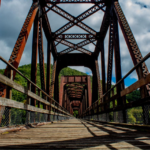
- Restored rail bridges
- Industrial landmarks
- Freight infrastructure
- Former station communities
These trails preserve physical reminders of a period that helped shape modern America.
The popularity of rail-trails demonstrates how communities can successfully balance historical preservation with modern recreational needs.

Stories of Migration and Settlement Along Rural Routes
Country trails frequently reveal the human side of America’s migration history.
Throughout the eighteenth and nineteenth centuries, settlers moved through rural landscapes searching for farmland, economic opportunities, and new beginnings. Wagon roads, stagecoach routes, and early transportation corridors became lifelines for expanding communities.
Many modern trail systems now follow portions of these historic pathways.
Walking these routes allows visitors to imagine the challenges faced by travelers who crossed unfamiliar terrain without modern infrastructure. Weather, distance, limited supplies, and geographic obstacles often shaped entire settlements.
Historical markers along these trails frequently tell stories of:
- Pioneer families
- Homesteaders
- Agricultural communities
- Frontier merchants
- Early transportation networks
These narratives help connect modern Americans with the experiences that influenced regional development.
Why Country Trails Are Valuable for Conservation
The significance of country trails extends beyond history.
Many trail systems now play an important role in environmental conservation and habitat protection.
Protected trail corridors often serve as:
- Wildlife migration routes
- Native plant habitats
- Watershed protection zones
- Educational outdoor classrooms
- Green spaces connecting fragmented ecosystems
Because many trails pass through forests, wetlands, grasslands, and agricultural landscapes, they provide opportunities for visitors to better understand local ecosystems.
Conservation organizations increasingly recognize that people are more likely to support environmental protection when they have direct experiences in natural areas.
In this way, country trails contribute to both cultural preservation and environmental stewardship.
The Communities Keeping Trail Traditions Alive
One overlooked aspect of country trails is the role local volunteers play in maintaining them.
Across the country, thousands of community members donate time to:
- Repair trail surfaces
- Maintain signage
- Preserve historical structures
- Organize educational programs
- Remove invasive species
- Conduct guided tours
Many of these volunteers possess extensive knowledge about local history and often serve as informal storytellers for visitors.
Community-led stewardship helps ensure that important historical and environmental information continues reaching future generations.
Without these efforts, many local stories could be lost as older generations pass on.
What Travelers Can Learn From Exploring Country Trails Today
Modern travelers increasingly seek experiences that feel authentic, educational, and meaningful.
Country trails offer all three.
Unlike crowded tourist attractions, rural trails often provide opportunities for slower exploration and deeper engagement with local culture.
Visitors can learn about:
- Indigenous history
- Agricultural traditions
- Transportation development
- Conservation efforts
- Regional architecture
- Community resilience
Even short walks frequently reveal connections between geography, economics, culture, and history.
For families, these experiences can also serve as valuable educational opportunities. Children often gain a stronger appreciation for history when they encounter it in real places rather than solely through textbooks.

Questions Many Americans Ask About Historic Country Trails
Are country trails only for experienced hikers?
No. Many country trails are designed for a wide range of skill levels. Numerous routes are accessible to casual walkers, families, cyclists, and individuals seeking shorter outings.
How can I learn the history of a trail before visiting?
Many state parks, local historical societies, tourism organizations, and trail associations provide online resources, maps, and historical information.
Are former railroad trails safe for families?
Most developed rail-trails are considered family-friendly and feature relatively gentle grades because they follow former railroad corridors.
Why do so many trails follow old transportation routes?
Historic transportation routes were often built along practical geographic pathways, making them ideal for modern recreational trail conversion.
Do trails help local economies?
Yes. Heritage tourism and outdoor recreation frequently support local businesses, restaurants, lodging providers, and community attractions.
How do trails contribute to conservation?
Trail corridors often protect habitats, support environmental education, and encourage public appreciation for natural resources.
Can trails teach local history effectively?
Absolutely. Interpretive signs, preserved structures, and guided programs often provide accessible historical context for visitors.
Are there trails connected to Native American history?
Many trails across the United States trace or intersect historic Indigenous travel routes and cultural landscapes.
What should visitors bring when exploring rural trails?
Water, weather-appropriate clothing, navigation tools, sunscreen, and awareness of local conditions are generally recommended.
Why are volunteer organizations important to trail systems?
Volunteers frequently provide maintenance, education, preservation efforts, and community support that help keep trails accessible and historically meaningful.
The Continuing Relevance of America’s Country Trails
Country trails remain important because they connect people to stories that are often overlooked in everyday life. They reveal how Indigenous communities shaped landscapes long before modern development. They preserve evidence of migration, agriculture, transportation, conservation, and community resilience. They also provide opportunities for recreation that foster a stronger connection to both nature and history.
As interest in outdoor experiences continues to grow, country trails offer something increasingly valuable: a chance to slow down, observe, and understand the people and events that helped shape the places we know today. Every mile contains layers of history waiting to be discovered, making these routes far more than simple pathways through the countryside.