Americans in 2026 are increasingly using food as a guide for how they travel, where they spend locally, and which neighborhoods or small businesses they trust with their time and money. The “Flavor Trail” trend reflects a broader shift toward experience-led decision-making: travelers want meals that connect to place, residents want local food stories with substance, and both groups are prioritizing authenticity, value, and cultural context over generic convenience.
Food has always influenced travel decisions, but in 2026 it is doing more than shaping restaurant reservations. It is shaping itineraries, weekend road trips, hotel choices, neighborhood exploration, and even how people evaluate a destination’s identity. In practical terms, a “Flavor Trail” is the route people build around meaningful eating and drinking experiences: a regional taco corridor, a Gulf Coast oyster route, a self-guided food hall crawl across a city, or a weekend organized around farm dinners, coffee roasters, bakeries, and heritage food spots.
What makes this worth paying attention to is that it is not just a tourism trend. It also says something important about how Americans are making everyday choices closer to home. The same person who plans a trip around Santa Fe’s chile culture may also spend a Saturday following a local pastry map, a barbecue trail, or a cluster of immigrant-owned restaurants in their own metro area. The “Flavor Trail” is as much about local discovery and values-based spending as it is about vacation dining.
Why “Flavor Trail” matters in 2026
At a glance, the term sounds like a social-media phrase, but the behavior behind it is well grounded in travel and restaurant data. Food is now a central trip motivator rather than a side activity. Grand View Research reports that more than half of travelers across generations prioritize food when planning trips, reflecting the continued rise of culinary tourism. Skift has also highlighted the growing role of restaurant reservations and food-led planning in travel behavior, while Expedia’s 2025 travel trend reporting found rising interest in standout hotel dining and food-forward travel experiences.
At the same time, the restaurant industry is adapting to a customer who wants more than a meal. The National Restaurant Association has pointed to a mix of global flavors, comfort, local sourcing, and value-driven experiences as defining menu forces for 2026. Its broader industry outlook also notes that “value” increasingly means more than low price; it includes hospitality, experience, and perceived worth.
Put those developments together and the picture becomes clearer: Americans are choosing food experiences that feel rooted, memorable, and worth the effort, whether they are traveling across the country or driving 20 minutes across town.
What exactly is the “Flavor Trail” trend?
The easiest way to understand it is to think of food as an organizing principle. Instead of asking, “Where should we eat while we’re there?” people are increasingly asking, “Where should we go because of what we can eat there?”
A Flavor Trail can take several forms:
- A destination-wide route, such as a barbecue trail through Texas, a seafood route along coastal New England, or a regional taco circuit in Southern California
- A city-based neighborhood trail, such as exploring Queens for regional South Asian food, or Chicago for Mexican bakeries, Polish delis, and contemporary tasting menus in one weekend
- A category-specific trail, like coffee roasters in Portland, oyster bars in Charleston, or Detroit-style pizza stops in Michigan
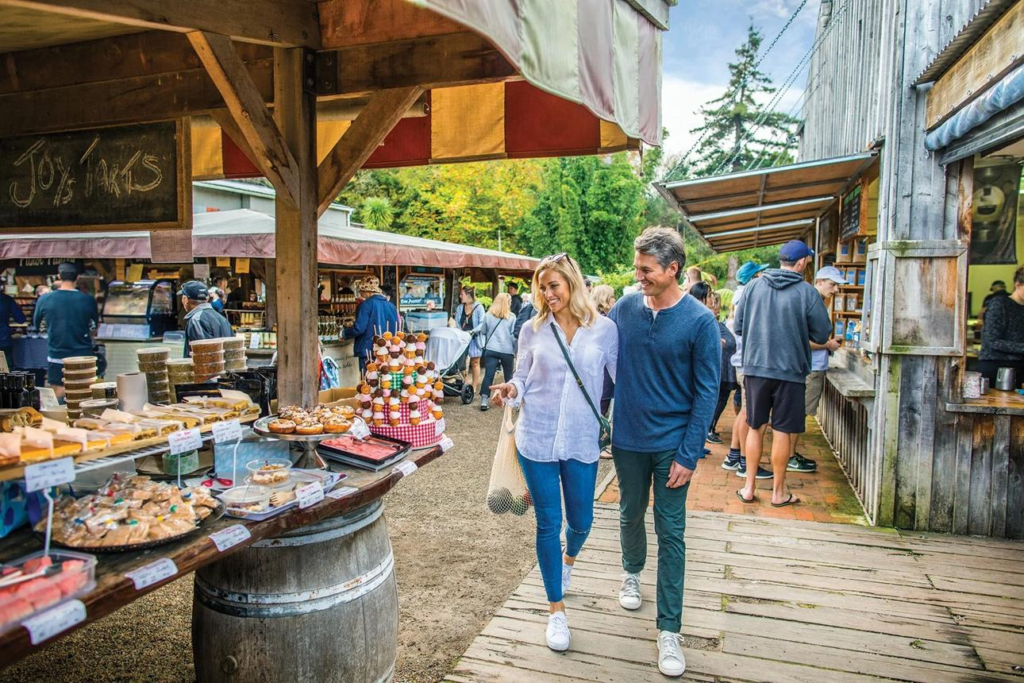
- A local discovery trail close to home, built around farmers markets, chef-driven food halls, breweries, family-run diners, and cultural festivals
The common thread is intentionality. People are not simply consuming meals; they are connecting food to geography, culture, small business discovery, and personal identity.
Why Americans are building trips around food instead of just fitting food into trips
One of the clearest shifts in 2026 is that food is no longer just a pleasant add-on to travel. It has become a practical decision tool.
1) Food helps travelers narrow overwhelming choices
The modern traveler has too many options. When every city markets itself with rooftop bars, boutique hotels, and “must-see” attractions, food provides a clearer filter. A traveler may not know which U.S. mountain town to choose for a long weekend, but they may know they want Indigenous-inspired cuisine, serious coffee, and a strong farmers market culture. That immediately narrows the field.
This is one reason food-first destinations continue to gain traction. Santa Fe, for example, remains a strong example of a place where culinary identity, local history, and arts culture reinforce each other rather than competing for attention. Recent travel coverage around top U.S. cities has repeatedly highlighted food as part of what makes a destination feel distinctive rather than interchangeable.
2) Food offers a faster connection to place
A museum can teach you history, but a meal often makes a place feel immediate. A bowl of green chile stew in New Mexico, Hmong-inspired dishes in the Upper Midwest, a plate lunch in Hawaii, or Gulf seafood on the Alabama or Florida coast can communicate migration, climate, labor, trade, and family tradition in one sitting.
That matters because many travelers are looking for efficient authenticity. They want something more grounded than a checklist, but they do not always have a week to immerse themselves. Food gives them a shortcut to context.
3) It supports “closer-to-home” travel behavior
The Flavor Trail trend also fits the practical economics of 2026. As travel costs remain uneven and many households continue to watch discretionary spending, domestic trips, drivable vacations, and weekend escapes remain appealing. AP recently reported that many Americans are traveling closer to home, benefiting local small businesses and regional tourism economies.
A Flavor Trail works especially well in that environment because it can be scaled up or down. It might be a four-day New Orleans food trip, but it could just as easily be a Saturday loop of three family-run spots, one market, and a bakery in your own state.
The four forces shaping Flavor Trail behavior in 2026
1. Authenticity is being defined more carefully
Americans still want “authentic” food, but in 2026 that word is being used more carefully. Increasingly, what people actually mean is:
- food with a visible connection to people, region, or tradition
- a business with a clear story about sourcing or heritage
- menus that feel specific rather than generic
- environments that reflect the neighborhood instead of flattening it
That does not mean every restaurant has to be old or rustic. It means diners are rewarding places that can explain who they are. A new Filipino bakery in Las Vegas, a chef-led Indigenous tasting experience in Minneapolis, or a modern Southern restaurant in Atlanta can all fit the Flavor Trail mindset if the food feels grounded rather than interchangeable.
2. Localism is becoming a spending strategy, not just a sentiment
The phrase “support local” has been around for years, but Flavor Trail behavior gives it a more concrete form. Instead of abstract goodwill, people are building real spending around local food ecosystems. They are seeking out public markets, regional specialties, chef-owner restaurants, and businesses that tell a coherent story about place.
This has practical implications for destinations. A city with a strong cluster of independent coffee shops, neighborhood bakeries, and specialty grocers may be more attractive than a city with a technically strong dining scene that is harder to access or less connected to local life.
3. Value now includes memory, not just price
Consumers remain price aware, but value has broadened. A $16 sandwich at a famous deli may feel worth it if it comes with local history, a strong recommendation network, and a memorable setting. By contrast, a forgettable $16 sandwich in a generic entertainment district may feel overpriced even if the ingredients are fine.
This is one of the most important things the Flavor Trail trend reveals: Americans are not only asking “How much does it cost?” They are asking, “Will this help me understand where I am?” and “Will I remember this enough to recommend it?”
4. People want curated spontaneity
This sounds contradictory, but it captures how many people actually travel now. They do not want a rigid itinerary every hour of the day, but they also do not want to waste time in tourist traps. So they build a loose trail: one booked dinner, two saved lunch spots, a market to browse, a dessert place nearby, and a neighborhood worth walking.
Flavor Trails are perfect for this because they offer structure without overplanning.
How Flavor Trails are changing local experiences, not just vacations
One of the biggest misconceptions about food tourism is that it only matters when people travel far from home. In reality, the same habits now shape local leisure in U.S. cities and suburbs.
A few examples:
The weekend neighborhood crawl
A couple in Dallas might spend a Saturday in one immigrant-rich corridor rather than bouncing randomly across the city. They stop for Vietnamese coffee, browse a specialty market, grab lunch at a regional Chinese restaurant, and finish with pastries from a family-run bakery. That is a Flavor Trail, even without a hotel stay.
The market-plus-meal day trip
A family in Columbus might drive to Cincinnati for Findlay Market, a local chili stop, and one neighborhood brewery with food. The trip is less about “seeing the city” in a broad sense and more about experiencing it through a sequence of food-centered local touchpoints.
The event-based food detour
A traveler going to Nashville for a concert may build in hot chicken, meat-and-three lunch, and a coffee roaster in a different neighborhood. Food becomes the reason to leave the immediate event bubble and spend money more widely across the city.
What kinds of destinations benefit most from the Flavor Trail trend?
Not every destination needs a Michelin-heavy reputation to benefit. In fact, some of the biggest winners are places that offer concentration, identity, and navigability rather than luxury alone.
The destinations best positioned for Flavor Trail interest tend to have several of these traits:
- a recognizable regional food identity
- multiple food experiences within a walkable or drivable radius
- neighborhoods with cultural specificity rather than interchangeable retail strips
- public markets, food halls, or festival infrastructure that make discovery easy
- a mix of price points, from iconic budget spots to destination dinners
- local storytelling that goes beyond “best restaurants” lists
That is why places like Santa Fe, New Orleans, Charleston, Philadelphia, Chicago, parts of coastal Maine, and emerging Midwest food cities continue to resonate. It is also why second-tier neighborhoods inside major metros are gaining visibility. Travelers and locals alike are looking beyond the obvious downtown corridor.
How to build a Flavor Trail that actually works
If you are a traveler, editor, or marketer trying to understand the trend in practical terms, it helps to know what makes a Flavor Trail satisfying rather than chaotic.
Start with one anchor, not ten
Pick one non-negotiable: a market, a dinner reservation, a regional specialty, or a chef you want to try. Then build around it geographically.
Mix “iconic” with “lived-in”
A good trail usually includes one famous stop and several places locals genuinely use. That balance reduces the feeling that the day was built entirely from internet rankings.
Use neighborhoods, not just restaurant lists
The strongest food days often come from choosing an area rather than chasing scattered addresses. Walkability creates room for serendipity.
Pay attention to timing
A bakery at 9 a.m., market at 11 a.m., lunch at 1 p.m., break, then dinner in another district will often work better than stacking heavy meals too closely.
Look for supporting experiences
Specialty grocers, cooking classes, distillery tours, farmers markets, and food museums can deepen the trail without turning it into nonstop eating.
What businesses should learn from the Flavor Trail trend
For restaurants, DMOs, hotels, and tourism boards, the takeaway is not “add more buzzwords to the menu.” It is that food experiences perform best when they are easy to discover, easy to combine, and clearly connected to place.
Businesses that benefit most tend to do a few things well:
- explain the origin of dishes or ingredients without overdoing the storytelling
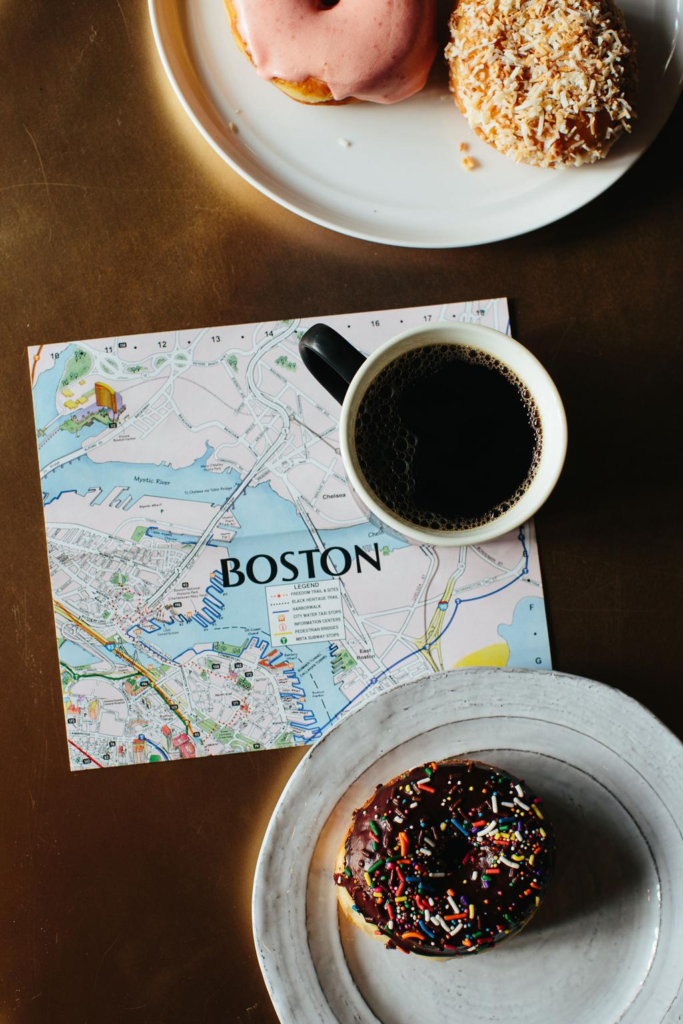
- make neighborhoods legible for visitors through maps, collaborations, and local guides
- partner across categories, such as bakeries with bookstores or hotels with local food tours
- respect price sensitivity while still delivering a sense of occasion
- show why a place belongs on a route, not just why it deserves a single visit
A hotel, for instance, may gain more by publishing a credible neighborhood breakfast-and-market guide than by simply promoting its own restaurant. A city tourism board may gain more by mapping a regional dumpling trail, oyster trail, or bakery corridor than by producing another generic “top 20 restaurants” roundup.
Where the Flavor Trail trend may go next
By late 2026 and beyond, the most interesting development may be how food, retail, and culture continue to merge. The line between restaurant discovery, shopping, neighborhood tourism, and cultural education is getting thinner.
We are already seeing the ingredients:
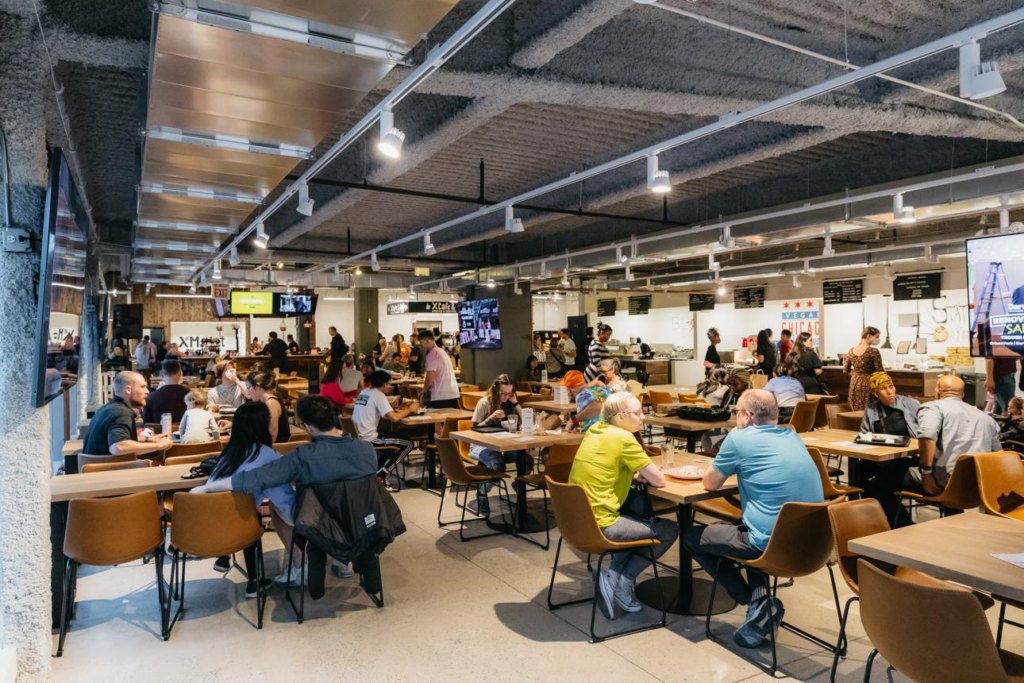
- food halls acting as cultural gateways rather than just convenient dining spaces
- hotel dining becoming part of destination choice
- culinary festivals doubling as local economic engines
- travelers seeking food experiences tied to heritage, sustainability, and sourcing
- fashion, hospitality, and dining increasingly overlapping in how they build lifestyle identity
The deeper point is that Americans are not just chasing novelty. They are using food to answer a more practical question: What kind of place is this, and how do I experience it well?
Reading the Country Through the Plate
The Flavor Trail trend is useful because it reveals more than a change in dining preferences. It shows how Americans are trying to make better decisions about time, money, and meaning. They want trips that feel grounded, local outings that feel worth the effort, and meals that do more than fill a slot between activities.
For travelers, that means food is increasingly the map. For local businesses, it means the details around story, sourcing, neighborhood connection, and accessibility matter more than ever. And for destinations, it means culinary identity is no longer a side feature of tourism marketing. In many cases, it is the entry point.
If 2026 has a clear lesson here, it is that people are not only searching for the best thing to eat. They are searching for a better way to understand where they are, one stop at a time.
Quick Signals to Watch in the Flavor Trail Economy
- More domestic travelers will continue to use food as a primary filter for choosing cities, regions, and weekend road trips.
- Neighborhood-based food discovery will matter as much as marquee restaurant openings.
- Independent businesses with a clear local story will remain well positioned.
- Travelers will keep rewarding destinations that combine culinary identity, walkability, and cultural context.
- “Value” will continue to include atmosphere, memorability, and place-based relevance, not just price.
- Food halls, markets, bakeries, and specialty grocers will play a larger role in destination discovery.
- Hotels and tourism boards that curate credible local food routes will have an advantage over those relying on generic dining lists.
- Local residents will increasingly behave like food tourists in their own metro areas, turning everyday leisure into micro Flavor Trails.
FAQs
1) What is a Flavor Trail in travel and food culture?
A Flavor Trail is a route or itinerary built around meaningful food experiences rather than treating meals as secondary. It can include restaurants, markets, bakeries, coffee shops, regional specialties, and food-related neighborhoods.
2) Is the Flavor Trail trend mainly about luxury dining?
No. In most cases it is about food experiences with a strong sense of place, not expensive tasting menus. A Flavor Trail can include diners, taco stands, public markets, bakeries, and family-run restaurants just as easily as fine dining.
3) Why are Americans planning trips around food in 2026?
Food helps people choose destinations more intentionally. It offers a fast connection to local culture, supports domestic and regional travel, and often provides better value than a generic sightseeing itinerary.
4) How is a Flavor Trail different from food tourism?
Food tourism is the broader category. A Flavor Trail is a more specific behavior within it: using a sequence of food experiences to shape where you go and how you spend your time.
5) Does this trend only apply to vacations?
No. Many people now create Flavor Trails close to home by exploring one neighborhood, market district, or regional food cluster over the course of a day.
6) What kinds of U.S. destinations benefit most from this trend?
Places with a strong regional food identity, walkable neighborhoods, public markets, cultural diversity, and a range of independent businesses tend to benefit most.
7) Are food halls and markets part of the Flavor Trail trend?
Yes. They often work as entry points because they allow travelers to sample multiple vendors, cuisines, and local businesses in one stop.
8) What do travelers look for on a Flavor Trail besides the food itself?
They often want context: who made the food, how it connects to the region, whether the neighborhood feels lived-in, and whether the experience feels memorable enough to justify the time and cost.
9) How can small businesses benefit from Flavor Trail behavior?
By making their story, location, and specialty easy to understand; collaborating with nearby businesses; and showing how they fit into a broader neighborhood experience rather than just promoting one menu item.
10) Is the Flavor Trail trend likely to last beyond 2026?
The exact phrase may evolve, but the behavior behind it looks durable. Food-led travel, local discovery, and experience-based spending are all part of longer-term shifts in how Americans evaluate leisure and hospitality.