
Summary
Iconic landmarks shape how people understand a place. In the United States, sites such as the Statue of Liberty, the Grand Canyon, and Mount Rushmore represent history, culture, and natural wonder. This guide explores what makes landmarks truly iconic—examining historical significance, cultural symbolism, architectural impact, and visitor experience across some of America’s most recognizable destinations.
Across the United States, certain locations transcend their physical presence and become symbols of the nation itself. These landmarks appear in textbooks, travel guides, films, and national celebrations. They shape identity, attract millions of visitors each year, and serve as shared reference points in American culture.
But what actually makes a landmark iconic?
The answer lies in a combination of historical importance, emotional symbolism, distinctive design, and widespread public recognition. Some landmarks reflect defining moments in American history, while others showcase extraordinary natural beauty or architectural innovation.
Understanding what elevates a location from notable to iconic helps explain why millions of Americans—and visitors from around the world—continue to travel to these sites year after year.
Defining an Iconic Landmark
An iconic landmark is more than a popular tourist attraction. It represents a deeper meaning tied to history, national identity, or collective memory.
According to the U.S. National Park Service, more than 300 million people visit national parks and historic sites annually, demonstrating the powerful draw of places that embody the American story.
Several characteristics consistently appear among the most recognized landmarks.
Key traits of iconic landmarks include:
- Strong historical significance
- Distinctive visual identity
- Cultural symbolism
- National or global recognition
- Educational or storytelling value
- Long-term preservation and protection
These qualities combine to create locations that people recognize instantly—even from a single photograph.
Historical Significance: Where the American Story Lives
Some landmarks become iconic because they mark pivotal moments in American history. These places preserve events that shaped the nation’s political, social, or cultural development.
For example, the Statue of Liberty in New York Harbor became a powerful symbol of immigration and freedom after its dedication in 1886. For millions of immigrants arriving through Ellis Island, the statue represented hope and opportunity.
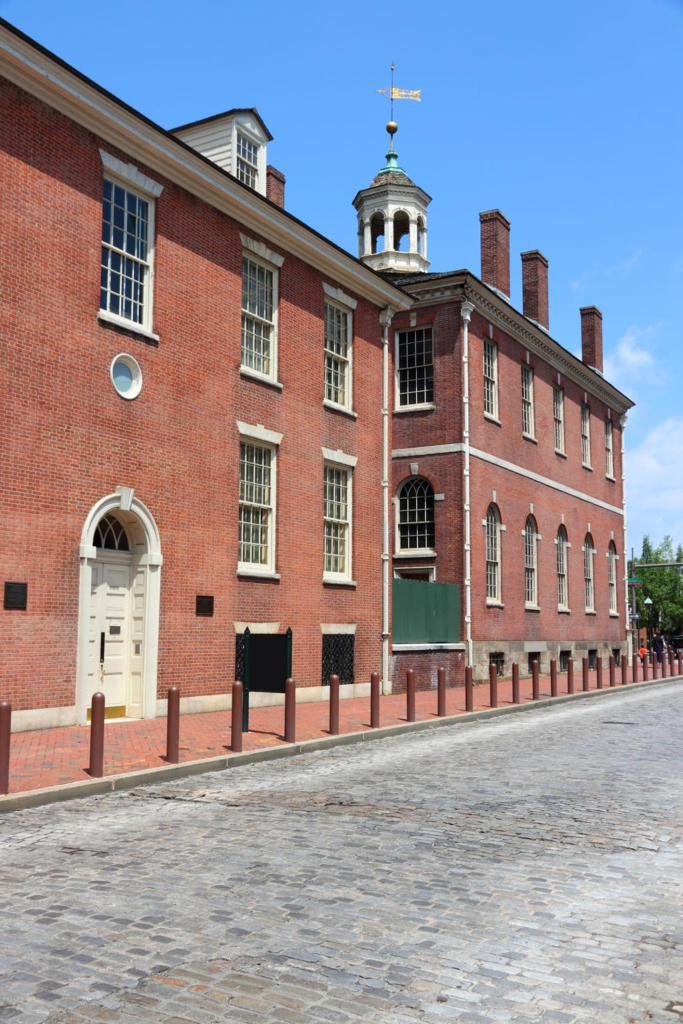
Another example is Independence Hall in Philadelphia, where the Declaration of Independence and the U.S. Constitution were debated and adopted. Its modest brick architecture holds immense symbolic weight because of the decisions made inside.
When a location connects directly to foundational events, it becomes part of the national narrative.
Natural Wonder: When Geography Creates a Global Symbol
Not all iconic landmarks are built by humans. Some achieve legendary status simply through the scale and uniqueness of nature itself.
The Grand Canyon is perhaps the most striking example. Carved over millions of years by the Colorado River, it stretches 277 miles long and over a mile deep, making it one of the most recognizable landscapes on Earth.
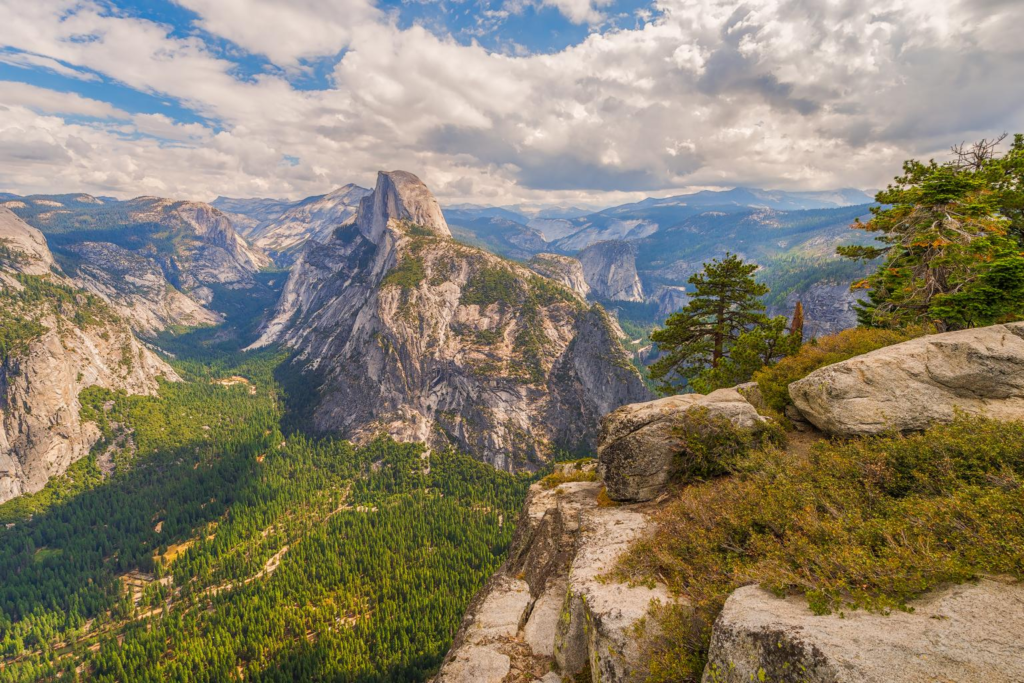
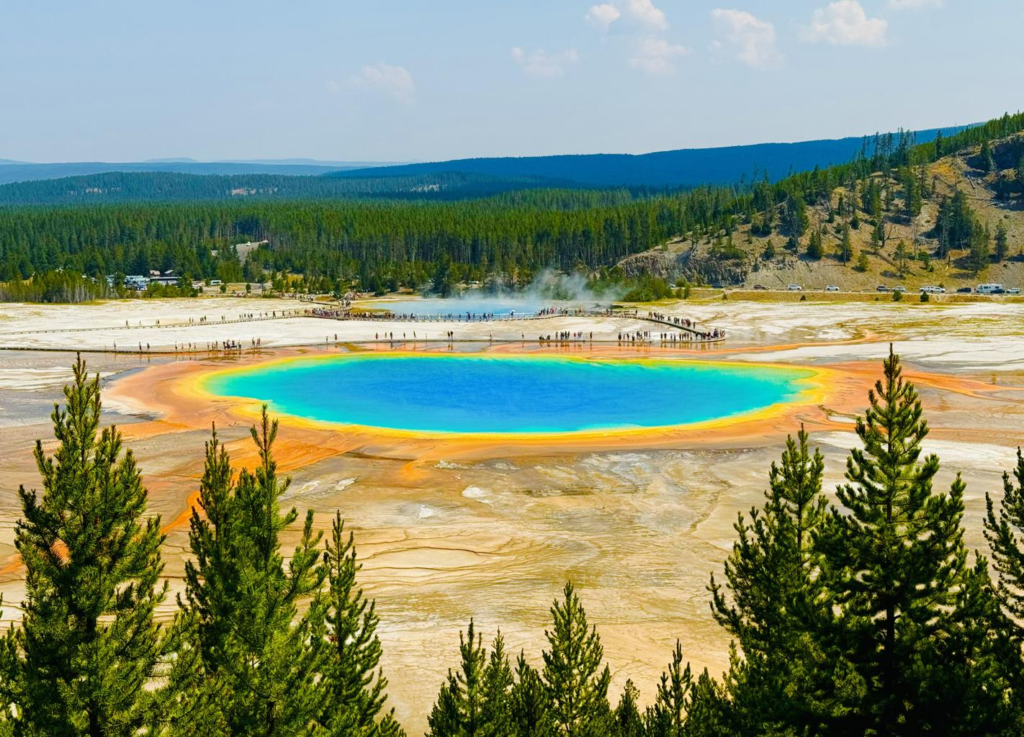
Similarly, Yosemite Valley and Yellowstone’s geothermal features draw millions of visitors because they offer natural experiences unavailable anywhere else.
Natural landmarks become iconic when they combine:
- Geological uniqueness
- Photographic visual impact
- Accessibility for visitors
- Long-standing conservation protection
These landscapes also contribute to America’s reputation as a destination for outdoor exploration.
Architectural Innovation and Design
Some landmarks earn iconic status through bold engineering or artistic design.
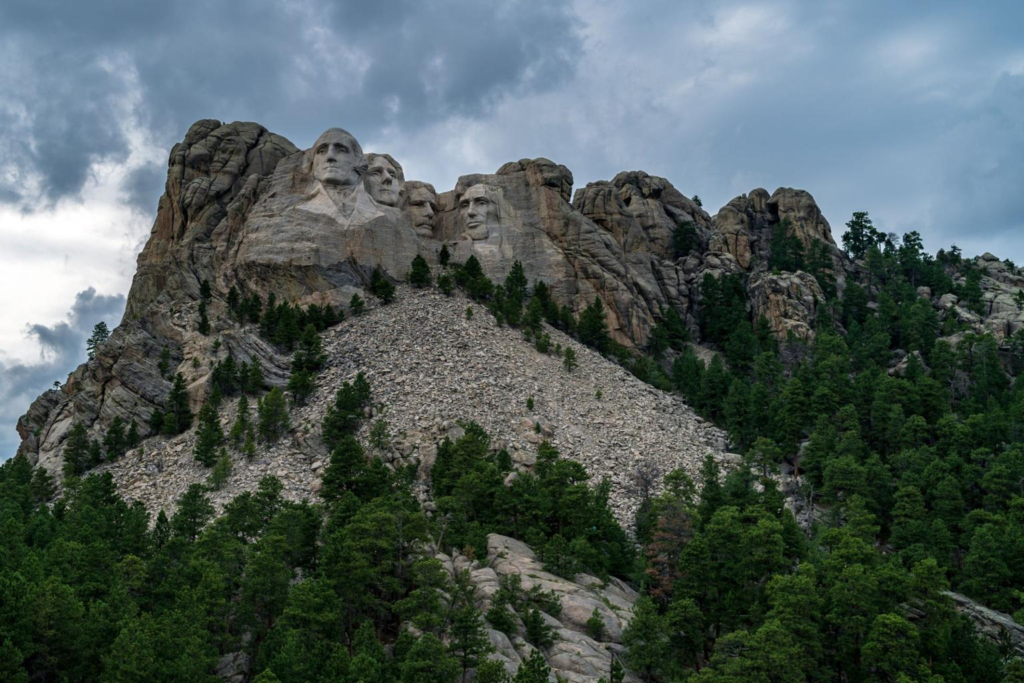
Mount Rushmore, carved into the granite of South Dakota’s Black Hills, features 60-foot sculptures of four U.S. presidents. Completed in 1941, it required unprecedented large-scale stone carving techniques.
Another example is the Golden Gate Bridge, whose distinctive International Orange color and Art Deco styling have made it one of the most photographed bridges in the world.
Architectural landmarks often share several traits:
- Visually distinctive structure
- Engineering achievements for their time
- Cultural symbolism beyond function
- Frequent appearance in media and photography
These structures become visual shorthand for entire cities or regions.
Cultural Identity and National Symbolism
An iconic landmark often represents more than its physical location—it symbolizes broader national values.
The Lincoln Memorial in Washington, D.C., is one such example. Beyond honoring President Abraham Lincoln, the site became historically significant during the Civil Rights Movement when Martin Luther King Jr. delivered his “I Have a Dream” speech there in 1963.
This layered meaning—combining architecture, history, and social progress—transforms the monument into a symbol of equality and democratic ideals.
Many iconic landmarks evolve over time as new historical events become connected to them.
Accessibility and Visitor Experience
For a landmark to become widely recognized, people must be able to experience it.
Accessibility plays a major role in shaping iconic status. Well-developed infrastructure—such as visitor centers, transportation routes, and educational programming—helps transform a site from a remote location into a national destination.
For example, the National Park Service has invested heavily in infrastructure across many major sites. Popular landmarks often offer:
- Guided tours and ranger programs
- Interpretive museums or visitor centers
- Scenic viewpoints and accessible pathways
- Historical exhibits and storytelling
These experiences help visitors understand the deeper significance of the site rather than simply observing it.
Media Influence and Cultural Representation
Movies, television, literature, and photography play a powerful role in elevating landmarks into cultural icons.
Hollywood films have frequently showcased locations such as:
- Monument Valley in western films
- The Golden Gate Bridge in action movies
- The National Mall in political dramas
Repeated media exposure strengthens recognition and reinforces a landmark’s symbolic status.
Over time, the landmark becomes instantly identifiable worldwide—even for people who have never visited.
Preservation and National Stewardship
Another essential factor behind iconic landmarks is long-term preservation.
The United States maintains an extensive network of protected sites through:
- The National Park Service
- National Historic Landmarks programs
- UNESCO World Heritage designations
- State and local preservation initiatives
As of 2024, the U.S. has over 2,600 National Historic Landmarks, highlighting places that possess exceptional historical significance.
Preservation ensures these sites remain accessible for future generations while maintaining their historical authenticity.
Examples of America’s Most Recognizable Landmarks
While the United States has thousands of significant sites, a few stand out for their widespread recognition.
Examples frequently cited among America’s most iconic landmarks include:
- Statue of Liberty – Symbol of immigration and freedom
- Grand Canyon – Natural geological wonder
- Mount Rushmore – Presidential monument carved into stone
- Lincoln Memorial – Civil rights and democratic ideals
- Golden Gate Bridge – Engineering and visual icon of San Francisco
- Independence Hall – Birthplace of American democracy
- Yellowstone National Park – World’s first national park
- Washington Monument – Tribute to the nation’s first president
Each of these landmarks combines multiple factors discussed earlier: history, symbolism, visual identity, and accessibility.
Frequently Asked Questions
What qualifies a site as a landmark in the United States?
A landmark is typically recognized for historical, cultural, architectural, or natural significance. Official designation often comes from government agencies such as the National Park Service.
What is the most visited landmark in the United States?
The Great Smoky Mountains National Park receives the most visitors annually, with more than 12 million visits per year.
Why is the Statue of Liberty considered iconic?
It symbolizes freedom and immigration in American history and has served as a welcoming symbol for millions of immigrants arriving in the United States.
How are historic landmarks preserved?
Preservation occurs through federal protections, restoration programs, historical research, and conservation policies.
Are natural sites considered landmarks?
Yes. Natural formations such as the Grand Canyon or Yellowstone geysers are widely recognized landmarks due to their unique geographic features.
What role does tourism play in landmark status?
Tourism increases visibility and public awareness, helping sites become widely recognized nationally and internationally.
How do landmarks influence national identity?
They represent shared historical events, cultural achievements, and geographic beauty that shape how people view the nation.
What is the difference between a landmark and a monument?
A monument is typically a structure built to commemorate a person or event, while a landmark can be natural or built and recognized for broader significance.
Why are landmarks important for education?
They provide physical locations where historical events occurred, making history more tangible and engaging.
Can modern structures become iconic landmarks?
Yes. Contemporary structures such as the Gateway Arch or the Space Needle demonstrate how modern architecture can quickly achieve iconic recognition.
Why Iconic Places Continue to Matter
Landmarks endure because they anchor stories in physical space. They allow people to see where history unfolded, experience natural wonders firsthand, and connect with shared cultural narratives.
Whether carved by nature or built by human ambition, iconic landmarks remind Americans—and visitors—of the forces that shaped the country. They serve as classrooms, memorials, works of art, and gathering places all at once.
As preservation efforts continue and new generations visit these sites, the meaning of these landmarks evolves while their significance remains firmly rooted in the national story.
Key Insights at a Glance
- Iconic landmarks combine historical significance, cultural symbolism, and visual recognition.
- Both natural landscapes and human-made structures can achieve landmark status.
- Media exposure and tourism greatly influence public recognition.
- Preservation programs protect landmarks for future generations.
- Experiencing these sites in person strengthens cultural understanding and historical awareness.