Summary
America’s landmarks do more than attract visitors—they shape how the United States is understood globally. From historic monuments in Washington, D.C., to natural wonders like the Grand Canyon, these places reflect the country’s history, ideals, and landscapes. Understanding the landmarks that define America offers insight into the nation’s cultural identity, global reputation, and enduring influence.
Why Landmarks Matter in How the World Sees America
For many people outside the United States, their first impressions of the country come from images: the Statue of Liberty rising above New York Harbor, the vast Grand Canyon stretching across Arizona, or the white dome of the U.S. Capitol in Washington, D.C.
These places are not simply tourist attractions. They function as visual symbols of American identity, representing ideas about democracy, opportunity, innovation, and natural beauty.
Landmarks also serve a practical role in shaping perception. According to the U.S. National Travel and Tourism Office, the United States welcomed more than 66 million international visitors in 2023, and a significant portion of their travel itineraries focused on iconic historical sites, national parks, and architectural landmarks.
For global audiences, these locations provide a window into how the country tells its own story.
In many ways, landmarks act as cultural ambassadors. They communicate history without requiring translation and connect people from different countries through shared curiosity about place, culture, and heritage.
The Statue of Liberty: America’s Most Recognized Symbol of Freedom
Few landmarks carry as much global recognition as the Statue of Liberty.
A gift from France in 1886, the statue quickly became a powerful symbol of liberty and democratic ideals. For millions of immigrants arriving through nearby Ellis Island, it represented the promise of a new beginning.
Today, the monument continues to influence how people around the world perceive the United States.
Key reasons it remains influential include:
- Historical symbolism: Associated with immigration and opportunity
- Cultural visibility: Frequently featured in global media and education
- Tourism impact: One of the most visited landmarks in the U.S.
Visitors often describe the experience of approaching the statue by ferry as emotionally powerful. Seeing the monument from the harbor offers the same perspective early immigrants once had, connecting personal travel experiences to broader historical narratives.

The U.S. Capitol and the Architecture of Democracy
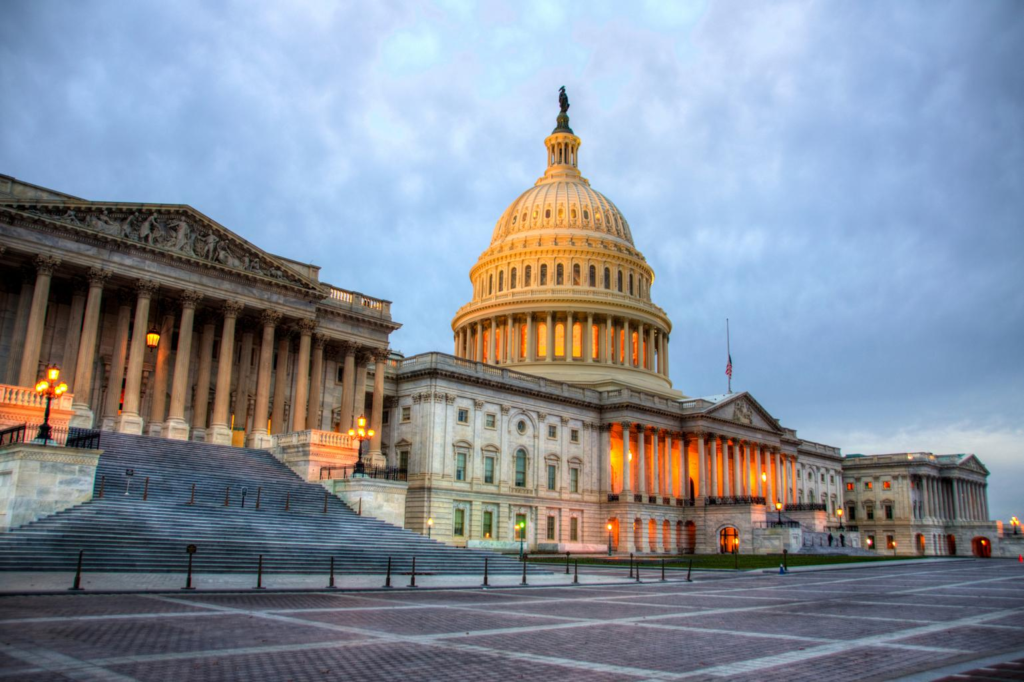
The United States Capitol stands at the center of American political life.
Its distinctive white dome overlooking the National Mall has become one of the most recognizable architectural images associated with the United States.
For international audiences, the Capitol symbolizes the American system of representative government.
Built in stages beginning in 1793, the building reflects classical architectural traditions inspired by Roman and Greek democracy. The structure itself communicates a message about governance—one rooted in transparency, civic participation, and institutional continuity.
Many visitors report that standing on the Capitol grounds changes how they understand American political institutions. Seeing the chambers where laws are debated makes abstract ideas like democracy feel tangible.
The Grand Canyon: America’s Natural Identity
Not all landmarks that shape global perception are built by humans.
The vast landscape of the Grand Canyon is often used to represent the scale and diversity of the American environment.
Formed over millions of years by the Colorado River, the canyon stretches roughly 277 miles long and up to 18 miles wide. The site attracts more than 5 million visitors annually, according to the National Park Service.
For international travelers, the canyon communicates several ideas about America:
- The country’s commitment to preserving natural spaces
- The dramatic scale of North American landscapes
- The role of national parks in American culture
Photographs of the canyon are widely used in global travel publications and documentaries, reinforcing the United States as a destination known for expansive natural beauty.

The Golden Gate Bridge: Engineering and American Innovation
Few structures demonstrate American engineering ambition like the Golden Gate Bridge.
Completed in 1937, the bridge quickly became one of the most photographed landmarks in the world. Its distinctive International Orange color and sweeping suspension design helped define the skyline of San Francisco.
Beyond its visual impact, the bridge represents a broader narrative of American innovation.
At the time of its construction, it was the longest suspension bridge in the world. Engineers overcame powerful ocean currents, strong winds, and deep waters—an accomplishment widely covered in global newspapers of the era.
Today, the bridge continues to symbolize:
- American infrastructure ambition
- West Coast creativity and culture
- The connection between natural landscapes and urban development
Travelers often walk or cycle across the bridge, experiencing firsthand how a piece of infrastructure can become a cultural icon.
Mount Rushmore: Monument, Memory, and National Identity
Carved into granite in South Dakota’s Black Hills, Mount Rushmore National Memorial features the faces of four American presidents: George Washington, Thomas Jefferson, Theodore Roosevelt, and Abraham Lincoln.
The monument was completed in 1941 and quickly became one of the most recognizable representations of American leadership and history.
For global audiences, Mount Rushmore communicates the importance the United States places on historical figures and national narratives.
At the same time, the monument also highlights how landmarks can spark complex conversations about history, cultural memory, and Indigenous land rights—reminding visitors that national symbols often carry layered meanings.
Why These Places Continue to Shape America’s Global Image
Across media, travel, and education, landmarks provide powerful shorthand for understanding the United States.
They influence global perception in several ways:
Visual storytelling
Images of landmarks appear in textbooks, films, travel documentaries, and international news coverage.
Cultural symbolism
Certain locations represent national values—freedom, innovation, democracy, or environmental stewardship.
Tourism diplomacy
When international visitors travel to the U.S., landmarks often become the most memorable part of their experience.
Shared global recognition
Landmarks serve as reference points that people worldwide immediately recognize.
According to the U.S. Travel Association, landmark tourism contributes billions annually to local economies and supports hundreds of thousands of jobs across hospitality, transportation, and conservation sectors.
What Travelers Often Discover When Visiting These Landmarks
Many visitors arrive expecting a photo opportunity. What they often leave with is a deeper understanding of American culture.
Common experiences include:
- Learning historical context through ranger programs and guided tours
- Seeing the geographic diversity of the United States firsthand
- Understanding the scale of American infrastructure and landscapes
- Experiencing moments that connect personal travel with national history
These experiences help explain why landmarks remain central to how the United States is perceived internationally.
They tell stories that are difficult to capture through statistics or political narratives alone.

Frequently Asked Questions
Why are American landmarks so globally recognizable?
Many landmarks appear frequently in films, news media, textbooks, and international tourism campaigns, making them widely recognizable across cultures.
What is the most internationally recognized U.S. landmark?
The Statue of Liberty is often considered the most recognizable American landmark due to its historical symbolism and global media presence.
How do landmarks influence tourism in the United States?
Landmarks attract millions of international visitors each year and often serve as anchor destinations that encourage broader regional travel.
Are U.S. national parks considered landmarks?
Yes. Many national parks, including the Grand Canyon and Yellowstone, function as globally recognized landmarks due to their unique natural features.
Why do governments preserve historical landmarks?
Preservation protects cultural heritage, supports tourism, and ensures future generations can learn from historic places.
What makes a landmark iconic?
Iconic landmarks typically combine historical significance, visual recognition, cultural symbolism, and public accessibility.
How many national historic landmarks exist in the U.S.?
The United States has more than 2,600 National Historic Landmarks, according to the National Park Service.
Do landmarks affect international perceptions of a country?
Yes. Famous landmarks often become shorthand representations of national culture, values, and history.
Why are landmarks important for education?
They provide real-world examples that help explain historical events, political systems, and environmental conservation.
Can newer landmarks become globally iconic?
Yes. Structures like major museums, bridges, and memorials can become iconic over time if they gain cultural significance and public recognition.
How Landmarks Continue to Tell America’s Story
The United States is a vast country with many identities—historical, cultural, political, and environmental. Landmarks provide a way to bring those identities into focus.
They remind visitors that the story of America is not told through a single place or moment. Instead, it unfolds across coastlines, deserts, cities, and monuments built over centuries.
For travelers, historians, and global audiences alike, these landmarks serve as enduring reference points—places where history, culture, and landscape meet in ways that shape how the world understands the United States.
Key Insights at a Glance
- Landmarks play a major role in shaping global perceptions of the United States
- Historic monuments often represent democratic values and national identity
- Natural landmarks highlight America’s environmental diversity
- Engineering achievements reflect innovation and infrastructure ambition
- Landmark tourism contributes significantly to the U.S. travel economy
- Visiting these places provides context that goes beyond photographs