
Summary
America’s most recognizable landmarks do more than attract visitors—they preserve the nation’s history, culture, and identity. From Independence Hall to the Grand Canyon, these sites reveal how the United States developed politically, geographically, and socially. Exploring them offers insight into pivotal moments, influential people, and natural forces that shaped the country—one location at a time.
Why Landmarks Matter in Understanding American History
Across the United States, landmarks serve as physical reminders of the events, movements, and landscapes that shaped the nation. These places provide more than visual appeal—they offer context for understanding how the country developed over time.
Historic buildings, monuments, and natural wonders preserve moments that textbooks alone cannot fully convey. Walking through a preserved assembly room in Philadelphia or standing along the rim of the Grand Canyon creates a sense of connection to the past that written history rarely delivers.
The U.S. National Park Service, which manages more than 420 sites nationwide, plays a central role in preserving these places. According to the agency, over 325 million people visited national parks in 2023, demonstrating the continuing interest Americans have in experiencing history and natural heritage firsthand.
Landmarks serve several important roles:
- Preserving national memory through protected historic spaces
- Educating visitors about political, cultural, and environmental history
- Supporting local economies through heritage tourism
- Connecting generations through shared historical experiences
Understanding the story of the United States becomes clearer when viewed through the places where it unfolded.
Independence Hall: Where a Nation Took Shape
Few sites capture the origins of the United States as clearly as Independence Hall.
Located in Philadelphia, this 18th-century building hosted two defining moments in American history: the signing of the Declaration of Independence in 1776 and the drafting of the U.S. Constitution in 1787.
The assembly room where delegates debated the nation’s future still looks remarkably similar to how it did during those meetings. Visitors often note the simplicity of the space—a reminder that some of the most significant decisions in world history occurred in relatively modest surroundings.
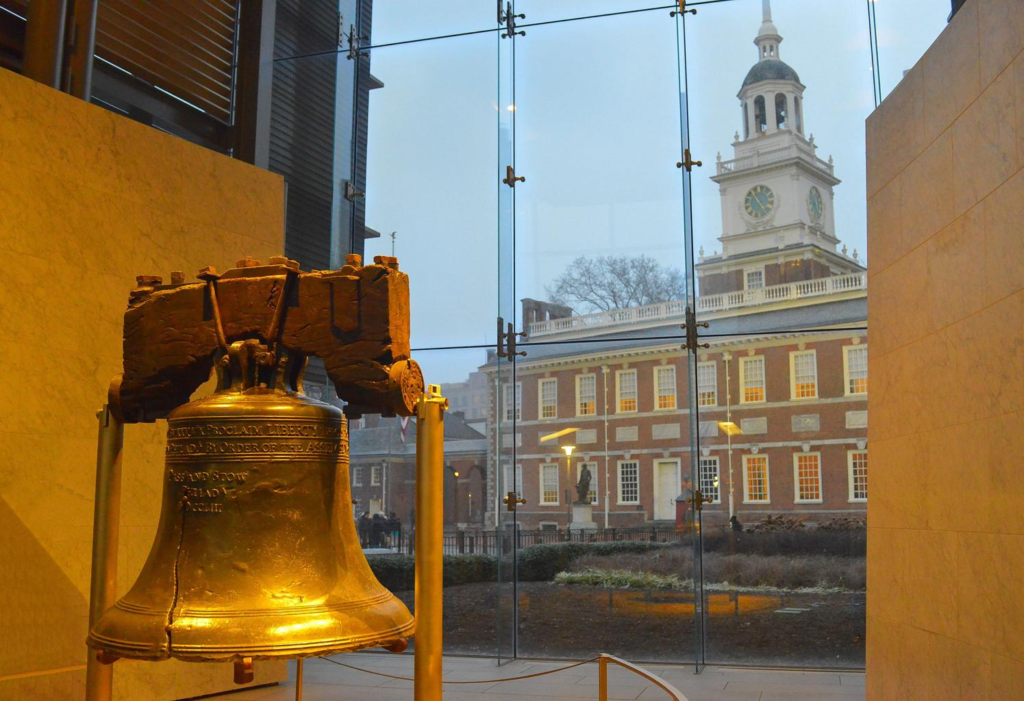
Nearby, the Liberty Bell symbolizes the ideals of independence and civil rights. Although the bell cracked in the 19th century, it became an enduring emblem of freedom during the abolitionist movement.
For many Americans, a visit to Independence Hall provides a direct link to the country’s founding principles.
The Statue of Liberty: A Symbol of Opportunity
Standing in New York Harbor, Statue of Liberty has long represented hope and opportunity.
Gifted by France in 1886, the statue greeted millions of immigrants arriving by ship during the late 19th and early 20th centuries. For many newcomers, it was the first sight of the United States.
Just across the harbor sits Ellis Island, where more than 12 million immigrants were processed between 1892 and 1954.
Together, these landmarks represent a major chapter in the American story: the waves of immigration that helped shape the nation’s culture, economy, and communities.
Visitors today can explore the immigration museum on Ellis Island and climb to observation areas within the statue’s pedestal for views of Manhattan and the harbor.
Gettysburg: Understanding the Cost of Civil War
History becomes deeply personal at Gettysburg National Military Park.
The Battle of Gettysburg in 1863 was the bloodiest battle of the American Civil War, with roughly 51,000 casualties over three days. The Union victory marked a turning point in the war.
Walking the preserved battlefield helps visitors visualize troop movements, defensive positions, and the scale of the conflict. Key sites include:
- Little Round Top, a strategic hill defended by Union troops
- Pickett’s Charge field, where Confederate forces launched a failed assault
- Soldiers’ National Cemetery, where thousands of soldiers are buried
It was here that Abraham Lincoln delivered the Gettysburg Address, redefining the purpose of the war as a struggle for equality and democratic ideals.
Today, the park combines historical interpretation, preserved landscapes, and museums to explain one of the most pivotal moments in American history.
Mount Rushmore: Presidential Legacy in Stone
Carved into the Black Hills of South Dakota, Mount Rushmore features the 60-foot faces of four presidents.
The monument honors:
- George Washington
- Thomas Jefferson
- Theodore Roosevelt
- Abraham Lincoln
Each president represents a phase of national development:
- Washington – founding of the nation
- Jefferson – territorial expansion
- Roosevelt – economic growth and global presence
- Lincoln – preservation of the Union
Completed in 1941 after 14 years of construction, the monument attracts nearly 3 million visitors annually.
Beyond the sculpture itself, exhibits explore the engineering challenges behind carving the mountain and the broader history of the region.
The Grand Canyon: A Natural Chronicle of Deep Time
Not all landmarks tell human stories alone. Some reveal the geological forces that shaped the continent.
Grand Canyon National Park exposes nearly two billion years of Earth’s geological history through its layered rock formations.
Carved by the Colorado River, the canyon stretches roughly 277 miles long and up to 18 miles wide.
Visitors experience the canyon in many ways:
- Scenic overlooks along the South Rim
- Hiking routes such as the Bright Angel Trail
- River rafting trips through the canyon’s interior
For many travelers, standing along the rim offers a humbling perspective on the scale of natural forces that shaped the American landscape long before the country existed.
The Golden Gate Bridge: Engineering and Identity
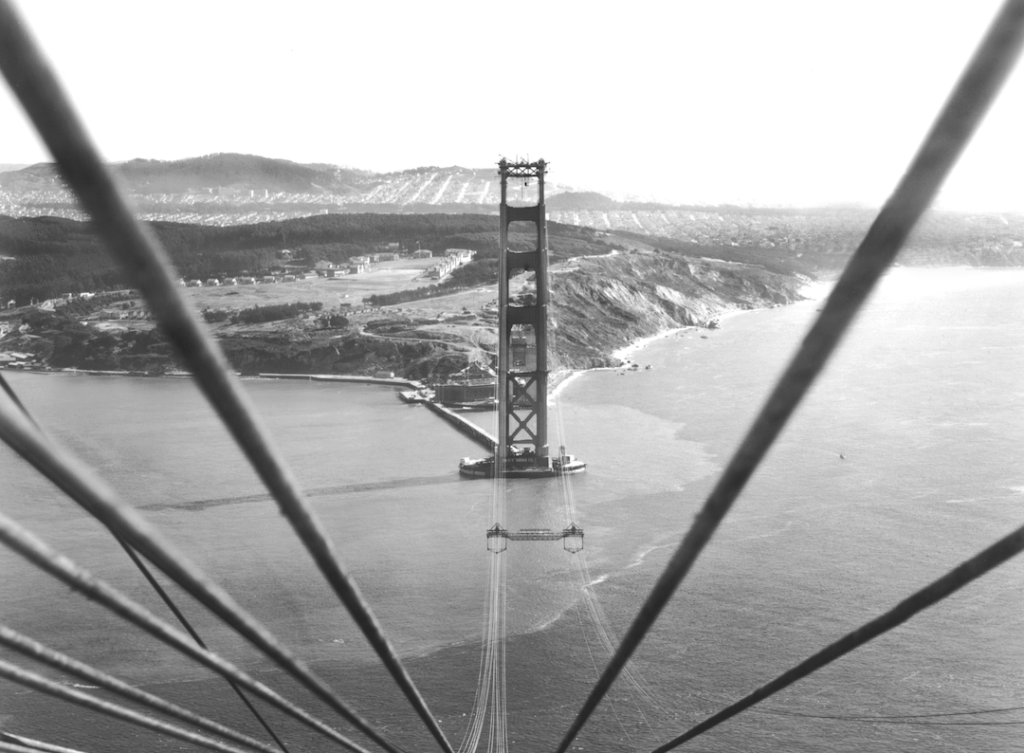
Completed in 1937, Golden Gate Bridge quickly became one of the most recognizable structures in the United States.
Spanning the entrance to San Francisco Bay, the bridge was once the longest suspension bridge in the world. Its distinctive International Orange color improves visibility in the region’s frequent fog.
The bridge reflects a broader story about American engineering during the early 20th century—a time when ambitious infrastructure projects reshaped cities and transportation networks.
Visitors often experience the landmark by:
- Walking or cycling across the bridge
- Viewing it from the Marin Headlands
- Exploring nearby historic sites within the Golden Gate National Recreation Area
Today, it remains a powerful symbol of California’s innovation and coastal landscape.
The National Mall: A Landscape of Democracy
In Washington, D.C., the National Mall brings together monuments that reflect defining moments in American history.
Within this two-mile stretch are several important sites:
- Lincoln Memorial
- Washington Monument
- Vietnam Veterans Memorial
These memorials represent different periods of national reflection—from the founding era to modern military conflicts.
The National Mall also hosted major civil rights events, including the 1963 March on Washington, where Martin Luther King Jr. delivered his “I Have a Dream” speech.
Because of this history, the area functions not only as a tourist destination but also as a living stage for civic expression.
What Makes a Landmark Truly Iconic?
Not every historic location becomes widely recognized. Certain characteristics help transform a site into a landmark of national significance.
Common traits include:
- Historical impact tied to pivotal national events
- Architectural or engineering significance
- Cultural symbolism that resonates across generations
- Preservation and accessibility for public education
Organizations such as the National Park Service and UNESCO World Heritage program evaluate these factors when designating important sites.
In many cases, the meaning of a landmark evolves over time. A structure built for one purpose may later become associated with broader cultural or political movements.
How Visiting Landmarks Deepens Historical Understanding
Experiencing historic places firsthand often changes how people understand the past.
Standing on a Civil War battlefield or inside a colonial assembly room creates a sense of scale and atmosphere that cannot be replicated through reading alone.
Many landmarks now incorporate educational tools such as:
- Interactive museum exhibits
- Guided ranger programs
- Digital reconstructions and audio tours
- Archival photographs and historical documents
These resources help visitors connect personal stories with national history.
For educators, historians, and travelers alike, landmarks remain one of the most effective ways to engage with the American story.

Frequently Asked Questions
What is considered a landmark in the United States?
A landmark is typically a site recognized for historical, cultural, architectural, or natural significance. Many are designated as National Historic Landmarks or protected within the National Park System.
How many national landmarks exist in the United States?
The United States has more than 2,600 National Historic Landmarks, along with hundreds of protected parks, monuments, and historic sites.
Why are landmarks important for education?
They provide tangible connections to historical events, making complex historical topics easier to understand through real locations.
What is the most visited landmark in the United States?
Times Square in New York City is often cited as the most visited public landmark, drawing tens of millions of visitors annually.
Are natural landmarks considered historical sites?
Yes. Natural landmarks such as the Grand Canyon are protected because of their geological significance and cultural importance.
Who manages historic landmarks in the U.S.?
Many are managed by the National Park Service, state governments, tribal authorities, or private preservation organizations.
Can visitors tour most American landmarks?
Most major landmarks allow visitors, though access may vary depending on preservation needs and seasonal conditions.
What qualifies a site as a National Historic Landmark?
The designation is granted to places with exceptional value in illustrating the heritage of the United States.
How do landmarks benefit local communities?
They support tourism, education, and preservation efforts while contributing to local economies.
Are new landmarks still being designated?
Yes. Historic sites continue to be identified and protected as historians and preservationists recognize their significance.
The Ongoing Story Written Across America’s Landscape
Landmarks across the United States form a network of places where history, culture, and geography intersect. From the halls where foundational documents were written to the vast natural formations shaped over millions of years, these sites provide perspective on how the nation evolved.
Exploring them reveals that American history is not confined to museums or textbooks. It exists in city streets, mountain landscapes, preserved battlefields, and memorial spaces.
Each landmark offers a chapter of the story—one that continues to shape how Americans understand their past and imagine their future.
Key Points to Remember About America’s Historic Landmarks
- Landmarks preserve important chapters of U.S. history and culture
- Sites like Independence Hall and Ellis Island reveal pivotal moments in the nation’s development
- Natural landmarks such as the Grand Canyon highlight geological history
- Memorials and monuments provide spaces for reflection and national memory
- Visiting historic places offers educational experiences that deepen understanding of the American story
Reading the American Story Through Its Landscapes
The United States is often described through dates, documents, and political movements. Yet the country’s identity is equally embedded in its landscapes and structures.
From colonial meeting halls to vast canyon walls, landmarks provide the settings where history unfolded. They remind visitors that the story of the nation is not abstract—it is grounded in real places that continue to shape American life today.
Snapshot of America’s Landmark Legacy
- Historic buildings reveal the founding of the nation
- Immigration landmarks show how diverse communities formed
- Battlefields illustrate the cost of national conflict
- Engineering marvels highlight innovation and infrastructure
- Natural landmarks reveal geological history spanning millions of years