
Summary
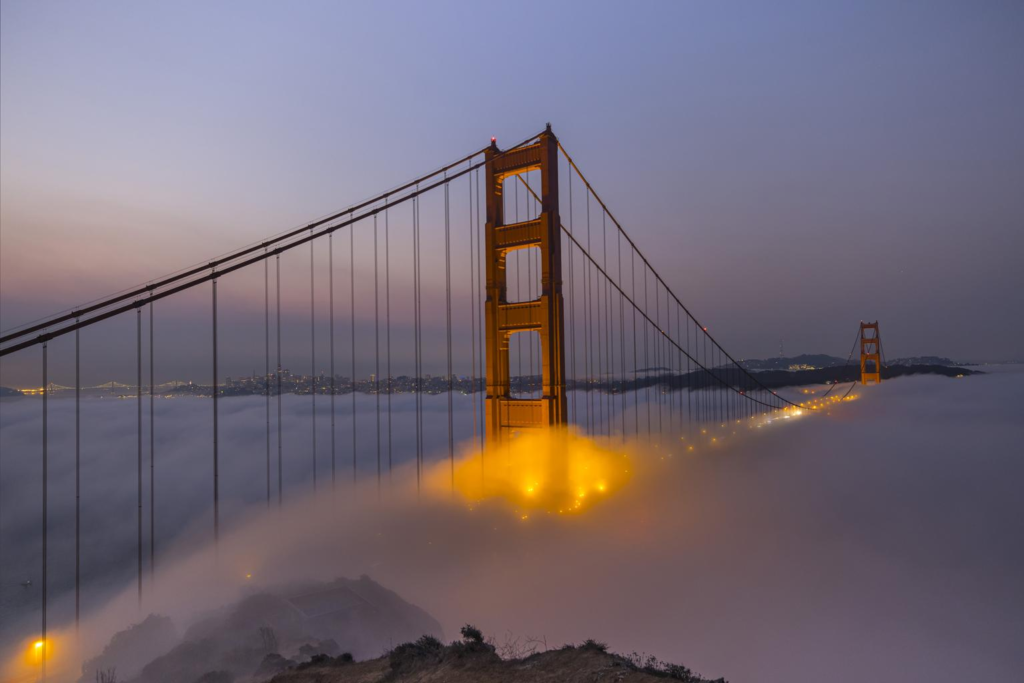
Across the United States, iconic landmarks do more than attract visitors—they preserve the stories that shaped the nation. From historic monuments and battlefields to bridges and public buildings, these places reflect moments of struggle, innovation, and cultural change. Understanding the history behind America’s landmarks helps travelers, students, and residents connect everyday landscapes with the deeper narrative of the country.
Why Landmarks Matter More Than Most People Realize
Across the United States, landmarks function as physical reminders of the nation’s evolving story. Many people recognize these sites as tourist destinations, yet their deeper significance lies in how they preserve historical memory. A monument, bridge, or historic building often marks an event, achievement, or turning point that shaped American society.
According to the National Park Service, the United States has over 2,600 National Historic Landmarks designated for their exceptional historical significance. These sites represent everything from Indigenous heritage and early colonial settlements to industrial innovation and civil rights milestones.
What makes these landmarks especially powerful is their ability to connect the past with everyday life. Millions of Americans pass these places regularly without realizing the depth of history embedded within them.
Understanding these landmarks adds context to American history in ways that textbooks cannot. Walking through a historic site allows visitors to experience scale, geography, and atmosphere in a way that written records rarely capture.
The Statue of Liberty: A Symbol of Immigration and Opportunity
Few landmarks are as widely recognized as the Statue of Liberty. Standing on Liberty Island in New York Harbor since 1886, the statue was a gift from France to celebrate the alliance between the two countries during the American Revolution.
Yet its historical meaning expanded dramatically in the early 20th century.
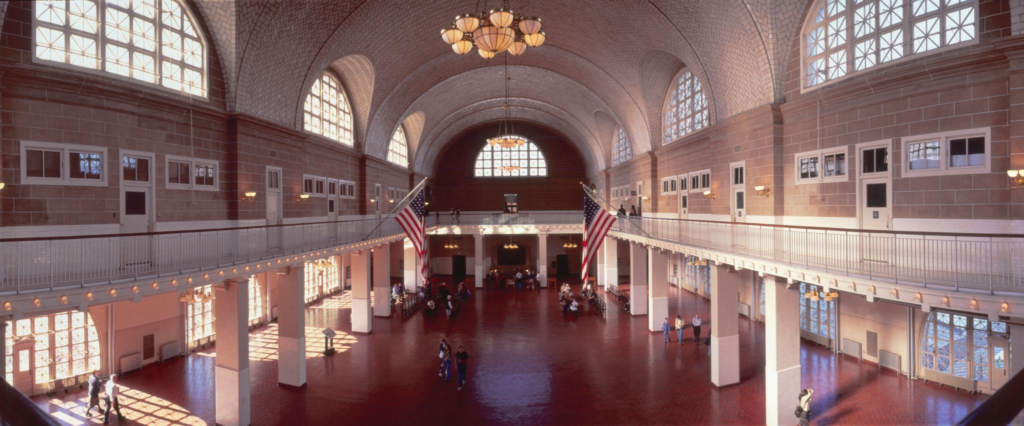
Between 1892 and 1954, more than 12 million immigrants passed through nearby Ellis Island, and many saw the statue as their first glimpse of the United States. For those arriving from Europe and elsewhere, the towering monument represented the possibility of a new life.
Key historical insights tied to the Statue of Liberty include:
- It became a central symbol of American immigration during the early 1900s.
- Emma Lazarus’s poem “The New Colossus” helped frame the statue as a symbol of refuge.
- It represents democratic ideals and global cooperation.
Today, the monument remains a powerful reminder of how immigration shaped the nation’s culture and economy.
The Golden Gate Bridge: Engineering and Westward Expansion
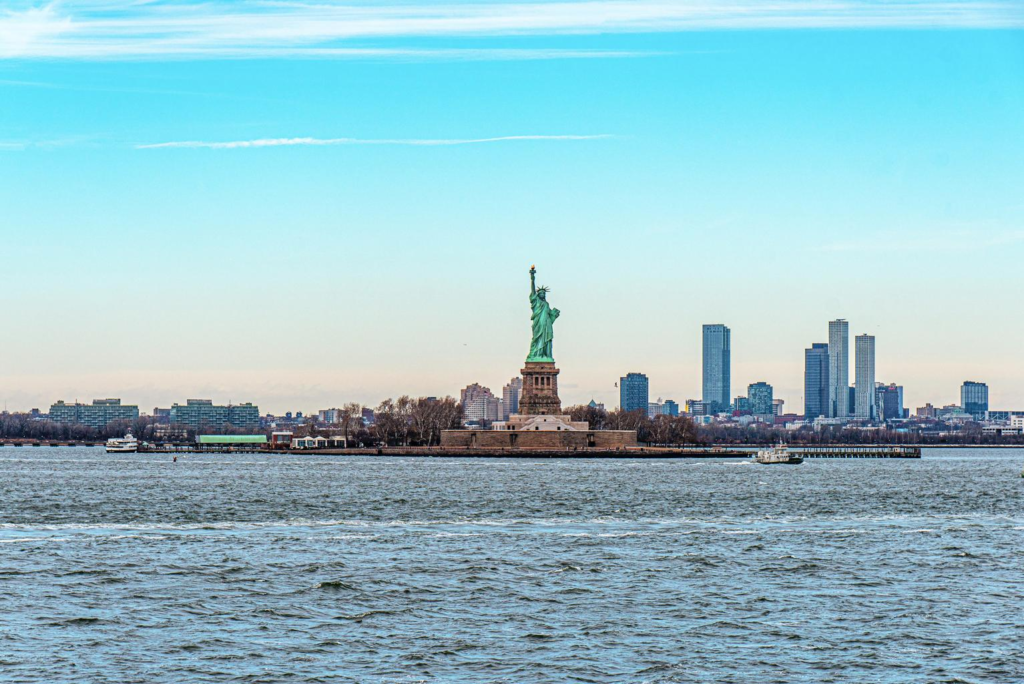
When the Golden Gate Bridge opened in 1937, it was the longest suspension bridge in the world. Connecting San Francisco to Marin County, the bridge symbolized American engineering confidence during the Great Depression.
Beyond its striking appearance, the bridge reflects the broader story of California’s development. During the early 20th century, the San Francisco Bay Area was rapidly expanding, and transportation infrastructure was essential for regional growth.
The project also highlights the changing role of public works during difficult economic periods. Large infrastructure projects during the 1930s provided jobs while transforming the nation’s transportation networks.
The Golden Gate Bridge quietly represents several historical themes:
- The rise of American engineering leadership
- Infrastructure development during the New Deal era
- The economic growth of the West Coast
More than 40 million vehicles cross the bridge each year, yet few drivers stop to consider the historical circumstances that made it possible.
Independence Hall: Where the Nation Was Formed
Independence Hall in Philadelphia is one of the most historically significant buildings in the United States. Within its brick walls, two foundational documents were debated and adopted:
- The Declaration of Independence in 1776
- The U.S. Constitution in 1787
These events transformed thirteen British colonies into a new democratic republic.
The building itself dates back to 1753, originally serving as the Pennsylvania State House. What makes the site remarkable is not its architecture but the decisions made inside it. Delegates spent months negotiating the structure of a new government, shaping political principles that continue to influence democracies worldwide.
Visitors walking through Independence Hall today see the Assembly Room, where debates over representation, federal authority, and individual rights unfolded.
The landmark reminds Americans that democracy is not static—it emerged through negotiation, compromise, and debate.
Mount Rushmore: Memory, Controversy, and National Identity
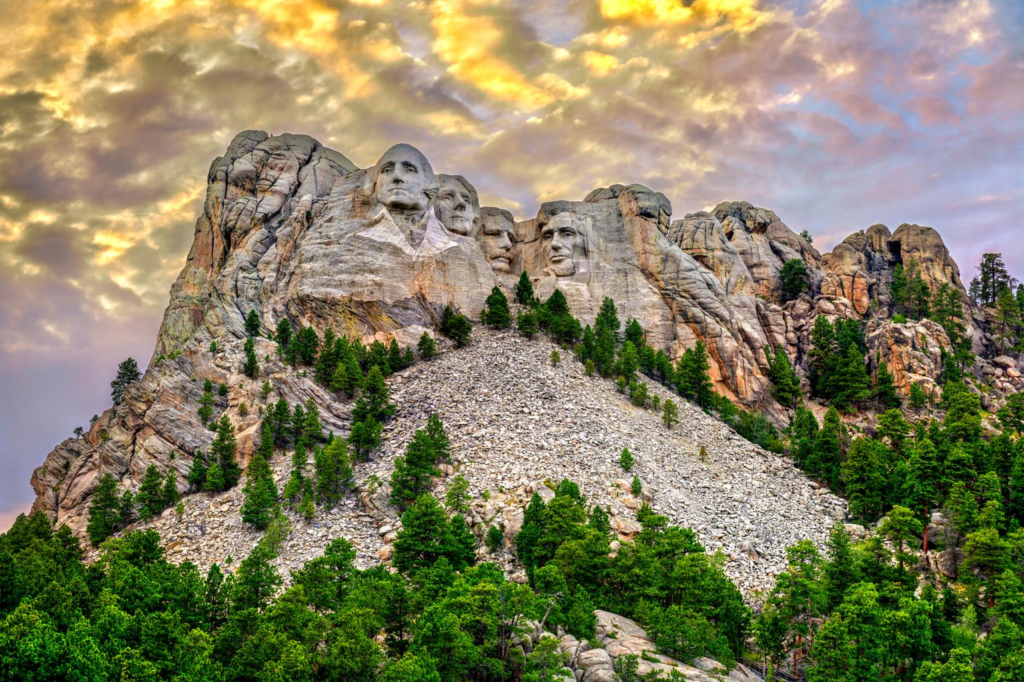
Mount Rushmore National Memorial in South Dakota features the carved faces of four presidents:
- George Washington
- Thomas Jefferson
- Theodore Roosevelt
- Abraham Lincoln
Completed in 1941, the monument was designed to represent the first 150 years of American history.
Each president symbolizes a different chapter:
- Washington — the nation’s founding
- Jefferson — territorial expansion
- Lincoln — preservation of the Union
- Roosevelt — industrial and global influence
However, Mount Rushmore also reflects a more complicated historical context. The monument sits in the Black Hills, land considered sacred by the Lakota Sioux and central to longstanding land disputes.
This dual legacy makes Mount Rushmore an example of how landmarks can carry both national pride and historical complexity. Understanding both perspectives provides a fuller view of American history.
The Alamo: A Turning Point in Texas History
The Alamo in San Antonio, Texas, is remembered primarily for the 1836 Battle of the Alamo, a conflict between Texan defenders and Mexican forces.
Although the Texan forces were defeated, the event became a rallying point during the Texas Revolution. The phrase “Remember the Alamo” inspired continued resistance that eventually led to Texas gaining independence from Mexico later that year.
Originally constructed in the 18th century as a Spanish mission, the Alamo represents several layers of history:
- Spanish colonial expansion
- Conflict between Mexico and Texas settlers
- The development of Texas identity
Today the site attracts more than 2 million visitors annually, demonstrating how historic events continue to shape regional identity generations later.
The Lincoln Memorial: A Monument to Unity
Located on the National Mall in Washington, D.C., the Lincoln Memorial honors President Abraham Lincoln and his role in preserving the United States during the Civil War.
Completed in 1922, the monument quickly became more than a presidential tribute. It evolved into a symbolic location for civil rights activism.
One of the most significant events associated with the site occurred in 1963, when Martin Luther King Jr. delivered the “I Have a Dream” speech during the March on Washington.
The memorial reflects two major historical themes:
- The preservation of the Union during the Civil War
- The ongoing struggle for civil rights and equality
Standing before Lincoln’s seated statue today, visitors often see both histories at once.
How Landmarks Help Americans Connect With History
Landmarks remain powerful educational tools because they place historical events within real physical settings.
Experiencing a landmark in person can reveal details often overlooked in textbooks. For example:
- Geographic context helps explain strategic decisions during battles.
- Architecture reveals technological capabilities of earlier eras.
- Monuments reflect how societies choose to remember their past.
For families, educators, and travelers, visiting historic landmarks can transform abstract historical narratives into tangible experiences.
Many Americans build road trips around these sites, combining travel with learning opportunities for children and students.
Practical Ways to Explore Historic Landmarks in the U.S.
Visiting historical landmarks can be more meaningful with a bit of planning. Consider these strategies when exploring historic sites:
Before your visit
- Read about the site’s historical background
- Look for National Park Service or museum resources
- Understand the broader historical context
During the visit
- Take guided tours when available
- Pay attention to exhibits and interpretive signs
- Ask park rangers or historians questions
Afterward
- Reflect on how the site fits into larger historical events
- Explore related landmarks nearby
- Continue learning through books or documentaries
These simple steps often transform a short visit into a deeper historical experience.
Frequently Asked Questions
What qualifies a landmark as historically significant?
A landmark is typically designated based on its association with important events, people, architectural achievements, or cultural developments. The National Park Service evaluates sites using strict historical criteria.
How many National Historic Landmarks exist in the United States?
There are more than 2,600 officially designated National Historic Landmarks across the country.
Are all famous landmarks managed by the National Park Service?
No. Many are managed by state governments, local municipalities, or private organizations.
Why are landmarks important for education?
They provide physical context for historical events, helping people better understand how history unfolded.
Which landmark is the most visited in the United States?
The Lincoln Memorial consistently ranks among the most visited landmarks, attracting millions of visitors each year.
Are natural landmarks also historically important?
Yes. Sites such as Yellowstone or the Grand Canyon represent environmental history and conservation efforts.
Can landmarks change their historical interpretation over time?
Yes. As historical research evolves, the stories presented at landmarks may expand to include broader perspectives.
How can families make landmark visits more engaging for children?
Interactive museum exhibits, guided tours, and storytelling approaches often help younger visitors stay engaged.
Why do some landmarks become controversial?
Many historic sites reflect complex or difficult aspects of American history, including conflict, inequality, or displacement.
Are there lesser-known landmarks worth visiting?
Yes. Smaller regional landmarks often provide unique insights into local history and culture.
Walking Through America’s Living History
America’s landmarks are more than scenic destinations. They represent moments when the country changed direction—whether through political decisions, cultural shifts, technological achievements, or social movements.
Each monument, building, or historic site quietly holds a piece of the national story. Together, they create a landscape where history is not confined to museums or textbooks but embedded in cities, parks, and communities across the country.
Recognizing these places as living records of the past encourages a deeper appreciation for the events and people that shaped the United States.
Key Insights to Remember
- Landmarks preserve pivotal moments in American history
- Over 2,600 sites are officially recognized as National Historic Landmarks
- Monuments often reflect both national pride and complex historical narratives
- Visiting historic sites can deepen understanding of major events
- Infrastructure landmarks reveal economic and technological progress
- Civil rights history is embedded in many national monuments
- Smaller regional landmarks often hold unique local stories
- Historic preservation ensures future generations can learn from these sites