Summary
Immigrant communities have profoundly shaped American cuisine, turning the United States into one of the world’s most diverse food landscapes. From Italian pasta traditions to Korean barbecue and Mexican street food, generations of newcomers transformed local ingredients into new culinary identities. Understanding these influences reveals how migration, adaptation, and entrepreneurship continually expand America’s evolving flavor trail.
A Nation Built on Shared Tables
The story of American food is inseparable from immigration. Every wave of newcomers has brought ingredients, cooking techniques, and traditions that reshaped how Americans eat. Rather than replacing earlier foodways, these influences layered onto them—creating a constantly evolving national cuisine.
Today, the U.S. is home to cuisines from nearly every corner of the globe. According to the Migration Policy Institute, immigrants make up roughly 14% of the U.S. population, yet their cultural impact on food far exceeds that number. Walk through any American city—large or small—and you’ll see how immigrant-owned restaurants, bakeries, and markets define local flavor.
Food historians often describe American cuisine not as a fixed tradition but as a “culinary crossroads.” The fusion of cultures is why pizza, tacos, bagels, pho, and sushi are now everyday staples in many American households.
Understanding how immigrant traditions expanded America’s flavor trail helps explain why the country’s food culture continues to innovate.
Early Foundations: Immigrant Foodways in the 19th and Early 20th Century
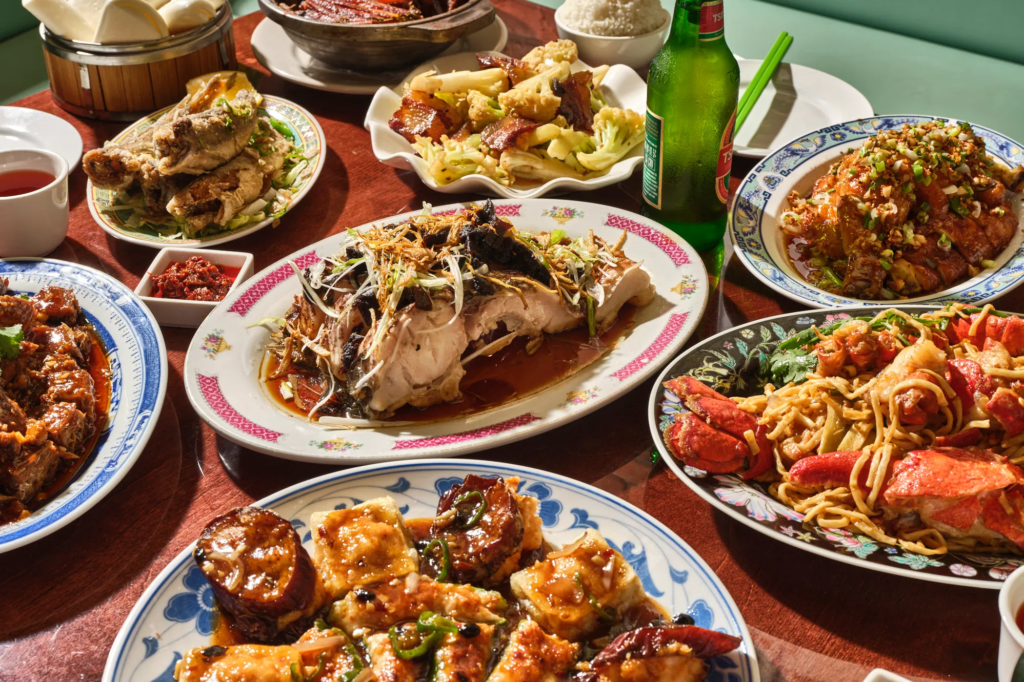
Many foods Americans consider “classic” originated in immigrant kitchens. During the late 1800s and early 1900s, massive migration from Europe introduced culinary traditions that quickly spread beyond ethnic neighborhoods.
Italian immigrants, for example, arrived in large numbers between 1880 and 1920. They brought pasta-making traditions, tomato sauces, and bakery culture. Over time, these foods adapted to American ingredients and tastes.
Pizza is a clear example. In Naples, it was a simple street food. In the U.S., it evolved into regional styles—from New York’s thin crust to Chicago’s deep dish.
Jewish immigrants from Eastern Europe also transformed American dining habits. Delicatessens became neighborhood institutions serving:
- Bagels and smoked fish
- Pastrami sandwiches
- Pickled vegetables
- Matzo ball soup
These foods moved beyond immigrant communities and became widely adopted comfort foods.
Meanwhile, German immigrants contributed brewing traditions and sausage-making methods that shaped American barbecue and beer culture.
By the early 20th century, immigrant foods had already begun redefining what Americans considered everyday cuisine.
How Immigrant Communities Adapted Recipes to America
Immigrant cooking rarely transfers unchanged. New arrivals adapt recipes based on available ingredients, climate, and consumer preferences.
Food historians call this “culinary adaptation.” It’s the process that turns traditional dishes into new regional classics.
For example:
- Italian-American red sauces became richer and more tomato-heavy because tomatoes were abundant in the U.S.
- Chinese-American cuisine developed dishes like General Tso’s chicken to suit American tastes for sweeter sauces
- Tex-Mex cuisine evolved from Mexican traditions mixed with Texas ranch ingredients
These adaptations often lead to dishes that don’t exist in the country of origin but become deeply American.
Chinese restaurants illustrate this evolution. Chinese immigrants began opening restaurants in the mid-1800s during the Gold Rush. To survive economically, they adjusted flavors and ingredients to appeal to broader audiences.
Today, dishes like orange chicken and chop suey represent Chinese-American culinary innovation, not traditional Chinese cuisine.
Regional Flavor Trails Shaped by Immigration
Immigrant traditions didn’t influence America uniformly. Instead, they reshaped regional food cultures in unique ways.
California: A Global Culinary Gateway
California’s agricultural abundance and diverse population make it one of the most dynamic food regions in the world.
Influences include:
- Mexican street food traditions
- Japanese sushi and ramen culture
- Korean barbecue and fermentation techniques
- Vietnamese pho and bánh mì sandwiches
Los Angeles alone contains thousands of immigrant-owned food businesses that contribute to a constantly evolving culinary landscape.
The Northeast: Delis, Bakeries, and Italian Classics
Cities like New York and Boston were shaped heavily by European immigration.
Signature contributions include:
- Italian-American pizza and pasta dishes
- Jewish deli traditions
- Portuguese seafood cooking
- Greek diner culture
Many of these establishments have operated for generations, becoming cultural landmarks.
The Gulf Coast: Caribbean and Vietnamese Influence
In cities like Houston and New Orleans, immigrant cuisines blend with Southern food traditions.
Vietnamese communities along the Gulf Coast have contributed seafood dishes, noodle soups, and vibrant herb-driven cooking styles.
In fact, Houston now hosts one of the largest Vietnamese populations in the U.S., creating a distinctive Vietnamese-Texan food culture.
The Role of Immigrant Entrepreneurs in America’s Restaurant Industry
Immigrants play a major role in the American restaurant economy.
According to the National Restaurant Association:
- About 29% of U.S. restaurant owners are immigrants
- Nearly one-third of restaurant workers are foreign-born
Many immigrant-owned restaurants begin as family businesses. Over time, these establishments introduce unfamiliar cuisines to wider audiences.
Successful examples often follow a similar pattern:
- Start within the immigrant community
- Gain local popularity
- Expand beyond ethnic neighborhoods
- Influence mainstream food culture
Consider how once-niche foods have become national favorites:
- Sushi
- Bubble tea
- Halal street carts
- Korean fried chicken
These trends often start with immigrant entrepreneurs experimenting with traditional techniques in new environments.
Grocery Stores and Markets: Cultural Gateways for Ingredients
Restaurants are only part of the story. Immigrant grocery stores play a major role in expanding the American pantry.
In many cities, international markets now provide ingredients once considered exotic.
Examples include:
- Korean gochujang and fermented soybean paste
- Mexican dried chilies and masa flour
- Indian spices such as garam masala and turmeric
- Middle Eastern tahini and za’atar
Once these ingredients become accessible, home cooks begin experimenting. This is how dishes gradually move from restaurant menus into everyday kitchens.
Food media and cooking shows have accelerated this process by highlighting global ingredients and techniques.
The Rise of Food Trucks and Street Food Traditions
Street food culture in the U.S. owes much to immigrant traditions.
Many immigrant entrepreneurs launch food trucks because startup costs are lower than opening a full restaurant. These mobile kitchens often showcase authentic regional dishes.
Popular examples include:
- Mexican taco trucks
- Salvadoran pupusa stands
- Filipino barbecue trucks
- Mediterranean shawarma carts
Cities like Los Angeles, Austin, and Portland have thriving food truck scenes where immigrant cuisines dominate.
Street food also encourages culinary experimentation. Chefs frequently blend traditional recipes with local flavors—creating fusion dishes that reflect modern American food culture.
Second-Generation Chefs and Culinary Innovation
Second-generation immigrants are now redefining how heritage cuisine appears in American restaurants.
Unlike their parents, many grew up navigating two cultures simultaneously. Their cooking often blends traditional techniques with modern culinary training.
Examples include:
- Korean tacos combining Korean barbecue with Mexican street food
- Modern Indian restaurants highlighting regional Indian dishes rarely seen abroad
- Filipino fine dining reinterpreting traditional comfort foods
These chefs often explore identity through food, using restaurants to tell cultural stories while pushing culinary boundaries.
The result is a new generation of restaurants that feel both deeply traditional and unmistakably American.
Why America’s Flavor Trail Keeps Expanding
Immigration continues to reshape American cuisine. Every decade introduces new ingredients, techniques, and culinary perspectives.
Several factors keep the process evolving:
- Increased global travel
- International media and food programming
- Growing curiosity about global cuisine
- Easier access to international ingredients
As communities settle and grow, their food traditions gradually become part of the broader cultural landscape.
This process isn’t simply about adding new dishes. It’s about how cultures interact, adapt, and reinterpret flavors over time.
The American food story is still being written—one immigrant kitchen at a time.
Frequently Asked Questions
How did immigration influence American cuisine?
Immigration introduced new ingredients, cooking techniques, and food traditions that gradually blended into regional American cuisines.
What are examples of immigrant foods that became American staples?
Pizza, bagels, tacos, sushi, and ramen all began as immigrant foods before becoming mainstream in the U.S.
Why do immigrant recipes often change in America?
Ingredients, local tastes, and economic conditions encourage cooks to adapt traditional recipes to their new environment.
Which immigrant group influenced American food the most?
No single group dominates; waves of immigrants—from European to Asian and Latin American communities—have shaped different regions.
Why are many restaurant owners immigrants?
Restaurants often provide an accessible entry point for entrepreneurship, allowing families to build businesses around cultural food traditions.
What role do international grocery stores play?
They introduce ingredients that allow both immigrant families and American home cooks to explore global cuisines.
How do second-generation chefs influence food culture?
They blend heritage cooking with modern techniques, creating innovative dishes that reinterpret traditional cuisine.
Why are food trucks often run by immigrants?
Food trucks require lower startup costs than traditional restaurants, making them accessible for new entrepreneurs.
How do regional American cuisines reflect immigration?
Different cities absorbed influences from the immigrant communities that settled there, creating distinctive regional food identities.
Will immigrant influence on American food continue?
Yes. As immigration and global cultural exchange continue, American cuisine will keep evolving.
America’s Culinary Map Is Still Being Drawn
The expansion of America’s flavor trail reflects the country’s broader story—movement, adaptation, and shared cultural exchange. Immigrant traditions didn’t simply add dishes to American menus; they reshaped how Americans cook, eat, and think about food.
From neighborhood bakeries to global food halls, these traditions continue to evolve. Every new community brings flavors that eventually find a place at the national table.
Key Flavor Trail Highlights
- American cuisine is largely shaped by immigrant culinary traditions
- Regional food identities often reflect local immigrant populations
- Many iconic American dishes began as adaptations of immigrant recipes
- Immigrant entrepreneurs drive innovation in restaurants and food trucks
- International grocery stores help introduce new ingredients to home cooks
- Second-generation chefs are redefining heritage cuisine
- Cultural exchange continues expanding America’s food landscape