
Summary
America’s most recognizable landmarks are more than travel destinations—they are places where defining moments in U.S. history unfolded. From independence movements and civil rights milestones to technological achievements and national memorials, these sites help explain how the country evolved. Understanding the history behind them adds meaning to every visit and reveals why certain places became lasting national symbols.
Why Historic Landmarks Matter in American Culture
Across the United States, landmarks serve as physical reminders of pivotal events that shaped the nation. These locations preserve the memory of decisions, conflicts, and cultural shifts that influenced American society. For many Americans, visiting such places provides context that textbooks alone cannot fully convey.
The U.S. government formally recognizes thousands of historically important sites through the National Historic Landmark Program, administered by the National Park Service. As of 2024, more than 2,600 locations hold National Historic Landmark status, representing events ranging from the founding of the republic to modern social movements.
Many of the best-known landmarks gained significance not only through architecture or natural beauty, but through defining historical moments. Understanding those events helps explain why millions of people continue to visit them every year.

The Statue of Liberty: A Symbol of Immigration and Freedom
Few American landmarks carry as much symbolic meaning as the Statue of Liberty in New York Harbor.
The statue was dedicated in 1886 as a gift from France celebrating the ideals of liberty and democracy. However, its historic importance expanded dramatically during the late 19th and early 20th centuries when millions of immigrants passed through nearby Ellis Island.
Between 1892 and 1954, more than 12 million immigrants entered the United States through Ellis Island, often seeing the statue as their first glimpse of the country.
The landmark’s deeper meaning was cemented in 1903, when Emma Lazarus’s poem “The New Colossus”—with the famous line “Give me your tired, your poor”—was added to the pedestal. The poem reframed the monument as a welcoming symbol of immigration and opportunity.
Today, the statue remains one of the most visited landmarks in the United States and a central icon of American ideals.
Independence Hall: Where the United States Was Born
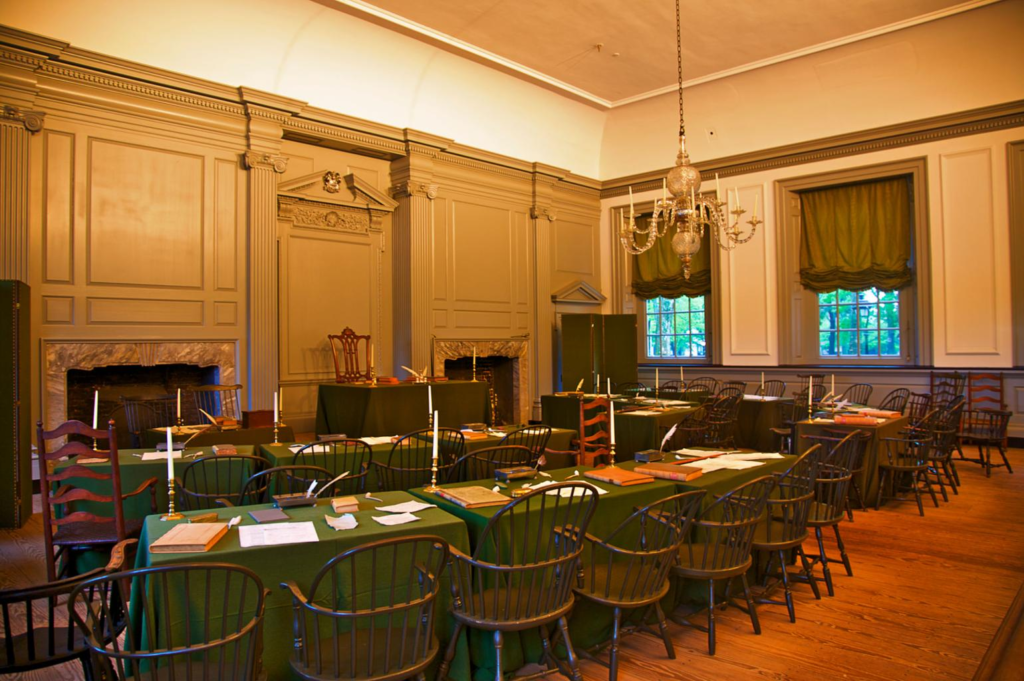
Located in Philadelphia, Independence Hall is the site where two foundational documents of American democracy were debated and adopted.
Two major historical moments define the landmark:
- July 4, 1776: Delegates approved the Declaration of Independence.
- 1787: Delegates drafted and signed the United States Constitutional Convention.
The building served as Pennsylvania’s colonial state house, but its role in shaping the new republic transformed it into one of the most important historic sites in the country.
Today it is part of Independence National Historical Park and recognized as a UNESCO World Heritage Site. Visitors can walk through the Assembly Room where delegates debated issues like representation, federal power, and the balance between states and the national government.
Gettysburg Battlefield: Turning Point of the Civil War
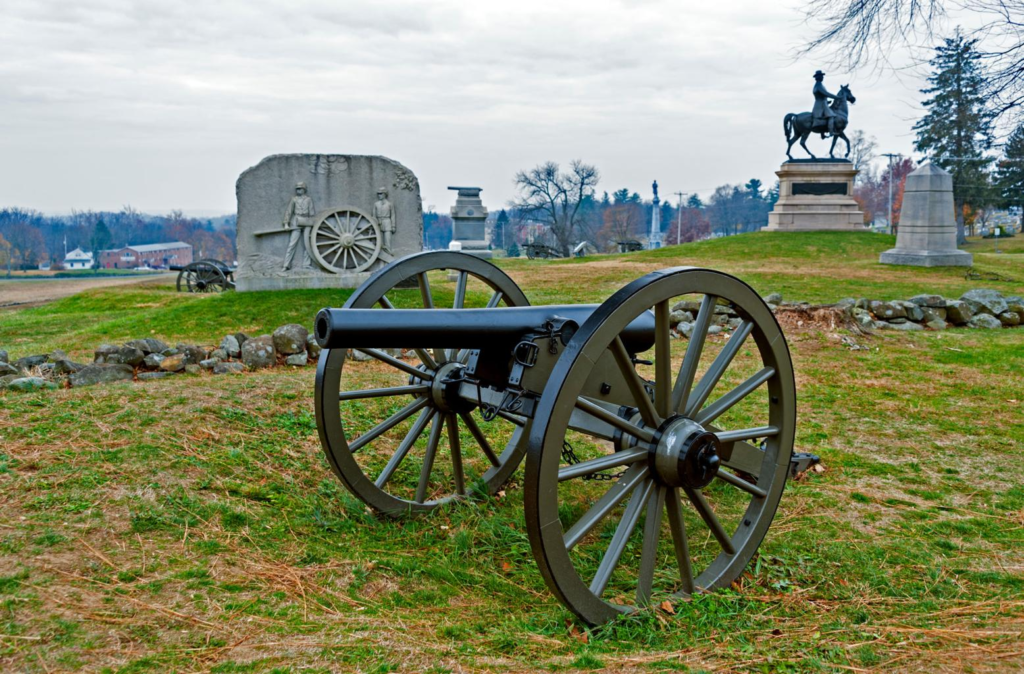
The Gettysburg National Military Park preserves the site of the Battle of Gettysburg, one of the most consequential conflicts in American history.
The battle occurred from July 1–3, 1863, during the American Civil War. Union forces defeated Confederate troops in what historians widely consider the turning point of the war.
Later that year, Abraham Lincoln delivered the Gettysburg Address at the dedication of the Soldiers’ National Cemetery. Though only about two minutes long, the speech redefined the war as a struggle to preserve democracy and equality.
Today the battlefield contains more than 1,300 monuments and markers, offering insight into the strategies, sacrifices, and human stories of the conflict.
The Lincoln Memorial: A Stage for the Civil Rights Movement
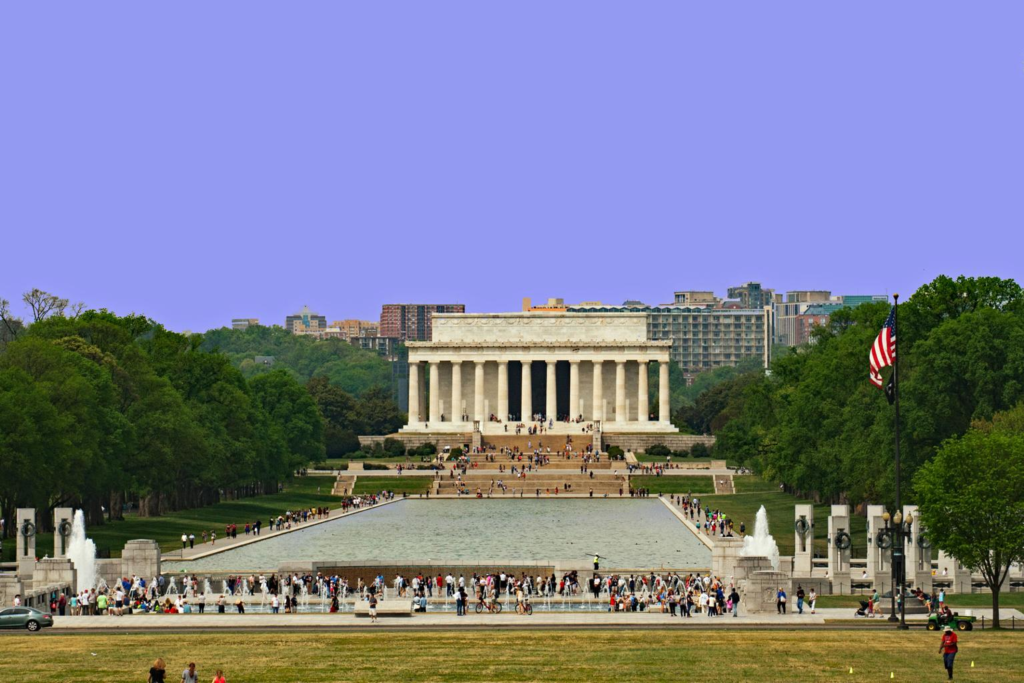
The Lincoln Memorial honors President Abraham Lincoln, but its significance expanded dramatically during the 20th century.
On August 28, 1963, the memorial became the stage for one of the most influential events in civil rights history—the March on Washington for Jobs and Freedom.
During the march, Martin Luther King Jr. delivered his famous “I Have a Dream” speech from the memorial steps.
The event drew more than 250,000 people, making it one of the largest demonstrations in U.S. history at the time. The speech helped galvanize support for the Civil Rights Act of 1964.
The Lincoln Memorial remains a gathering place for civic events, protests, and national commemorations.
The Golden Gate Bridge: Engineering and West Coast Identity
Completed in 1937, the Golden Gate Bridge was once the longest suspension bridge in the world.
Its construction during the Great Depression symbolized economic resilience and technological ambition. Designed by engineer Joseph Strauss and architect Irving Morrow, the bridge connected San Francisco with Marin County, dramatically improving transportation across the bay.
Key historical significance includes:
- A major infrastructure project during the Great Depression
- A defining symbol of California’s global identity
- One of the most photographed bridges in the world
Today, more than 10 million visitors walk or cycle across the bridge each year.
Mount Rushmore: Monument to Presidential Legacy
Located in South Dakota’s Black Hills, the Mount Rushmore National Memorial features 60-foot sculptures of four presidents:
- George Washington
- Thomas Jefferson
- Theodore Roosevelt
- Abraham Lincoln
Construction lasted from 1927 to 1941, led by sculptor Gutzon Borglum.
Each president was chosen to represent a phase of national development:
- Washington – founding of the nation
- Jefferson – territorial expansion
- Roosevelt – industrial growth
- Lincoln – preservation of the Union
The monument continues to attract roughly two million visitors annually.
The Alamo: A Symbol of Texas Independence
The The Alamo became famous during the Battle of the Alamo.
In February and March of 1836, a small group of Texian defenders held the mission against Mexican forces led by General Antonio López de Santa Anna. Though the defenders were ultimately defeated, the event became a rallying cry for Texas independence.
Just weeks later, Texian forces won the decisive Battle of San Jacinto, leading to the creation of the Republic of Texas.
Today the Alamo stands as one of the most visited historic sites in Texas and an enduring symbol of resilience.
Why Visiting Historic Landmarks Still Matters Today
Historic landmarks serve an important educational role, offering context for major events in American history. Many visitors report that seeing these places firsthand helps them better understand the complexity of the nation’s past.
Landmarks also contribute significantly to tourism and local economies. According to the National Park Service, national parks and historic sites collectively attract hundreds of millions of visitors each year, generating billions in economic activity for surrounding communities.
Beyond tourism, these sites continue to host civic gatherings, educational programs, and commemorations that keep historical memory alive.
Frequently Asked Questions
What is considered a U.S. landmark?
A landmark is a site recognized for historical, cultural, architectural, or natural significance. Many are officially designated as National Historic Landmarks by the National Park Service.
How many national historic landmarks exist in the United States?
There are more than 2,600 National Historic Landmarks, representing places tied to major events, influential people, or important cultural developments.
Why is the Statue of Liberty historically important?
The Statue of Liberty symbolizes freedom and became a powerful emblem of immigration during the late 19th and early 20th centuries when millions entered the country through Ellis Island.
What happened at Independence Hall?
Independence Hall is where the Declaration of Independence was adopted in 1776 and the U.S. Constitution was drafted in 1787.
Why is Gettysburg considered a turning point in the Civil War?
The Union victory at Gettysburg halted the Confederate invasion of the North and shifted the momentum of the Civil War.
Why is the Lincoln Memorial important to civil rights history?
It was the location of the 1963 March on Washington where Martin Luther King Jr. delivered his “I Have a Dream” speech.
When was the Golden Gate Bridge built?
Construction began in 1933 and was completed in 1937 during the Great Depression.
Why were those four presidents chosen for Mount Rushmore?
They represent key phases of American history: founding, expansion, development, and preservation of the nation.
What happened at the Alamo?
Texian defenders fought Mexican forces in 1836 during the Texas Revolution, becoming a symbol of resistance and independence.
Why do Americans continue visiting historic landmarks?
They provide educational value, preserve national memory, and offer meaningful connections to important events in the country’s past.
Where History Still Stands in Stone
America’s most famous landmarks endure not just because of their architecture or location, but because of the moments that happened there. These places represent turning points—debates about independence, struggles for equality, battles that reshaped the nation, and achievements that demonstrated innovation.
Visiting them allows people to experience history in a tangible way. Standing in the same locations where influential decisions or movements unfolded offers a perspective that written history alone rarely provides.
As new generations explore these landmarks, they help ensure that the stories behind them remain part of the nation’s shared memory.
Key Insights at a Glance
- Many famous U.S. landmarks gained significance through historic events, not just design or location.
- Independence Hall marks the creation of the Declaration of Independence and Constitution.
- Gettysburg represents the turning point of the Civil War.
- The Lincoln Memorial became central to the civil rights movement.
- The Statue of Liberty symbolizes immigration and democratic ideals.
- Infrastructure achievements like the Golden Gate Bridge reflect American engineering progress.
- Landmarks continue to support education, tourism, and civic engagement.