

Summary
America’s most famous landmarks are more than scenic destinations—they are physical reminders of the country’s history, innovation, and cultural evolution. From monuments built to honor national ideals to natural wonders preserved for future generations, these sites reveal how historical events, geography, and civic values shaped the United States and continue to influence how Americans experience their past today.
Why Landmarks Matter in the American Story
Across the United States, landmarks function as visible anchors of national memory. Some commemorate defining moments in American history, while others showcase natural landscapes that helped shape cultural identity. Together, they create a network of places where history, architecture, geography, and public life intersect.
The U.S. National Park Service manages more than 420 national parks, monuments, historic sites, and preserved landscapes, protecting many of the country’s most significant landmarks. These locations attract hundreds of millions of visitors each year, reflecting the enduring role of landmarks in education, tourism, and civic identity.
Landmarks often reveal the values of the era in which they were created. Memorials reflect political ideals, historic buildings illustrate architectural progress, and preserved landscapes highlight America’s long tradition of conservation. Visiting these places offers more than sightseeing—it provides context for understanding how the nation developed.
The Statue of Liberty: A Global Symbol of Freedom
Standing in New York Harbor since 1886, the Statue of Liberty remains one of the most recognizable symbols of the United States. A gift from France marking the centennial of American independence, the statue represented democratic ideals and international friendship.
For millions of immigrants arriving through nearby Ellis Island in the late 19th and early 20th centuries, Lady Liberty was the first view of America. The monument became deeply associated with immigration, opportunity, and the promise of a new life.
Key historical context:
- Designed by French sculptor Frédéric Auguste Bartholdi
- Internal framework engineered by Gustave Eiffel
- Dedicated in 1886
- Added to the UNESCO World Heritage list in 1984
Today, the Statue of Liberty continues to symbolize both American independence and the country’s long history as a destination for immigrants.
The National Mall: Where History and Democracy Meet
The National Mall in Washington, D.C. functions as the symbolic center of American civic life. Stretching roughly two miles from the Capitol to the Lincoln Memorial, the Mall hosts many of the country’s most important monuments and museums.
Throughout history, it has served as the stage for major national moments. The 1963 March on Washington, where Martin Luther King Jr. delivered his “I Have a Dream” speech, remains one of the most influential civil rights events in American history.
Major landmarks located along the National Mall include:
- Lincoln Memorial
- Washington Monument
- World War II Memorial
- Vietnam Veterans Memorial
- Smithsonian museums
These sites collectively reflect key chapters of American political and social history.
Mount Rushmore: Presidential Legacy in Stone
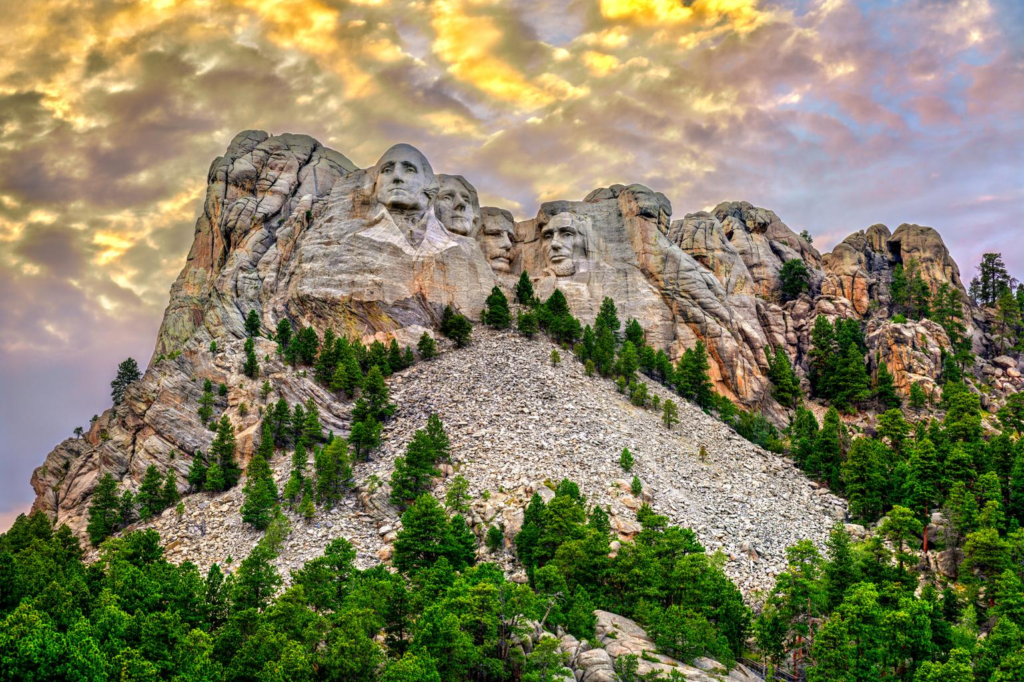
Carved into the Black Hills of South Dakota, Mount Rushmore National Memorial features the 60-foot faces of four U.S. presidents: George Washington, Thomas Jefferson, Theodore Roosevelt, and Abraham Lincoln.
Construction began in 1927 and continued for fourteen years under sculptor Gutzon Borglum. The monument was intended to represent pivotal periods in American development:
- George Washington – founding of the nation
- Thomas Jefferson – expansion through the Louisiana Purchase
- Theodore Roosevelt – industrial growth and conservation
- Abraham Lincoln – preservation of the Union
Mount Rushmore attracts more than 2 million visitors annually, but it also represents complex historical conversations. The Black Hills are sacred to the Lakota Sioux, and the monument remains part of ongoing discussions about land rights and cultural representation.
The Golden Gate Bridge: Engineering Meets Landscape
When the Golden Gate Bridge opened in 1937, it was the longest suspension bridge in the world. Stretching across the entrance to San Francisco Bay, the structure quickly became an icon of American engineering.
Its distinctive “International Orange” color was chosen both for visibility in fog and aesthetic harmony with the surrounding coastline.
Beyond its design, the bridge reflects a period of major infrastructure development during the Great Depression. Large public projects like the Golden Gate Bridge demonstrated how engineering innovation could transform transportation and regional economies.
Today, it carries approximately 100,000 vehicles daily while remaining one of the most photographed structures in the United States.
Yellowstone National Park: America’s Conservation Legacy
Established in 1872, Yellowstone became the world’s first national park. The decision to preserve its geothermal features, wildlife habitats, and dramatic landscapes marked a turning point in environmental policy.
Yellowstone’s creation introduced the concept that certain natural areas should be protected not for resource extraction, but for public enjoyment and long-term conservation.
Highlights of Yellowstone include:
- Old Faithful geyser
- Vast bison herds
- One of the world’s largest active volcanic systems
- Over 2 million acres of protected wilderness
The park receives over 4 million visitors annually, illustrating how natural landmarks can shape environmental awareness and tourism simultaneously.
Independence Hall: Where the Nation Was Born
In Philadelphia, Independence Hall stands as one of the most historically important buildings in the United States. It was here that the Declaration of Independence (1776) and the U.S. Constitution (1787) were debated and adopted.
Originally built as the Pennsylvania State House in the 18th century, the building became the setting for political discussions that defined the structure of American government.
Today, Independence Hall forms part of Independence National Historical Park and is recognized as a UNESCO World Heritage Site. Visitors can walk through the same assembly room where early leaders debated issues such as representation, federal authority, and civil liberties.
The Grand Canyon: Geological History on a Monumental Scale
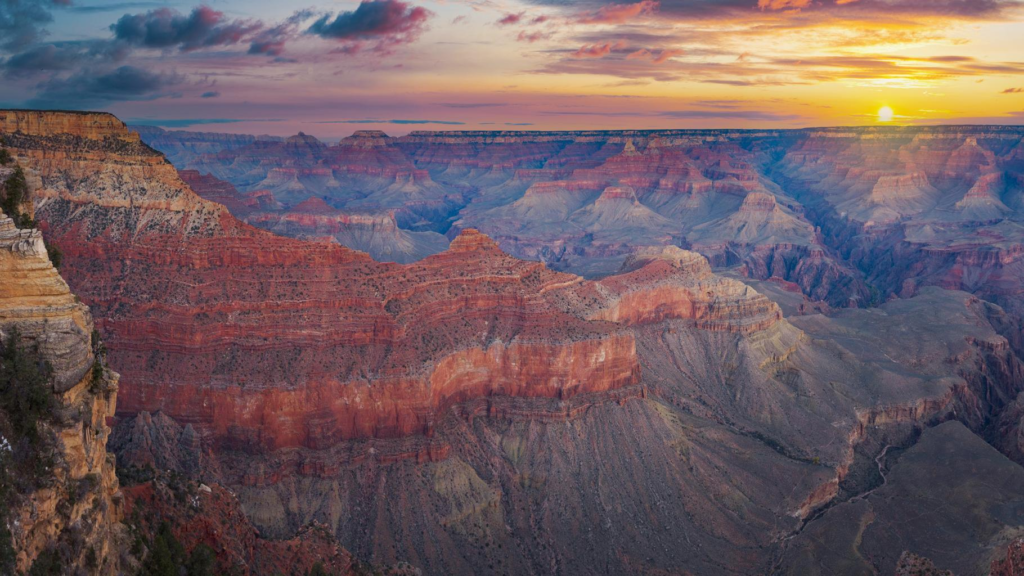
Few natural landmarks illustrate Earth’s geological history as dramatically as the Grand Canyon in Arizona. Carved by the Colorado River over millions of years, the canyon stretches 277 miles long and reaches depths exceeding one mile.
The Grand Canyon became a national park in 1919, though efforts to protect it began decades earlier through national monument designations.
What makes the canyon historically significant is not only its scale but its role in shaping early conservation policy. President Theodore Roosevelt strongly advocated for protecting the canyon, stating that it should be preserved for future generations.
Today it remains one of the most visited natural landmarks in North America.

Alcatraz Island: A Prison That Became a Cultural Landmark
Located in San Francisco Bay, Alcatraz Island is known primarily for its former federal prison, which operated from 1934 to 1963. The facility housed notorious inmates such as Al Capone and gained a reputation for being escape-proof.
However, Alcatraz has a broader historical narrative.
In 1969, Native American activists occupied the island for nearly two years, bringing national attention to Indigenous rights and treaty issues. The protest became a significant moment in the modern Native American civil rights movement.
Today, Alcatraz operates as part of the Golden Gate National Recreation Area and serves as both a historic site and museum.
How Landmarks Continue to Shape American Identity
Landmarks remain influential not only because of their history but also because they continue to shape public memory and cultural identity. Schools organize educational trips to historic sites, families visit national parks during vacations, and civic ceremonies often take place near monuments.
These locations serve several lasting roles:
- Historical education – connecting visitors with past events
- Tourism and economic impact – generating billions in travel revenue
- Cultural symbolism – reinforcing shared national values
- Environmental preservation – protecting landscapes and ecosystems
As the United States evolves, its landmarks continue to reflect changing perspectives about history, heritage, and national identity.
Frequently Asked Questions
What qualifies a site as a landmark in the United States?
A landmark is typically a place recognized for historical, cultural, architectural, or natural significance. Designations may come from the National Park Service, UNESCO, or state and local preservation authorities.
How many national landmarks exist in the United States?
There are more than 2,600 National Historic Landmarks, alongside hundreds of national parks, monuments, and historic sites.
Why are national landmarks protected?
Protection ensures historically important locations are preserved for education, research, and public access rather than being lost to development.
Which U.S. landmark receives the most visitors?
The Great Smoky Mountains National Park consistently ranks as the most visited national park in the United States.
Are natural landmarks as historically important as monuments?
Yes. Natural landmarks like Yellowstone and the Grand Canyon influenced environmental policy and conservation movements in American history.
Who manages most national landmarks?
Many are managed by the National Park Service, though others may be overseen by state agencies or private foundations.
Can landmarks lose protected status?
In rare cases, a site may lose designation if significant historical features are destroyed or altered beyond recognition.
Are U.S. landmarks important for tourism?
Yes. Historic sites and national parks contribute tens of billions of dollars annually to the U.S. travel economy.
Why are some landmarks controversial?
Certain landmarks intersect with complex histories involving land ownership, colonial expansion, or cultural representation.
How can visitors explore landmarks responsibly?
Following park guidelines, respecting historic structures, and supporting preservation efforts help ensure these sites remain accessible for future generations.
Preserving the Stories Behind America’s Landmarks
Landmarks endure because generations of Americans have chosen to preserve them. Whether carved into mountains, built as monuments, or protected as wilderness, these destinations provide physical connections to the nation’s past.
By visiting them thoughtfully, supporting conservation efforts, and understanding the histories they represent, travelers help ensure that these places continue to educate and inspire future generations.
Key Insights at a Glance
- Landmarks provide tangible connections to American history and identity
- Sites like the Statue of Liberty and Independence Hall represent foundational political ideals
- Natural landmarks such as Yellowstone and the Grand Canyon shaped conservation policy
- Many landmarks attract millions of visitors annually and support regional economies
- Preserving historic sites helps maintain cultural memory and public education