

Summary
America’s landmarks tell a story far beyond architecture or geography. From historic monuments and civic buildings to natural wonders and cultural districts, these sites reflect the nation’s evolving identity. This guide explores how major landmarks embody America’s cultural legacy, why they matter today, and how visitors can experience them with deeper historical understanding.
Why Landmarks Matter in Understanding American Culture
Landmarks serve as physical reminders of the events, ideas, and people that shaped the United States. They are not simply tourist attractions. Many are preserved because they represent defining moments in American history, cultural shifts, or achievements in engineering and architecture.
Across the country, these locations offer insight into the nation’s complex development—from early colonial settlements to civil rights movements and modern urban identity. According to the U.S. National Park Service, more than 95,000 sites are listed on the National Register of Historic Places, reflecting the broad diversity of places considered culturally significant.
Landmarks help Americans and visitors alike connect with the country’s past in tangible ways. Standing at a site where historical events unfolded often creates a deeper understanding than reading about them in a textbook.
These locations also support local economies and community identity. Cultural tourism contributes billions annually to the U.S. travel sector, and historic sites frequently anchor revitalization efforts in cities and small towns.
The Different Types of Landmarks That Shape America’s Identity
America’s cultural legacy is reflected through several types of landmarks. Each category contributes to understanding the nation’s story from a different perspective.
Historic and Political Landmarks
Historic monuments and government buildings reflect the ideals and struggles that shaped American democracy.
Examples include:
- The Statue of Liberty in New York Harbor, symbolizing immigration and freedom
- The Lincoln Memorial in Washington, D.C., connected to the legacy of the Civil War and civil rights
- Independence Hall in Philadelphia, where the Declaration of Independence and U.S. Constitution were debated and adopted
These sites serve as reminders of foundational principles such as liberty, representation, and civic responsibility.
Architectural Landmarks
Architecture often reflects the cultural priorities of its era. From neoclassical government buildings to modern skyscrapers, American architecture tells a story about technological progress and aesthetic evolution.
Notable examples include:
- The Empire State Building, an icon of 20th-century engineering
- The Golden Gate Bridge, representing innovation in infrastructure
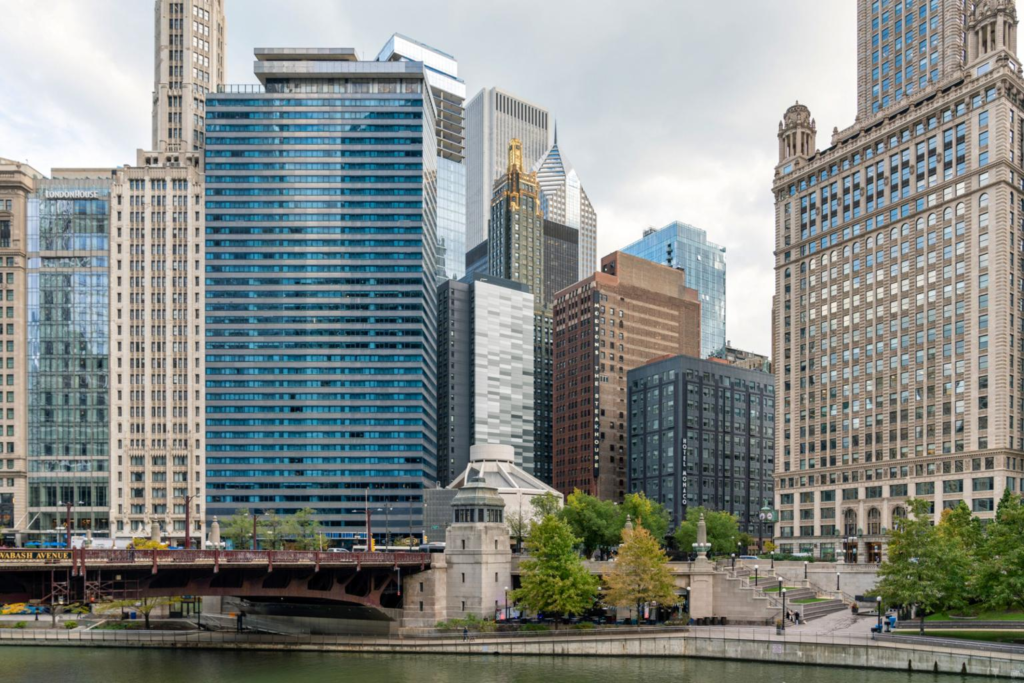
- Chicago’s historic skyline, shaped by pioneers of modern skyscraper design
Architecture can reveal how cities grew, how industries expanded, and how design trends evolved over time.

Cultural and Community Landmarks
Some landmarks reflect cultural movements or communities that shaped American society.
Examples include:
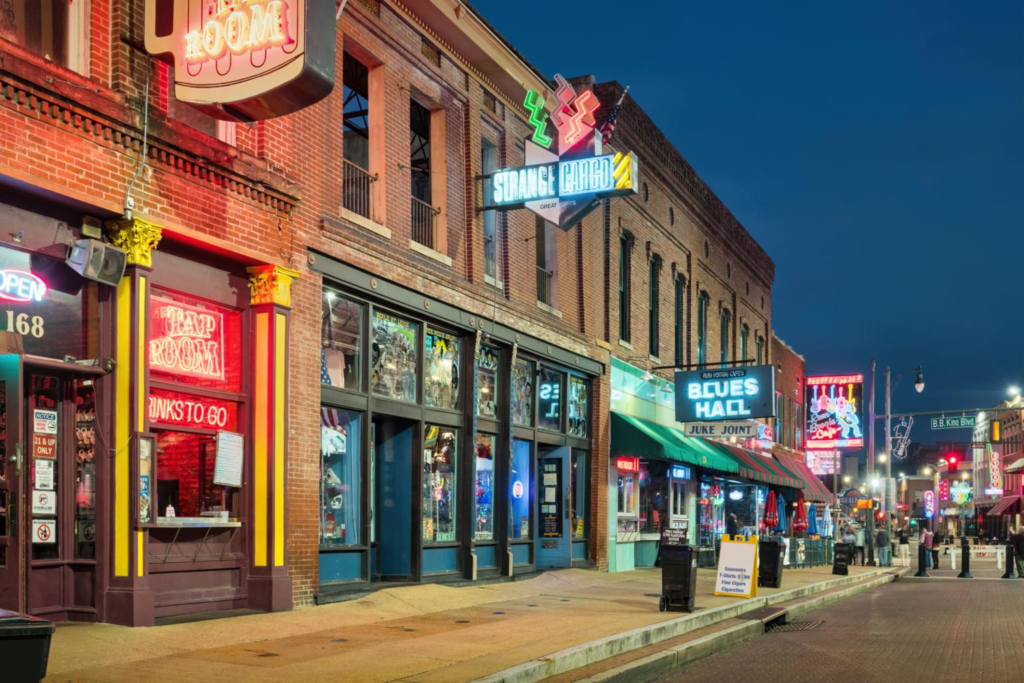
- Beale Street in Memphis, associated with blues music
- Harlem in New York City, a center of the Harlem Renaissance
- Chinatown districts in cities like San Francisco and Los Angeles
These locations represent the influence of diverse cultural groups in shaping American identity.
Natural Landmarks
America’s cultural legacy also includes landscapes that shaped national identity.
Sites such as:
- Grand Canyon National Park
- Yellowstone National Park
- Yosemite Valley
These natural wonders helped establish the U.S. conservation movement and inspired the creation of the national park system in the late 19th century.
How Historic Landmarks Reflect America’s Values
Many American landmarks symbolize values that continue to shape national conversations.
Freedom and Democracy
Sites connected to the founding of the United States often highlight the development of democratic ideals.
Places like Philadelphia’s historic district illustrate how early leaders debated governance and representation. These discussions led to the creation of political systems that still influence modern government.
Civil Rights and Social Change
Landmarks tied to civil rights movements offer insight into the nation’s ongoing pursuit of equality.
Examples include:
- The Edmund Pettus Bridge in Selma, Alabama
- The National Civil Rights Museum in Memphis
- The Martin Luther King Jr. Memorial in Washington, D.C.
These locations help visitors understand both the challenges and achievements of social justice movements.
Immigration and Cultural Exchange
America’s identity has long been shaped by immigration. Landmarks connected to immigration highlight how diverse cultures contributed to the nation’s development.
Ellis Island, for example, processed more than 12 million immigrants between 1892 and 1954, according to the National Park Service. For many families, it represents the beginning of their American story.
Experiencing America’s Cultural Landmarks as a Visitor
Travelers often approach famous landmarks as quick sightseeing stops. However, experiencing them more thoughtfully can significantly deepen understanding.
Strategies for Meaningful Visits
Visitors who want to learn more from these sites can benefit from a few practical approaches:
- Use ranger-led tours or guided programs when available
- Read historical context beforehand to understand the site’s significance
- Visit museums connected to the landmark for deeper interpretation
- Explore surrounding neighborhoods that developed around the site
For example, visiting the Lincoln Memorial becomes more meaningful when paired with a walk along the National Mall, where numerous historic demonstrations—including the 1963 March on Washington—took place.
Planning Around Peak Tourism
Major landmarks can attract millions of visitors annually. Planning strategically can make the experience more enjoyable.
Helpful planning tips include:
- Visiting early in the morning or late afternoon
- Traveling during shoulder seasons such as spring or fall
- Reserving timed-entry tickets where required
- Combining major landmarks with lesser-known nearby sites
This approach allows travelers to better appreciate the cultural context surrounding a landmark rather than focusing solely on the monument itself.
Preserving Landmarks for Future Generations
Historic preservation plays a critical role in protecting cultural landmarks. Without preservation efforts, many sites connected to important historical events would disappear.
Preservation work often involves collaboration between federal agencies, local governments, nonprofit organizations, and community groups.
Key organizations involved include:
- The National Park Service
- The National Trust for Historic Preservation
- State and local historical societies
Preservation efforts include restoring historic structures, protecting surrounding landscapes, and documenting cultural history through archives and museums.
These initiatives ensure that future generations can continue to learn from these physical connections to the past.
Frequently Asked Questions About American Landmarks
1. What qualifies a site as a national landmark?
A National Historic Landmark is designated by the U.S. government because it possesses exceptional historical significance related to American heritage.
2. How many historic landmarks exist in the United States?
More than 2,600 sites are designated as National Historic Landmarks, while tens of thousands of additional sites are listed on the National Register of Historic Places.
3. Why are natural sites considered cultural landmarks?
Natural landscapes shaped national identity and inspired conservation movements, making them important parts of American heritage.
4. Which U.S. landmark receives the most visitors?
The National Mall in Washington, D.C. attracts tens of millions of visitors annually, making it one of the most visited landmark areas in the country.
5. Are historic landmarks always government-owned?
No. Some are privately owned, while others are managed by nonprofit organizations or local governments.
6. How can visitors learn more during a landmark visit?
Guided tours, visitor centers, interpretive signage, and historical exhibits often provide valuable context.
7. Why are some landmarks controversial?
Some landmarks represent complicated historical periods. Public debate often arises around how history should be remembered or interpreted.
8. How are historic landmarks protected?
Federal and state preservation laws help protect many landmarks, and funding often supports restoration and conservation efforts.
9. Can new landmarks still be designated?
Yes. Sites can receive landmark designation when historians determine they hold significant cultural, architectural, or historical importance.
10. What is the best way to explore multiple landmarks in one trip?
Many cities offer historic districts where several important landmarks are located within walking distance.
Walking Through the Living Story of America
America’s landmarks function as a living record of the nation’s cultural development. They illustrate how ideas about freedom, innovation, diversity, and conservation evolved over time.
Whether standing beneath the Statue of Liberty, exploring the halls of Independence Hall, or overlooking the vast landscape of the Grand Canyon, visitors experience more than scenery or architecture. They encounter the physical spaces where history unfolded.
These landmarks remain relevant not because they are old, but because they continue to inspire conversations about the nation’s identity and future.
Key Insights From America’s Cultural Landmarks
- Landmarks provide physical connections to pivotal historical events
- Architectural sites reflect technological progress and design evolution
- Cultural districts highlight the influence of diverse communities
- Natural landmarks played a major role in shaping national identity
- Preservation ensures future generations can engage with these sites