
Summary
Regional American dishes often reflect far more than taste—they reveal geography, migration, agriculture, and local identity. From Louisiana gumbo to New England clam chowder, these foods trace a “flavor trail” across the country. Exploring regional cuisine helps explain how communities developed, what ingredients thrive locally, and why certain dishes remain cultural symbols generations later.
Understanding the Flavor Trail
Every place has a culinary fingerprint. In the United States, that fingerprint often takes the form of regional dishes shaped by climate, migration, agriculture, and history. Food historians sometimes refer to this pattern as a “flavor trail”—a way to follow local stories through ingredients and cooking traditions.
Across the country, iconic dishes developed because people cooked with what they had nearby. Coastal towns leaned on seafood. Farming regions emphasized grains and livestock. Immigrant communities introduced techniques and flavors that blended with existing traditions.
For readers interested in food culture, the flavor trail offers something deeper than restaurant recommendations. It reveals how communities adapt to their environment and preserve heritage through everyday meals.
According to the Smithsonian Magazine’s coverage of American foodways, regional dishes often persist for centuries because they connect families to shared cultural memory. Recipes become a form of storytelling passed through kitchens rather than textbooks.
Understanding these culinary patterns makes traveling—and even cooking at home—more meaningful.
Why Regional Dishes Matter More Than Ever
Regional cuisine once developed naturally through isolation and local agriculture. Today, nationwide grocery chains and fast-food restaurants make food more standardized. Yet regional dishes remain strong cultural markers.
Americans continue to value local food traditions for several reasons.
• Identity and pride – Communities celebrate dishes that represent local history
• Agricultural connection – Many dishes depend on ingredients that grow best locally
• Tourism appeal – Food tourism has become a major driver of travel
• Cultural preservation – Recipes help maintain immigrant and regional traditions
A 2023 report from the U.S. Travel Association noted that over 60% of leisure travelers in the U.S. seek out local food experiences when visiting new destinations.
Regional dishes are no longer just everyday meals—they are part of a region’s brand.
How Geography Shapes What Ends Up on the Plate
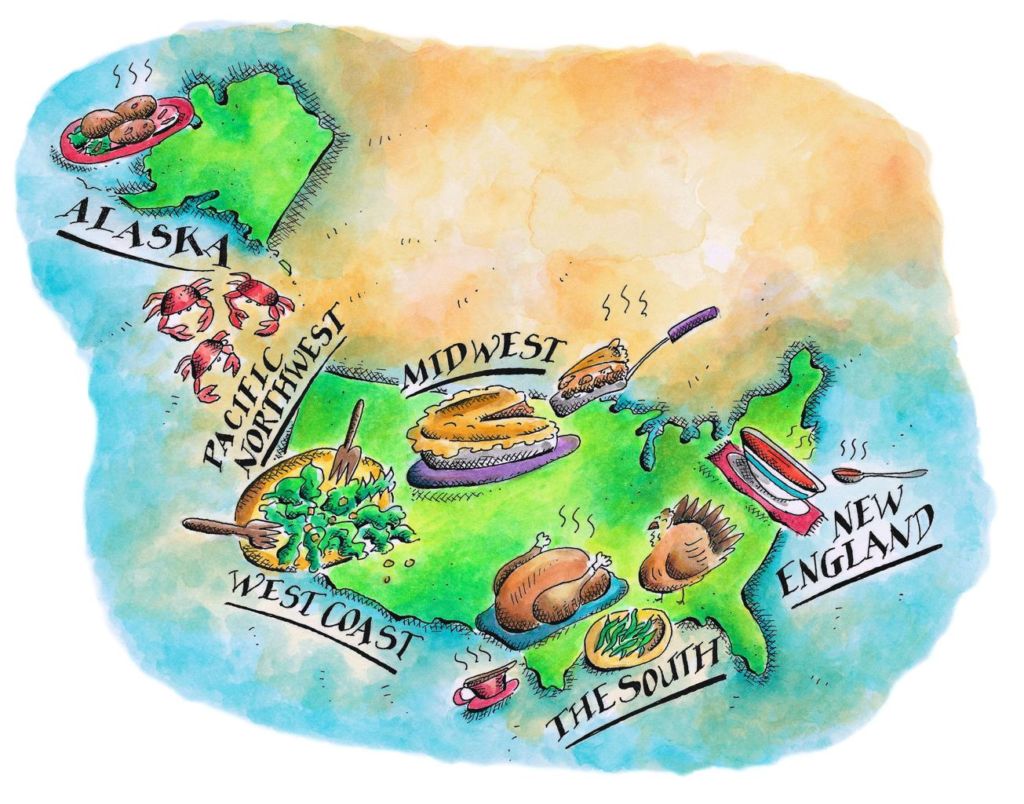
Geography remains one of the strongest forces behind regional American cuisine.
Climate and landscape determine what ingredients grow easily or are harvested locally. This influences the flavors, techniques, and traditions that develop in each region.
Consider how geography shapes dishes in different parts of the country.
• Coastal regions rely heavily on seafood
• River regions historically emphasized catfish and freshwater fish
• Agricultural plains favor beef, corn, and grains
• Warm climates incorporate spices, peppers, and rice
For example, Louisiana’s famous gumbo emerged in a region where rice grows well and seafood is abundant. Meanwhile, the cattle industry helped shape the steak and barbecue traditions of Texas.
These environmental factors often explain why certain dishes could only develop in specific places.
The Northeast: Seafood, Dairy, and Colonial Traditions
The northeastern United States offers one of the clearest examples of the flavor trail at work.
Early settlers relied heavily on coastal fishing and dairy farming. The result is a cuisine that emphasizes seafood, butter, cream, and preserved foods suited to colder climates.
Well-known regional dishes include:
• New England clam chowder
• Maine lobster rolls
• Boston baked beans
• Rhode Island clam cakes
Clam chowder illustrates how local ingredients shaped a dish. New England’s cold Atlantic waters produce abundant clams, while dairy farming supplied milk and cream for the soup’s signature texture.
Food historians also point out that Boston baked beans reflect colonial trade routes—molasses from Caribbean sugar plantations became a key ingredient in the dish.
Even today, these foods remain deeply tied to regional identity.
The South: A Culinary Blend of Cultures
Southern cuisine tells one of the richest food stories in the United States.
Many iconic Southern dishes reflect the blending of African, European, and Indigenous culinary traditions. The agricultural environment—especially rice, corn, and livestock farming—also shaped the cuisine.
Some hallmark Southern dishes include:
• Gumbo and jambalaya (Louisiana)
• Fried chicken and biscuits
• Shrimp and grits (South Carolina)
• Barbecue traditions across multiple states
Take shrimp and grits as an example. The dish originated along the South Carolina coast, where shrimp were plentiful and stone-ground grits were a staple food for local communities.
Today, chefs across the country serve refined versions of the dish, but its roots remain firmly tied to the Lowcountry region.
Southern food traditions also emphasize communal meals—church suppers, family gatherings, and neighborhood barbecues. These social contexts help explain why many recipes are preserved across generations.
The Midwest: Agriculture and Comfort Food
The Midwest sits at the heart of America’s agricultural economy, and its cuisine reflects that reality.
Corn, wheat, dairy, and livestock dominate the region’s food production. As a result, many Midwestern dishes focus on hearty, practical meals designed to feed large families and farming communities.
Common regional specialties include:
• Chicago deep-dish pizza
• Wisconsin cheese curds
• Indiana pork tenderloin sandwiches
• Minnesota hotdish casseroles
The famous Chicago deep-dish pizza, developed in the 1940s, represents the region’s emphasis on rich, filling foods. Its thick crust and layered toppings reflect both Italian immigrant influence and Midwestern comfort-food traditions.
Midwestern cuisine may appear simple, but it reflects generations of agricultural life and community cooking.
The Southwest: Indigenous Roots and Bold Flavors
Southwestern cuisine offers another powerful example of how food tells the story of place.
The region’s culinary identity comes from a mix of Native American, Mexican, and Spanish influences, combined with desert agriculture.
Common ingredients include:
• Chiles
• Corn
• Beans
• Squash
• Slow-cooked meats
In New Mexico, the question “red or green?” refers to chile sauce—a staple that appears on everything from enchiladas to breakfast dishes.
These flavors connect directly to Indigenous farming practices that date back centuries. Corn, beans, and squash—sometimes called the “Three Sisters” crops—were cultivated by Native communities long before European settlement.
Today’s Southwestern cuisine continues to build on those traditions.
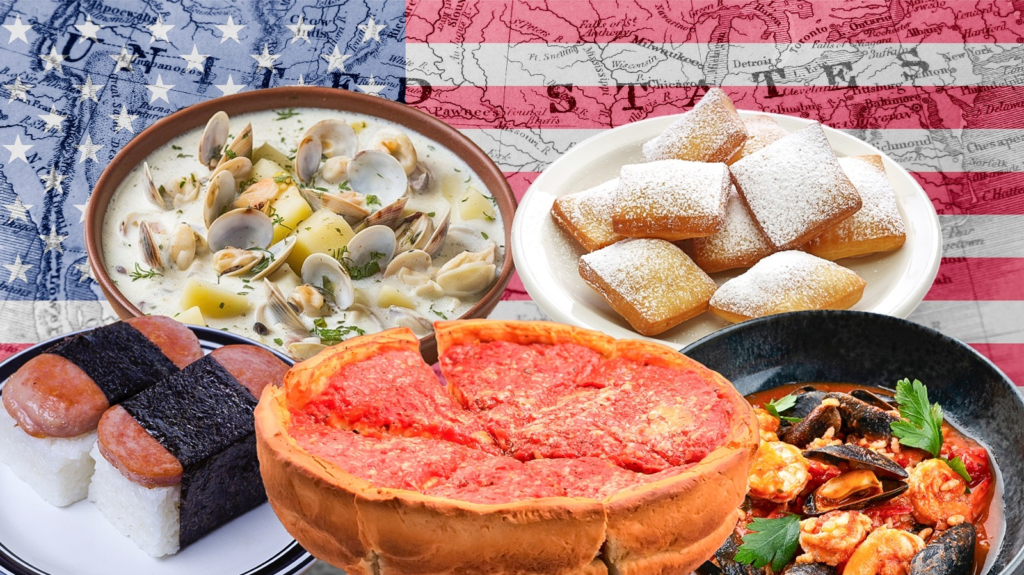
The West Coast: Innovation Meets Local Agriculture
West Coast cuisine is often associated with innovation, but its roots still follow the flavor trail principle.
California, Oregon, and Washington benefit from diverse agricultural regions and easy access to fresh produce, seafood, and wine.
This environment helped spark the farm-to-table movement, which emphasizes seasonal ingredients and local sourcing.
Popular West Coast dishes include:
• California-style sushi rolls
• Fish tacos (Southern California)
• Dungeness crab dishes
• Avocado-centered recipes
Unlike older regional cuisines, West Coast cooking often blends influences from Asian, Latin American, and Mediterranean traditions.
Even so, the emphasis on fresh local ingredients remains consistent with older regional patterns seen across the country.
Following the Flavor Trail While Traveling
For travelers interested in American food culture, following the flavor trail offers a practical way to experience a place more deeply.
Instead of searching only for famous restaurants, many food historians recommend exploring where local traditions actually live.
Consider these strategies:
• Visit farmers markets to see what ingredients dominate the region
• Ask locals about long-standing neighborhood restaurants
• Look for dishes that originated in the area
• Explore food festivals celebrating regional specialties
• Try traditional preparations rather than modern reinterpretations
Small-town diners, family-owned seafood shacks, and regional barbecue joints often provide the most authentic flavor trail experiences.
Food writer Calvin Trillin once noted that the best regional food in America often appears in the most ordinary-looking places.
How Home Cooks Can Explore the Flavor Trail
You don’t need to travel across the country to experience regional American cuisine.
Many home cooks recreate regional dishes using widely available ingredients.
Ways to explore regional flavors at home include:
• Cooking from regional cookbooks
• Learning traditional techniques such as slow barbecue or seafood boils
• Sourcing local produce that reflects seasonal agriculture
• Experimenting with spice blends tied to specific regions
For example, cooking a classic New England clam chowder or Louisiana gumbo can provide insight into how local ingredients shape flavor.
Recipes often tell the same cultural story that restaurants and travel experiences reveal.
Frequently Asked Questions
What does “flavor trail” mean in food culture?
The flavor trail refers to the pattern of regional dishes that reflect local geography, agriculture, and cultural history. Following it helps explain why certain foods develop in specific places.
Why does the United States have so many regional dishes?
The country’s large size, diverse climate, and history of immigration created many distinct food traditions across different regions.
What are the most famous regional foods in America?
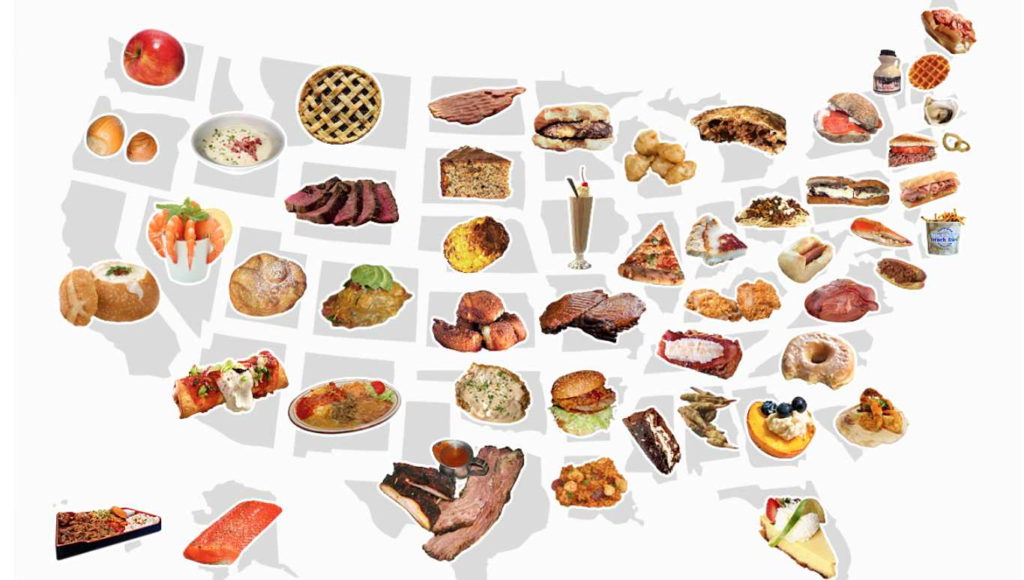
Examples include New England clam chowder, Texas barbecue, Louisiana gumbo, Chicago deep-dish pizza, and California fish tacos.
How do immigrant communities influence regional cuisine?
Immigrant groups introduce ingredients, spices, and cooking techniques that blend with local foods, creating unique regional dishes.
Is regional cuisine still important today?
Yes. Regional food traditions remain central to tourism, cultural identity, and local economies.
How can travelers find authentic regional food?
Local diners, farmers markets, and neighborhood restaurants often preserve traditional dishes better than large chains.
What role does agriculture play in regional dishes?
Local agriculture determines which ingredients are most available, shaping the dishes that develop in a region.
Are regional American dishes changing?
Yes. Modern chefs reinterpret traditional recipes while still preserving core ingredients and techniques.
Can regional cuisine be recreated outside its original location?
Yes, though the flavor may vary slightly depending on ingredient availability and local variations.
Why do certain regional dishes last for generations?
They become cultural traditions tied to family memories, celebrations, and community identity.
Reading America Through Its Kitchens
Regional food offers one of the most accessible ways to understand American history. Every dish—from a bowl of gumbo to a lobster roll—captures layers of geography, migration, and community life.
Following the flavor trail reveals how ingredients, climate, and culture combine to shape the meals people cherish. In many ways, regional cuisine acts as an edible archive, preserving stories long after historical records fade.
Exploring those dishes—whether through travel or cooking—keeps those stories alive.
Key Insights From the Flavor Trail
• Regional dishes often originate from local agriculture and geography
• Immigration played a major role in shaping American cuisine
• Many iconic foods developed from practical, community-based cooking
• Food tourism now drives travel across many U.S. regions
• Traditional dishes continue evolving while preserving cultural identity