Summary
Certain places in the United States have grown beyond geography to become national symbols. Landmarks such as the Statue of Liberty, Lincoln Memorial, and Golden Gate Bridge represent moments, ideals, and turning points in American history. This guide explores how these sites gained symbolic meaning—and what visitors should know when experiencing them today.
Across the United States, certain locations have evolved into powerful symbols of the country’s history, values, and identity. These landmarks are more than destinations on a travel itinerary. They represent moments of political change, technological achievement, cultural transformation, and collective memory.
Every year millions of Americans—and international visitors—travel to these places not just to see them, but to experience the stories they represent. According to the U.S. National Park Service, more than 300 million visits occur annually across national parks and historic sites, many of them tied to landmark locations that have become part of the national narrative.
Understanding why these places matter requires looking beyond architecture or scenery. Each site became iconic because it intersected with history at a critical moment.
Why Certain Places Become National Symbols
Not every historic building or scenic location becomes iconic. The landmarks that resonate nationally tend to share several characteristics.
They often represent foundational moments in American history. They may also embody national ideals such as freedom, democracy, innovation, or resilience. Over time, repeated cultural references—textbooks, speeches, films, and news coverage—strengthen their symbolic meaning.
Several factors commonly elevate a site into national significance:
- Association with defining historical events
- Architectural or engineering innovation
- Representation of national ideals
- Visibility in media and public ceremonies
- Preservation through federal or state protection
For example, when people think about immigration, the image that often comes to mind is the towering figure of the Statue of Liberty. When they consider the legacy of civil rights and democracy, the Lincoln Memorial frequently appears in collective memory.
The Statue of Liberty: America’s Global Symbol of Freedom
Few landmarks in the United States are as internationally recognized as the Statue of Liberty. Dedicated in 1886 as a gift from France, the statue quickly became associated with the promise of freedom and opportunity.
Located on Liberty Island in New York Harbor, the statue greeted millions of immigrants arriving through nearby Ellis Island during the late 19th and early 20th centuries. For many families, it was their first visual encounter with the United States.
The statue’s symbolism grew over time through cultural reinforcement:
- Emma Lazarus’s poem “The New Colossus” linked the monument to immigration.
- Wartime propaganda used the statue as an image of democratic resilience.
- Political speeches frequently reference it when discussing liberty and immigration.
Today, the National Park Service reports that the monument receives over 4 million visitors annually. Visitors can explore the pedestal museum, take guided tours, and learn about the engineering that made the 305-foot structure possible.
Travel tip: reserve ferry tickets weeks in advance during peak travel months.
The Lincoln Memorial: A Stage for American Democracy
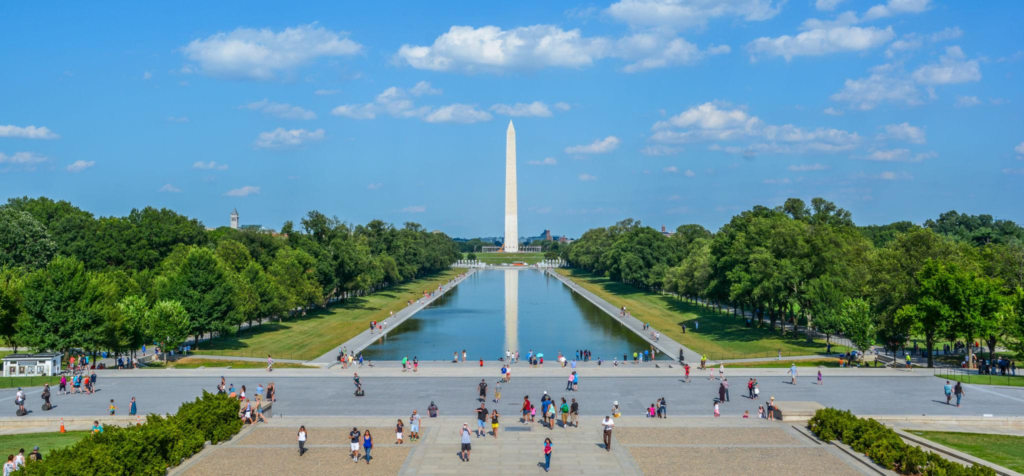
The Lincoln Memorial stands at the western end of the National Mall in Washington, D.C. Completed in 1922, the memorial honors President Abraham Lincoln, whose leadership during the Civil War preserved the Union and led to the abolition of slavery.
Architecturally inspired by a Greek temple, the memorial contains a 19-foot marble statue of Lincoln seated in contemplation. Yet the site’s symbolic power expanded dramatically through later historical events.
One of the most defining moments occurred in 1963, when Martin Luther King Jr. delivered his “I Have a Dream” speech on its steps during the March on Washington.
Since then, the site has become associated with civil rights, equality, and public expression.
Visitors frequently notice inscriptions of Lincoln’s most influential speeches, including the Gettysburg Address and his Second Inaugural Address. The reflective atmosphere encourages quiet contemplation—especially at sunrise or after sunset when crowds are lighter.
The Golden Gate Bridge: Engineering Achievement and Cultural Icon
The Golden Gate Bridge demonstrates how infrastructure can evolve into a cultural symbol.
Completed in 1937, the suspension bridge connected San Francisco to Marin County across the Golden Gate Strait. At the time, it was the longest suspension bridge span in the world, a remarkable engineering achievement during the Great Depression.
Several elements contributed to its iconic status:
- The distinctive International Orange color
- Its dramatic coastal setting
- Frequent appearances in film, photography, and advertising
- Recognition as one of the world’s most photographed bridges
More than 10 million vehicles cross the bridge annually, and thousands of visitors walk or bike across it daily.
Travel insight: The best pedestrian experience is typically early morning when fog creates dramatic views over San Francisco Bay.
Mount Rushmore: Presidential Legacy in Stone
Located in the Black Hills of South Dakota, the Mount Rushmore National Memorial features 60-foot sculptures of four U.S. presidents: George Washington, Thomas Jefferson, Theodore Roosevelt, and Abraham Lincoln.
The monument was carved between 1927 and 1941 under sculptor Gutzon Borglum. It was designed to represent key stages in American development:
- Washington – founding of the nation
- Jefferson – expansion through the Louisiana Purchase
- Roosevelt – industrial growth and conservation
- Lincoln – preservation of the Union
Each year roughly 2 million visitors travel to the site, according to the National Park Service.
The surrounding visitor center provides historical context about the construction process, which involved hundreds of workers using dynamite and carving tools to sculpt the granite mountain.
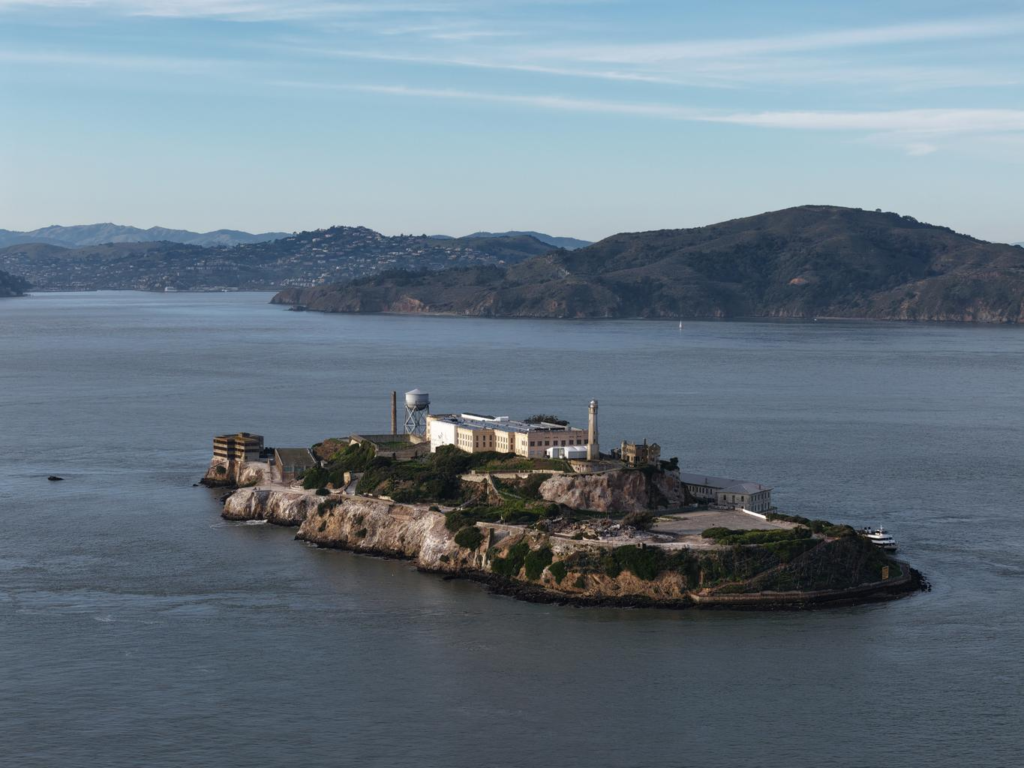
Alcatraz Island: From Prison to Historical Reflection
The former federal prison on Alcatraz Island offers a different type of symbolism—one connected to justice, incarceration, and political activism.
Operating as a federal penitentiary from 1934 to 1963, Alcatraz housed notorious inmates including Al Capone and George “Machine Gun” Kelly.
However, its historical meaning expanded after 1969, when Native American activists occupied the island for 19 months to protest federal policies toward Indigenous peoples.
Today, Alcatraz is part of the Golden Gate National Recreation Area and attracts over 1.5 million visitors annually. The self-guided audio tour—narrated by former guards and prisoners—remains one of the most immersive historical experiences in the U.S. park system.
The Gateway Arch: Symbolizing Westward Expansion
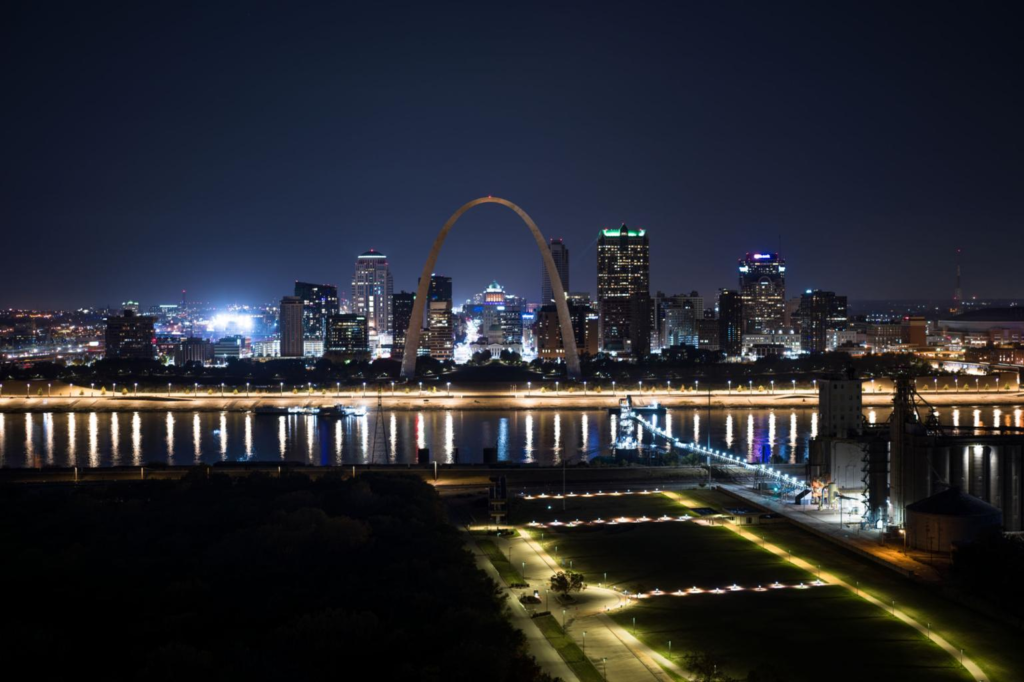
Standing 630 feet tall along the Mississippi River, the Gateway Arch commemorates America’s westward expansion.
Designed by architect Eero Saarinen and completed in 1965, the stainless-steel arch remains the tallest monument in the United States.
The site honors the role of St. Louis as a launching point for explorers, traders, and settlers heading west in the 19th century. Visitors can ride a unique tram system inside the arch to an observation deck overlooking the Mississippi River and downtown skyline.
The museum beneath the arch explores:
- Lewis and Clark expeditions
- Indigenous history of the region
- Expansion of the American frontier
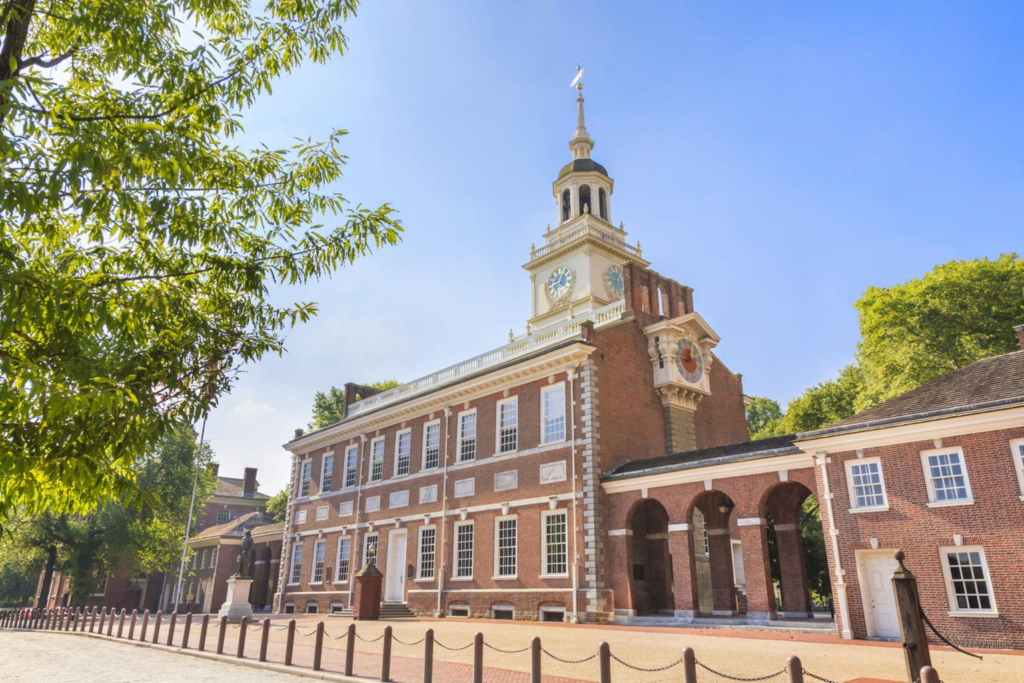
Independence Hall: Where the Nation Was Born
Few buildings carry as much historical weight as Independence Hall.
Constructed in the 18th century, this red-brick structure is where both the Declaration of Independence (1776) and the U.S. Constitution (1787) were debated and signed.
The building now forms part of Independence National Historical Park in Philadelphia and is designated a UNESCO World Heritage Site.
Visitors can stand in the Assembly Room where delegates such as George Washington, Benjamin Franklin, and James Madison debated the future of the new nation.
Reservations are strongly recommended during summer travel season.
Why Visiting Landmarks Still Matters Today
Even in an era of virtual tours and online history resources, physical landmarks remain powerful educational spaces.
Standing in the same locations where historical events occurred can provide a sense of scale, atmosphere, and emotional connection that books alone cannot replicate.
Visitors often report that experiences such as standing at the Lincoln Memorial or overlooking New York Harbor from Liberty Island make historical narratives feel immediate and personal.
Landmarks also serve as gathering places during national reflection. Major commemorations, protests, and celebrations frequently occur at these symbolic sites, reinforcing their relevance across generations.
Frequently Asked Questions
Why are landmarks important in American culture?
Landmarks preserve physical connections to historical events and national ideals, allowing people to experience history where it occurred.
What is the most visited landmark in the United States?
Times Square in New York City is often cited as the most visited tourist location, while major landmarks like the Statue of Liberty and the National Mall attract millions annually.
How does a place become a national historic landmark?
Sites gain recognition through historical significance, architectural importance, or cultural impact and are designated by the U.S. Department of the Interior.
Are all iconic landmarks managed by the National Park Service?
No. While many are part of the National Park System, others are managed by cities, states, or nonprofit organizations.
What landmark best represents American democracy?
Independence Hall and the Lincoln Memorial are often cited because of their connection to foundational democratic principles.
When is the best time to visit major U.S. landmarks?
Spring and fall typically offer moderate weather and smaller crowds compared to peak summer tourism.
Are guided tours necessary?
Not always, but guided tours often provide deeper historical context and access to areas not open during self-guided visits.
How can travelers avoid crowds?
Early morning visits, weekday travel, and off-season trips often provide the best experience.
Do most landmarks charge admission?
Many major national monuments are free, though transportation or tour reservations may require fees.
Why do certain landmarks become global symbols?
Visibility in media, historical significance, and architectural uniqueness all contribute to global recognition.
Where History Meets Landscape
America’s most iconic landmarks demonstrate how physical spaces can carry profound meaning. They represent turning points in national history, collective struggles, and achievements that shaped the country.
Visiting these sites allows travelers to connect with the past in tangible ways—standing where pivotal decisions were made, movements began, and ideas took root.
As generations continue to reinterpret history, these landmarks remain enduring reference points for understanding the American story.
Key Insights From America’s Landmark Legacy
- Iconic places become symbols when history and geography intersect.
- Landmarks preserve stories that define national identity.
- Many of the most famous sites evolved in meaning through later historical events.
- Visiting landmarks offers educational value beyond textbooks.
- Preservation efforts ensure future generations can experience these places.