
Summary
From towering monuments to innovative bridges and historic civic buildings, America’s most recognizable landmarks represent far more than tourism icons. These architectural wonders reflect engineering breakthroughs, cultural identity, and historical milestones. Understanding how these structures were designed, built, and preserved reveals why they continue to define the American skyline and remain essential destinations for travelers, historians, and architecture enthusiasts.
Across the United States, certain buildings and structures instantly signal a sense of place. The moment you see the Statue of Liberty, the Golden Gate Bridge, or the Capitol dome, you know exactly where you are. These landmarks have become visual shorthand for American history, innovation, and cultural identity.
Architecture plays a powerful role in shaping national memory. Many of America’s most recognizable landmarks were built during moments of ambition—periods when engineers, architects, and civic leaders pushed technological limits to create something enduring. Today, millions of visitors travel each year to see these structures not just as tourist attractions but as symbols of the country’s evolving story.
According to the National Park Service, more than 300 million people visit U.S. national parks and historic sites annually, many drawn specifically by landmark architecture. These places represent both engineering mastery and collective heritage.
This article explores several architectural landmarks that shaped the American landscape, why they remain globally recognizable, and how their design continues to influence modern architecture.
Why Architectural Landmarks Become National Symbols
Not every historic building becomes a cultural icon. The structures that endure typically share three defining characteristics: distinctive design, historical relevance, and strong cultural symbolism.
Distinctive design ensures that a structure stands apart visually. Whether it’s the sweeping cables of a suspension bridge or the symmetry of a neoclassical government building, memorable architecture tends to combine aesthetic impact with technical ingenuity.
Historical context also matters. Many famous American landmarks emerged during transformative periods—industrial expansion, immigration waves, or political milestones. Their stories reflect the broader narrative of the nation.
Finally, symbolic meaning elevates a structure from an impressive building to a national emblem. The Statue of Liberty, for example, represents freedom and immigration. The Capitol represents democratic governance.
These layers of meaning explain why certain architectural works transcend their original purpose.
The Statue of Liberty: America’s Most Recognizable Monument
The Statue of Liberty, located in New York Harbor, may be the most internationally recognized landmark in the United States.
Designed by French sculptor Frédéric Auguste Bartholdi and engineered by Gustave Eiffel, the statue was completed in 1886 as a gift from France celebrating American independence.
Standing 305 feet from ground to torch, the monument was an engineering marvel for its time. Its copper skin is only about 2.4 millimeters thick, supported by an internal iron framework designed to withstand strong harbor winds.
Beyond its engineering, the statue gained deep symbolic meaning during the early 20th century as millions of immigrants entered the United States through nearby Ellis Island.
For many families, the first sight of America was the statue rising from the harbor—transforming it into a powerful national symbol of opportunity.

The Golden Gate Bridge: Engineering Meets Iconic Design
Completed in 1937, the Golden Gate Bridge transformed San Francisco into one of the world’s most visually distinctive cities.
The bridge spans 1.7 miles across the Golden Gate Strait and was once the longest suspension bridge in the world. Its design came from engineer Joseph Strauss, with architectural input from Irving Morrow.
Several factors made the bridge revolutionary:
- It was built in an area known for strong ocean currents and frequent fog.
- Engineers had to account for seismic activity.
- The bridge towers rise 746 feet above the water, taller than many skyscrapers of the time.
The bridge’s famous International Orange color was originally chosen simply to improve visibility in fog, but it became a defining design feature.
Today, the Golden Gate Bridge is both a transportation artery and one of the most photographed structures in the world.
The U.S. Capitol: Architecture of Democracy
The United States Capitol in Washington, D.C., represents one of the most influential examples of neoclassical architecture in the country.
Construction began in 1793, with the building evolving over decades as the young nation expanded.
The most recognizable feature—the Capitol dome—was completed during the Civil War in 1866. Despite the ongoing conflict, President Abraham Lincoln insisted the dome project continue as a symbol that the Union would endure.
Key architectural characteristics include:
- A massive cast-iron dome weighing nearly 9 million pounds
- Classical columns inspired by Roman architecture
- Expansive symmetrical wings housing the House and Senate chambers
The Capitol’s design intentionally evokes ancient democratic civilizations, reinforcing the building’s political symbolism.
Today, the structure remains one of the most recognizable government buildings in the world.
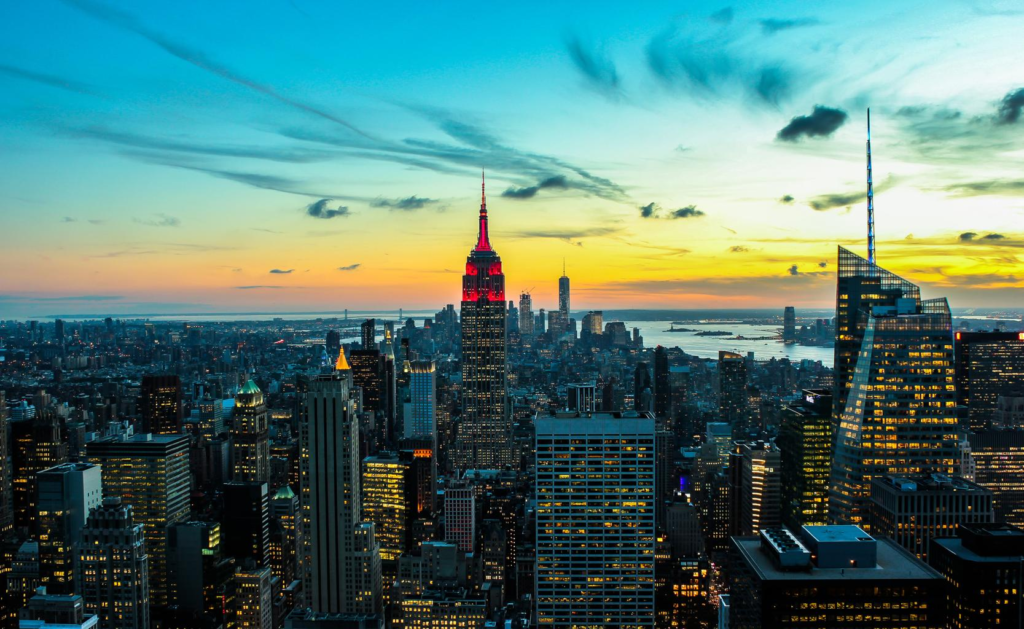
The Empire State Building: A Monument to American Ambition
Few skyscrapers carry the cultural weight of the Empire State Building in New York City.
Completed in 1931 during the Great Depression, the building symbolized optimism during a time of economic hardship.
At 1,454 feet including its antenna, the skyscraper held the title of world’s tallest building for nearly 40 years.
The building’s construction was famously rapid—taking only 13 months to complete. At peak construction, workers assembled the structure at a rate of four and a half floors per week.
The Art Deco design, with its streamlined geometry and steel frame, helped define the visual language of early American skyscrapers.
Today the building continues to attract over four million visitors annually, according to the Empire State Realty Trust.
Mount Rushmore: Monumental Sculpture as Architecture
Mount Rushmore in South Dakota occupies a unique position among American landmarks because it blends architecture, sculpture, and landscape design.
Carved into the granite face of the Black Hills, the monument features the faces of four presidents:
- George Washington
- Thomas Jefferson
- Theodore Roosevelt
- Abraham Lincoln
Construction lasted from 1927 to 1941 under sculptor Gutzon Borglum.
The scale of the project was extraordinary. Each presidential face measures approximately 60 feet tall.
While controversial due to its location on land sacred to Native American tribes, Mount Rushmore remains one of the most visited monuments in the United States, attracting roughly two million visitors annually.
Its dramatic integration with the natural landscape contributes significantly to its enduring visual impact.

The Gateway Arch: Modern Architecture’s National Symbol
In contrast to older monuments, the Gateway Arch in St. Louis represents modern American architecture.
Completed in 1965, the arch was designed by Finnish-American architect Eero Saarinen to commemorate westward expansion.
The structure stands 630 feet tall, making it the tallest arch in the world.
Its elegant curve follows a mathematical shape known as a weighted catenary, which provides both aesthetic balance and structural stability.
The monument’s sleek stainless steel exterior reflects changing light throughout the day, reinforcing its minimalist design philosophy.
Visitors can ride a unique tram system inside the arch to reach an observation deck overlooking the Mississippi River and downtown St. Louis.
How Landmark Architecture Shapes Tourism and National Identity
Architectural landmarks influence more than skyline aesthetics—they drive tourism, economic activity, and civic identity.
Cities often develop their global reputation around a single recognizable structure.
Examples include:
- San Francisco and the Golden Gate Bridge
- New York City and the Statue of Liberty
- Washington, D.C., and the Capitol
- St. Louis and the Gateway Arch
The economic impact can be significant. According to tourism research from the U.S. Travel Association, iconic landmarks often serve as the primary motivator for first-time visitors to major cities.
In addition to tourism, landmark architecture contributes to civic pride. These structures become visual anchors for public ceremonies, celebrations, and national events.
Why These Landmarks Continue to Matter
Despite changing architectural trends, America’s iconic landmarks remain culturally relevant.
Several factors explain their lasting importance:
- Engineering innovation: Many were technological breakthroughs when built.
- Cultural storytelling: They capture defining moments in American history.
- Visual identity: Their designs are instantly recognizable worldwide.
- Public accessibility: Many remain open for visitors and educational programs.
Preservation also plays a key role. Federal agencies, nonprofit foundations, and historic preservation groups invest millions each year to maintain these sites.
Their continued care ensures future generations can experience these architectural achievements firsthand.

Frequently Asked Questions
What is the most famous landmark in the United States?
The Statue of Liberty is widely considered the most famous American landmark due to its global recognition and symbolism of freedom and immigration.
Which U.S. landmark attracts the most visitors?
The Lincoln Memorial and National Mall area in Washington, D.C., typically receive the highest visitor numbers, often exceeding 20 million annually.
Why are American landmarks often built in neoclassical style?
Early U.S. architects used neoclassical design to reference the democratic traditions of ancient Greece and Rome, reinforcing the ideals of republican government.
What engineering challenges were faced when building the Golden Gate Bridge?
Engineers had to overcome powerful ocean currents, deep water foundations, heavy winds, and seismic activity.
How long did it take to build the Empire State Building?
Construction took about 13 months, an extraordinarily fast pace for a skyscraper of that size.
Why is the Gateway Arch shaped the way it is?
The arch follows a weighted catenary curve, which evenly distributes structural forces and creates stability.
Are these landmarks protected by law?
Many are designated National Historic Landmarks and receive federal protection and preservation funding.
Can visitors go inside the Statue of Liberty?
Yes. Visitors can access the pedestal and, with reservations, climb to the crown.
What makes a building a landmark?
A structure typically becomes a landmark due to historical importance, architectural uniqueness, cultural symbolism, or engineering significance.
Why do landmarks influence city identity?
Iconic architecture provides instantly recognizable imagery that becomes associated with a city’s brand and tourism economy.
Legacy Written in Stone, Steel, and Vision
America’s most recognizable landmarks were not built simply to impress. They emerged from moments when architects and engineers sought to solve challenges, represent ideals, or mark historic milestones.
Over time, these structures became visual anchors for national identity. They represent freedom, ambition, democracy, exploration, and innovation.
Their continued preservation ensures that the stories embedded in their foundations remain accessible to future generations.
These landmarks remind us that architecture can do more than shape skylines—it can shape how a nation remembers itself.
Essential Insights at a Glance
- Iconic American landmarks combine engineering innovation with cultural symbolism
- Structures like the Statue of Liberty and Golden Gate Bridge define global perceptions of the U.S.
- Many landmarks were technological breakthroughs when first built
- Architecture often reflects historical turning points in American history
- Landmark preservation supports tourism, education, and civic identity
- Modern monuments like the Gateway Arch demonstrate evolving architectural styles