
Summary
America’s most recognizable landmarks are more than scenic attractions—they are living records of the nation’s cultural, political, and environmental history. From historic halls where democracy took shape to geological wonders millions of years old, these sites continue to shape national identity. Understanding their stories helps travelers, students, and curious readers connect with the enduring narratives that define the United States.
Why American Landmarks Still Matter Today
Across the United States, certain places carry meaning far beyond their physical structures or landscapes. They represent pivotal events, cultural shifts, and moments when the country changed course. Landmarks such as the Statue of Liberty or the Grand Canyon have become symbols not only of American history but also of shared ideals and natural heritage.
According to the U.S. National Park Service, more than 325 million people visited national parks in 2023, demonstrating how deeply Americans and international travelers value these historic and natural landmarks. These sites serve multiple roles: educational spaces, tourism drivers, and reminders of collective identity.
Landmarks endure because they tell stories—stories of struggle, innovation, democracy, and discovery.
The Statue of Liberty: A Beacon of Arrival and Identity
Standing in New York Harbor since 1886, the Statue of Liberty remains one of the most powerful symbols of freedom in the world. Gifted by France to commemorate the centennial of American independence, the statue quickly became associated with immigration and the promise of a new beginning.
Between 1892 and 1954, more than 12 million immigrants passed through nearby Ellis Island, many seeing the statue before setting foot in America.
The landmark represents several overlapping narratives:
- The development of the United States as a nation of immigrants
- The expansion of democratic ideals in the late 19th century
- The role of public monuments in shaping national identity
Visitors today can walk through the statue’s museum, where original architectural models and historical documents reveal how the monument was engineered and why its symbolism continues to evolve.
For many Americans, visiting Liberty Island remains a meaningful reminder of family histories tied to immigration.
Independence Hall: Where the Nation Was Debated Into Existence
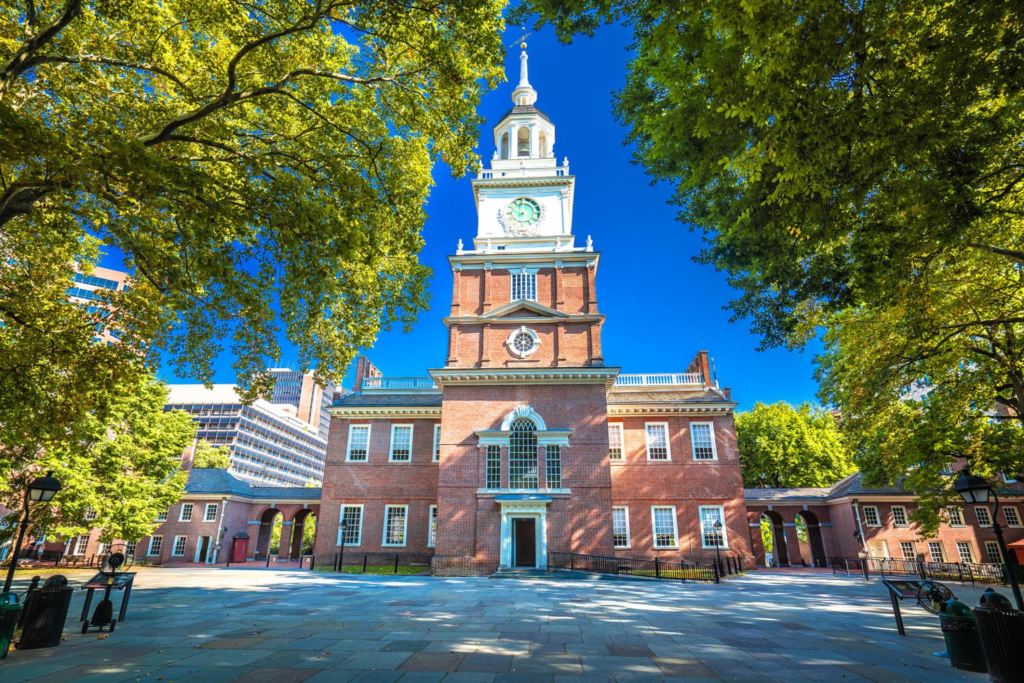
Located in Philadelphia, Independence Hall is one of the most historically significant buildings in the United States. It was here that delegates debated and ultimately signed both the Declaration of Independence in 1776 and the U.S. Constitution in 1787.
Unlike monumental statues or natural wonders, Independence Hall tells a quieter story—one of political negotiation and compromise.
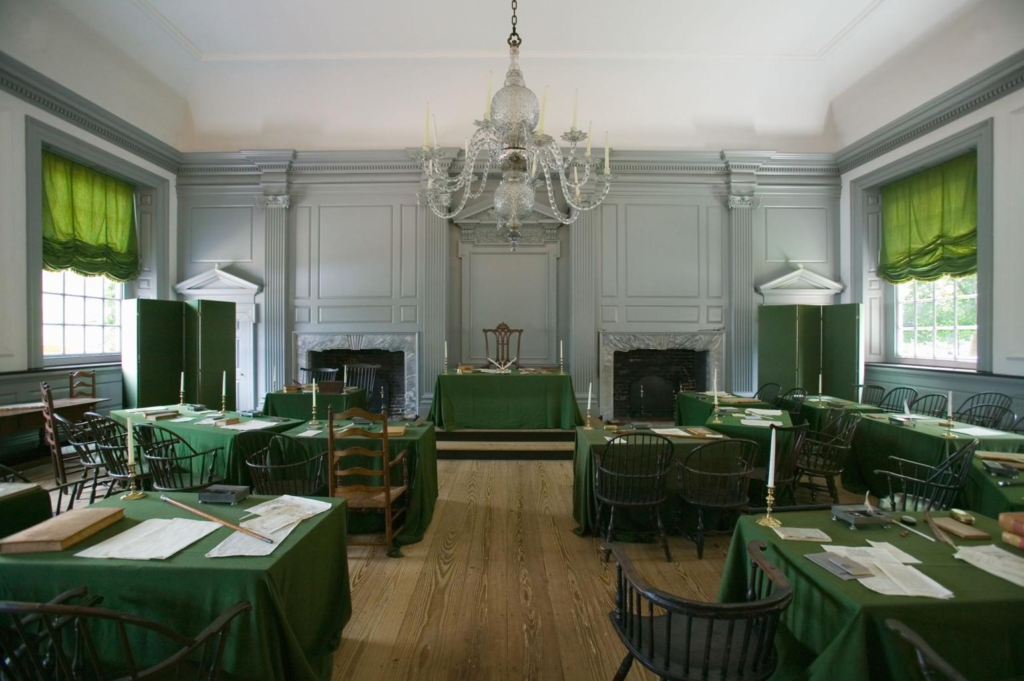
Inside the building, visitors can still see:
- The Assembly Room where constitutional debates occurred
- George Washington’s presiding chair
- Period furnishings recreating the political atmosphere of the 18th century
Historians often emphasize that the Constitution was not created in unanimous agreement. The debates held inside this building reveal the complexity of forming a new republic.
Understanding that process makes the landmark especially valuable for students and visitors seeking context for modern political discussions.
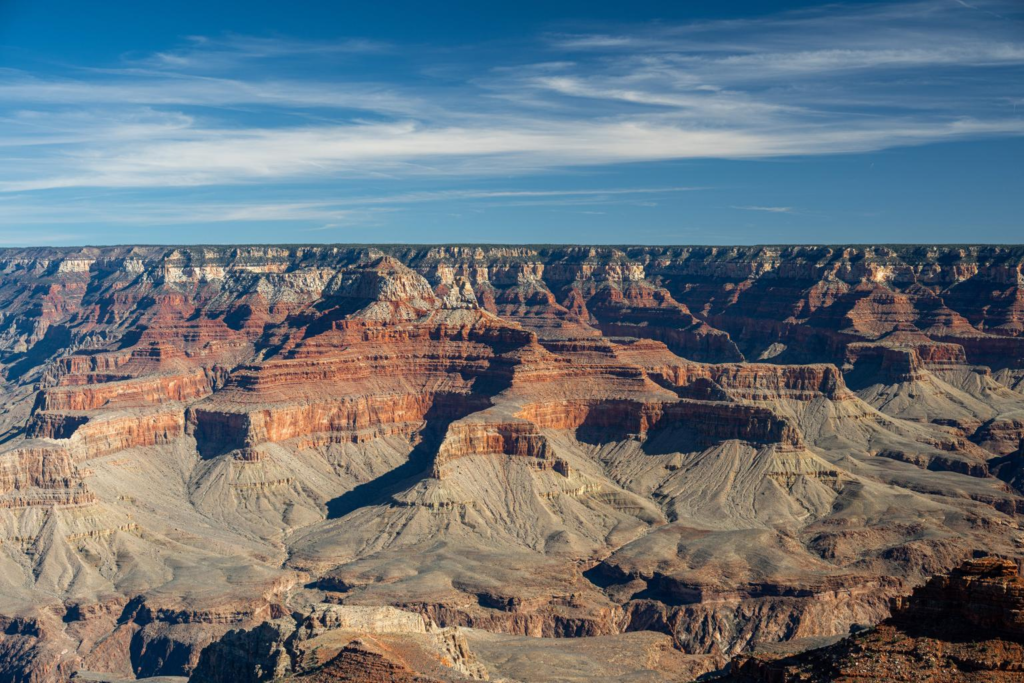
The Grand Canyon: America’s Geological Storybook
Few places illustrate the deep timeline of Earth as dramatically as the Grand Canyon. Carved by the Colorado River over millions of years, the canyon exposes nearly two billion years of geological history in layered rock formations.
The canyon’s significance extends beyond geology.
It also tells the story of:
- Indigenous civilizations that lived in the region for thousands of years
- Early exploration and mapping of the American West
- The birth of the U.S. conservation movement
President Theodore Roosevelt famously visited the canyon in 1903 and urged Americans to preserve it, saying:
“Leave it as it is. The ages have been at work on it.”
Today, the Grand Canyon is one of the most visited national parks in the United States, attracting nearly 5 million visitors annually.
For travelers, standing at the rim offers something rare in modern life: a perspective on time that stretches far beyond human history.
Mount Rushmore: A Monument to Leadership and Controversy
Carved into the Black Hills of South Dakota, Mount Rushmore National Memorial features the 60-foot faces of four U.S. presidents:
- George Washington
- Thomas Jefferson
- Theodore Roosevelt
- Abraham Lincoln
Sculptor Gutzon Borglum designed the monument to represent different phases of American history—founding, expansion, development, and preservation.
Yet the monument also carries complicated historical context. The Black Hills are sacred to the Lakota Sioux, and the land itself remains the subject of long-standing legal disputes.
Modern visitors increasingly encounter both narratives:
- The celebration of American leadership
- The ongoing conversation about Indigenous land rights and historical interpretation
This layered storytelling reflects how American landmarks evolve as the nation reevaluates its past.
The Golden Gate Bridge: Engineering That Became Cultural Identity
When the Golden Gate Bridge opened in 1937, it was the longest suspension bridge in the world, spanning 4,200 feet across the Golden Gate Strait.
Its construction occurred during the Great Depression, providing thousands of jobs and demonstrating the ambition of American engineering.
Beyond its technical achievements, the bridge became an icon of the American West.
The structure represents several themes:
- Innovation during economic hardship
- The expansion of infrastructure along the Pacific coast
- The merging of architecture and landscape
The bridge’s distinctive “International Orange” color was originally chosen to improve visibility in fog, but it later became a defining visual element recognized worldwide.
The National Mall: A Landscape of Memory
The National Mall functions less like a single monument and more like a living timeline of American history.
Stretching between the U.S. Capitol and the Lincoln Memorial, the Mall hosts monuments that represent defining moments in the nation’s story.
Among the most visited sites are:
- The Lincoln Memorial
- The Vietnam Veterans Memorial
- The Martin Luther King Jr. Memorial
- The Washington Monument
The National Mall has also been the stage for major civic events, including the 1963 March on Washington, where Dr. Martin Luther King Jr. delivered his “I Have a Dream” speech.
Few places better illustrate how public space can reflect evolving national values.
What Makes a Landmark “Timeless”?
Not every historic structure becomes a lasting symbol. The most enduring landmarks tend to share several characteristics.
They connect to defining national moments
Events that shape a nation—independence, civil rights movements, or major discoveries—often anchor landmark significance.
They remain accessible to the public
Many iconic sites are preserved through federal or state programs that encourage public engagement.
They adapt to new interpretations
Modern museums and visitor centers increasingly incorporate diverse historical perspectives, helping landmarks stay relevant.
They inspire emotional connection
Visitors often report feeling a sense of awe or reflection when standing at these sites—something that photographs or textbooks alone cannot replicate.
Experiencing Landmarks More Meaningfully
Visiting famous landmarks can be more rewarding when approached with curiosity and preparation.
Travel historians often recommend a few practical strategies:
- Arrive early or late in the day to avoid peak crowds.
- Use ranger-led tours or guided programs available at many national parks.
- Read historical context before visiting to better understand what you’re seeing.
- Explore nearby museums or archives that provide deeper interpretation.
- Look for local perspectives, especially from Indigenous or community historians.
These small steps transform a quick sightseeing stop into a deeper learning experience.
Frequently Asked Questions
What is the most visited landmark in the United States?
The National Mall in Washington, D.C. is widely considered the most visited landmark area in the country, attracting over 25 million visitors annually according to the National Park Service.
Why are landmarks important for American history?
Landmarks preserve physical locations where significant events occurred. They provide tangible connections to historical moments that shaped the nation’s political, cultural, and social development.
How are American landmarks protected?
Many are preserved through the National Park Service, state historical programs, or nonprofit preservation groups such as the National Trust for Historic Preservation.
Are all landmarks natural sites?
No. American landmarks include both natural wonders (like the Grand Canyon) and human-made monuments (like the Statue of Liberty or Independence Hall).
Can landmarks change in meaning over time?
Yes. As historical research expands and social perspectives evolve, the interpretation of landmarks often changes to include broader cultural narratives.
What is the difference between a national park and a landmark?
A national park is a protected area managed by the federal government, while a landmark refers to any site recognized for historical, cultural, or natural importance.
Which landmark best represents American democracy?
Many historians point to Independence Hall, where both the Declaration of Independence and the Constitution were debated and signed.
Are historic landmarks economically important?
Yes. Heritage tourism generates billions of dollars annually in local economic activity through travel, hospitality, and educational programs.
How can visitors help preserve landmarks?
Visitors can support preservation by following park guidelines, respecting protected areas, donating to preservation organizations, and participating in educational programs.
The Stories Still Being Written
America’s landmarks are not frozen in the past. They continue to accumulate new meaning as each generation revisits them with fresh questions and perspectives.
A visit to Independence Hall today might spark discussions about democracy and governance. Standing at the Grand Canyon can inspire reflection about environmental stewardship. Walking the National Mall can highlight ongoing conversations about equality and civil rights.
In this way, landmarks are not simply historical artifacts—they are active participants in the nation’s evolving story.
They remind us that history is not only something we study. It is something we continually reinterpret, preserve, and pass forward.
Snapshot Summary of America’s Landmark Legacy
- Iconic landmarks connect Americans to defining historical moments.
- Sites like the Statue of Liberty symbolize immigration and national identity.
- Independence Hall reveals the debates behind the U.S. Constitution.
- Natural landmarks such as the Grand Canyon tell stories millions of years old.
- Monuments like Mount Rushmore reflect both celebration and controversy.
- Infrastructure icons like the Golden Gate Bridge represent engineering innovation.
- The National Mall serves as a stage for civic expression and remembrance.