Summary
America’s most famous landmarks are often viewed through photographs and travel brochures, but their deeper stories rarely make it into guidebooks. From structural secrets inside the Statue of Liberty to engineering innovations behind the Golden Gate Bridge, these sites contain overlooked details that reveal how they were built, maintained, and experienced today.
Why America’s Famous Landmarks Still Hold Untold Stories
Millions of travelers visit iconic American landmarks every year. According to the National Park Service, U.S. national parks alone welcomed more than 325 million visits in 2023, many centered around historically significant sites and monuments.
But even well-known landmarks carry layers of overlooked history—engineering solutions, design compromises, preservation challenges, and symbolic meanings that casual visitors rarely notice.
Understanding these details adds depth to travel experiences. Instead of simply seeing a landmark, visitors begin to understand how and why it exists, the challenges its builders faced, and the ways it has evolved over time.
Below are some of the hidden stories behind several of America’s most recognizable landmarks.
The Statue of Liberty: A French Engineering Marvel in New York Harbor
Few American symbols are as recognizable as the Statue of Liberty in New York City. Yet the statue’s structural design is often overlooked.
Most people know it was a gift from France in 1886, but fewer realize the statue’s internal skeleton was designed by engineer Gustave Eiffel, who later built the Eiffel Tower.
Instead of being solid, the statue is essentially a thin copper shell supported by a flexible iron framework. This system allows the statue to expand and contract in response to temperature changes and strong harbor winds.
Some lesser-known details include:
- The statue’s copper skin is about the thickness of two pennies
- The green color is not paint but natural oxidation (patina)
- Visitors once climbed all the way to the torch until 1916, when it was closed for safety reasons
- The statue sways up to 3 inches in strong winds
Travelers today can still climb to the crown, but reservations often need to be made weeks in advance through the National Park Service.
The Golden Gate Bridge: Engineering Decisions That Nearly Failed
The Golden Gate Bridge in San Francisco is often photographed for its dramatic color and sweeping span, but its construction in the 1930s involved multiple engineering breakthroughs.
When construction began in 1933, many experts believed the bridge could not be safely built due to the strong currents and deep waters of the Golden Gate Strait.
Chief engineer Joseph Strauss led a team that developed innovative solutions.
Some surprising facts include:
- The bridge’s towers extend 746 feet above the water
- At the time of completion in 1937, it had the longest suspension span in the world
- Workers used one of the first large safety nets, which saved 19 lives
The bridge’s famous color, International Orange, was originally intended as a temporary primer. Architects later chose to keep it because it improved visibility in San Francisco’s frequent fog.
Today, the bridge carries roughly 112,000 vehicles daily, according to the Golden Gate Bridge, Highway and Transportation District.
Mount Rushmore: The Monument That Was Never Finished
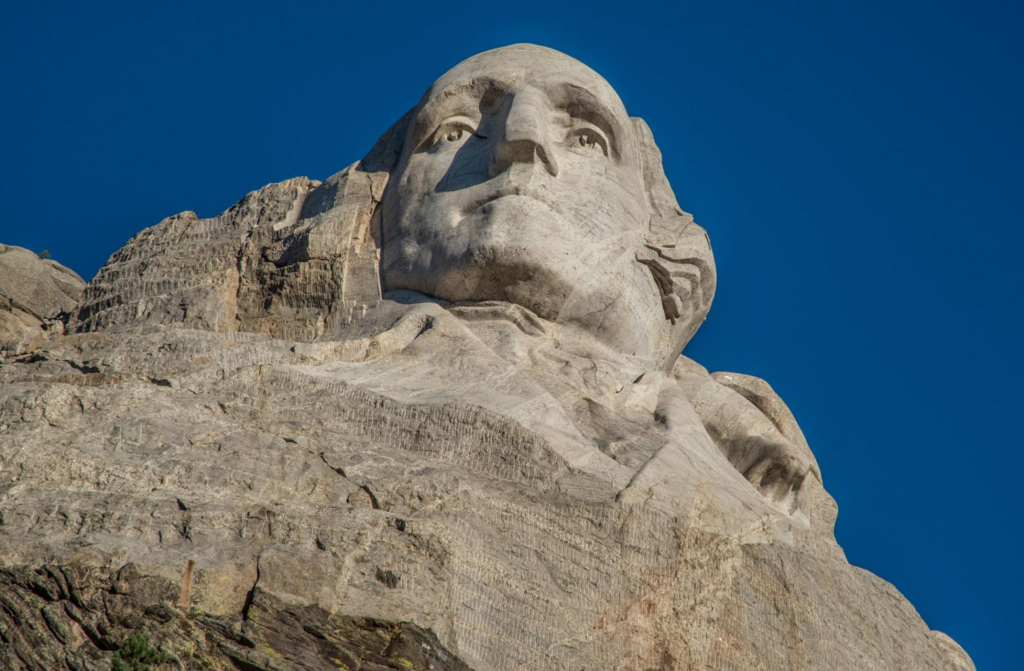
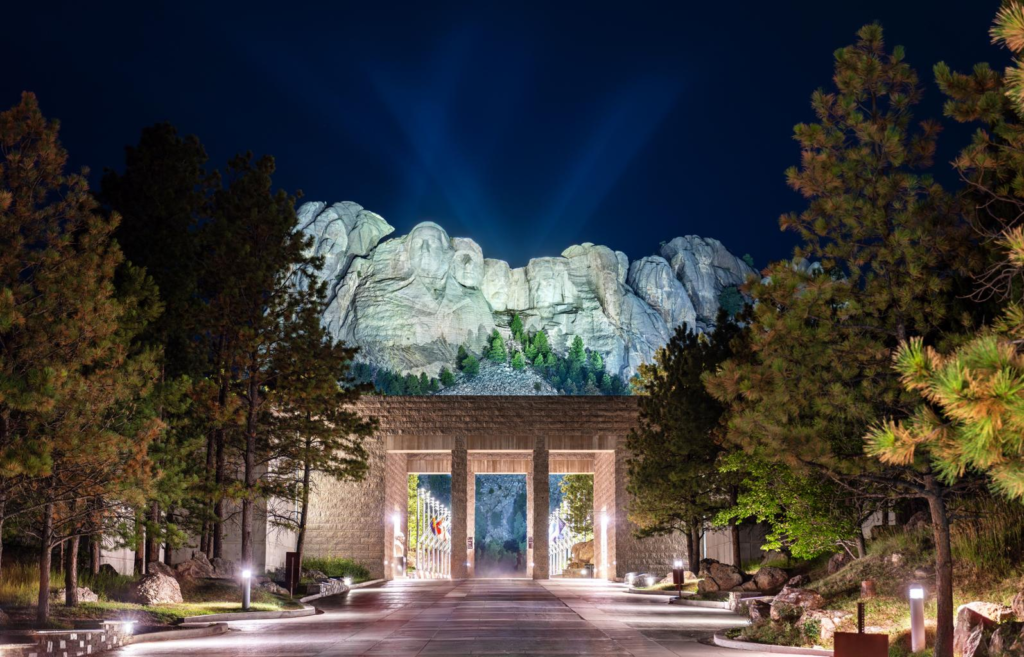
The granite faces at Mount Rushmore National Memorial in South Dakota are one of the most recognizable carvings in the world.
Yet the monument we see today represents only part of the original vision of sculptor Gutzon Borglum.
Borglum originally planned to carve the presidents down to their waists, including detailed inscriptions explaining American history.
Funding issues and Borglum’s death in 1941 forced the project to stop earlier than planned.
Other hidden details include:
- Workers used dynamite for about 90% of the carving
- The monument took 14 years to complete
- A hidden chamber called the Hall of Records sits behind the heads
Inside that chamber, a titanium vault stores documents describing the history and meaning of the monument.
The Washington Monument’s Two-Tone Color Mystery
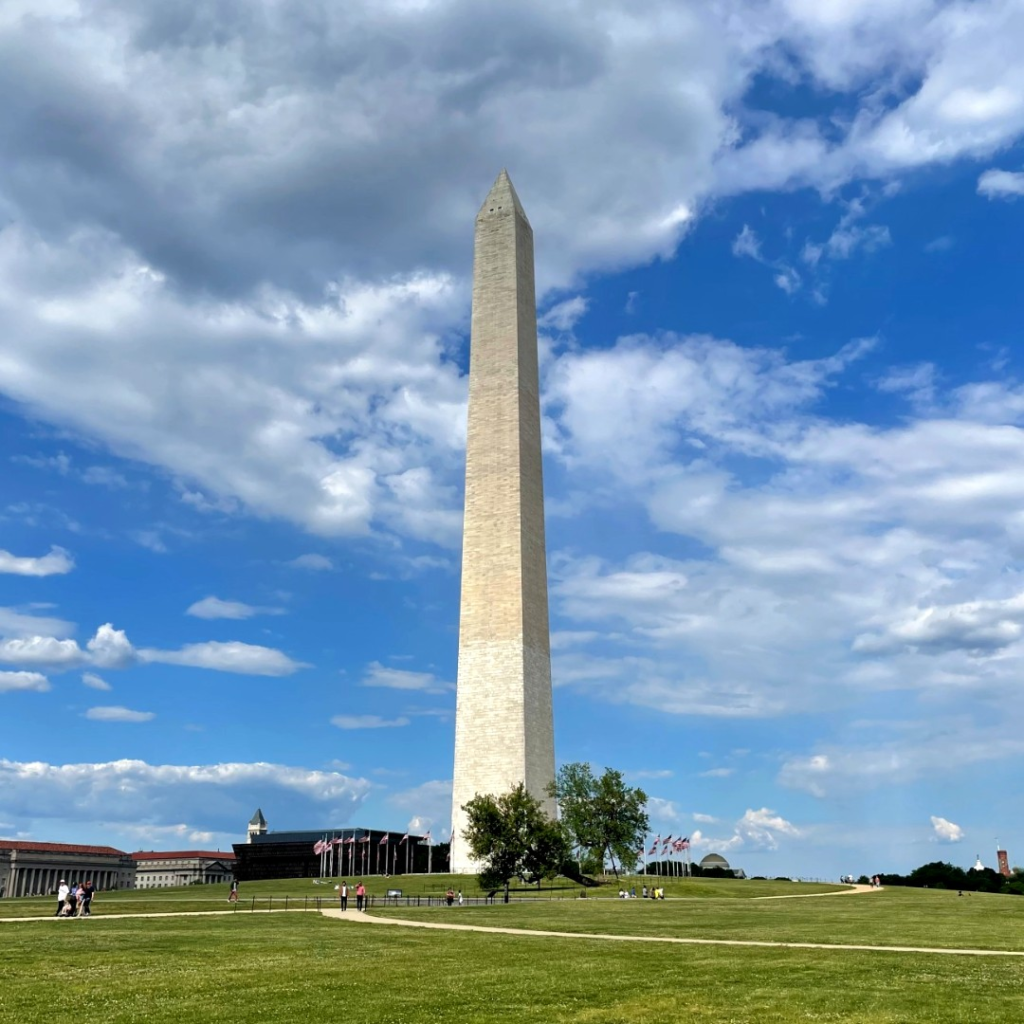
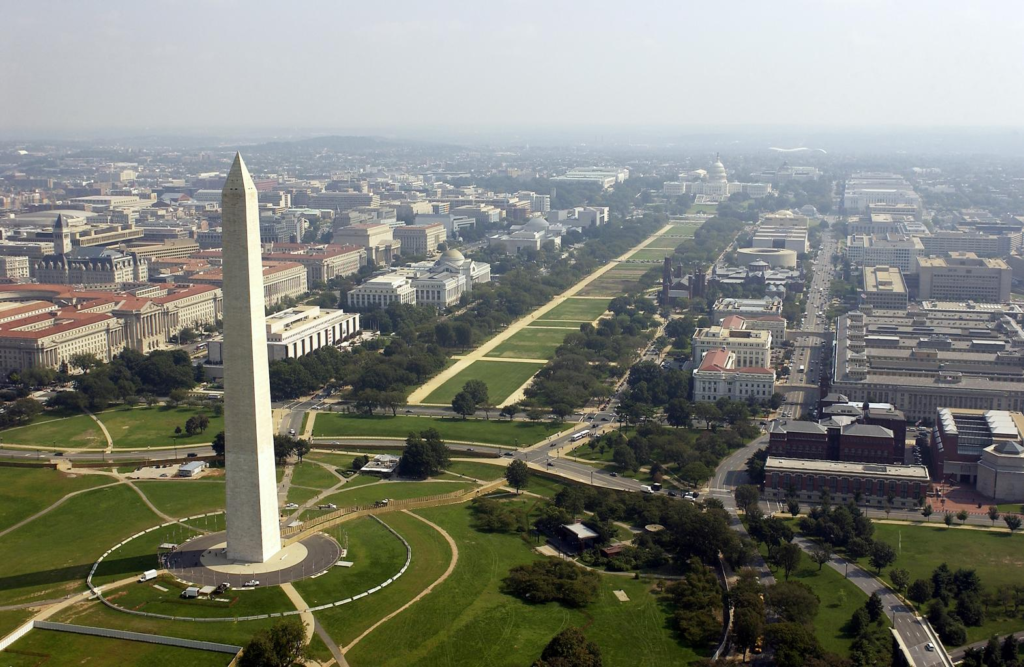
The towering Washington Monument in Washington, D.C. appears uniform from a distance. Up close, however, visitors notice a distinct color change halfway up the structure.
This difference comes from a long construction delay.
The monument began construction in 1848 but stopped in 1854 due to funding shortages and political turmoil leading up to the American Civil War.
When construction resumed in 1877, builders used marble from a different quarry, resulting in the visible color shift.
Other lesser-known facts:
- The monument is 555 feet tall
- It was the tallest structure in the world until the Eiffel Tower was completed in 1889
- Early visitors climbed 897 steps before elevators were installed
Today it remains the tallest stone obelisk ever constructed.
The Hollywood Sign: Originally a Real Estate Advertisement
Visitors traveling to Los Angeles often view the Hollywood Sign as a symbol of the American film industry.
But the sign was never meant to represent Hollywood itself.
When it was installed in 1923, the sign originally read “HOLLYWOODLAND.” It was built to promote a local housing development.
The sign included thousands of light bulbs and was intended to stand for only about 18 months.
Instead, it became culturally significant and was preserved.
Interesting details many visitors miss:
- Each letter is 45 feet tall
- The sign was completely rebuilt in 1978
- Donations from celebrities including Hugh Hefner helped fund restoration
Today the sign is protected and cannot be approached directly, though several nearby trails offer viewing points.
The Empire State Building’s Forgotten Airship Plan
When the Empire State Building opened in New York City in 1931, it was the tallest building in the world.
Its spire was designed with an unusual idea in mind: airship docking.
The concept involved dirigibles attaching to the top mast while passengers entered the building through the upper floors.
However, the plan quickly proved impractical.
Strong winds around the building made docking dangerous, and the idea was abandoned after only a few experimental attempts.
Despite that, the building still holds impressive distinctions:
- Built in just 13 months
- Contains 102 floors
- Attracted over 4 million visitors annually before 2020
Today it remains one of the most recognizable skyscrapers in the United States.
Why These Details Matter to Travelers and History Enthusiasts
Learning these hidden elements transforms how people experience landmarks.
Instead of simply taking photos, visitors gain context that deepens appreciation.
For example:
- Understanding the Statue of Liberty’s internal structure highlights 19th-century engineering ingenuity
- Recognizing Mount Rushmore’s unfinished design reveals how funding shapes national monuments
- Knowing the Hollywood Sign’s advertising origins shows how cultural symbols evolve over time
For travelers planning visits, these details also guide better experiences.
Helpful strategies include:
- Reading interpretive displays at visitor centers
- Taking ranger-led tours when available
- Visiting museums associated with the landmark
- Observing architectural details often missed in photographs
These steps turn a sightseeing stop into a more meaningful historical encounter.
Frequently Asked Questions
Why do famous landmarks have so many hidden details?
Large monuments and historic sites often involve complex engineering, long construction timelines, and evolving purposes. Over time, lesser-known aspects become overshadowed by the landmark’s symbolic image.
Which American landmark took the longest to build?
Several projects spanned decades, but the Washington Monument had one of the longest pauses due to political and funding issues.
Can visitors enter the Statue of Liberty crown?
Yes, but reservations are required in advance through the National Park Service due to limited space.
Why is the Golden Gate Bridge orange?
The color, known as International Orange, improves visibility in fog and complements the surrounding landscape.
Is Mount Rushmore still being expanded?
No. The monument was considered complete in 1941 and there are no current plans for additional carvings.
Why was the Hollywood Sign shortened?
The original real estate development failed, and the sign was shortened to simply “Hollywood” when it became a cultural landmark.
What was the tallest building before the Empire State Building?
The Chrysler Building briefly held the title before the Empire State Building opened in 1931.
Are these landmarks protected by law?
Yes. Many are managed by the National Park Service or protected through federal or state historic preservation programs.
What is the most visited American landmark?
Sites in Washington, D.C. and New York City consistently rank among the most visited due to tourism concentration.
How can visitors learn deeper historical context?
Visitor centers, museum exhibits, official park tours, and historical documentaries provide reliable insights beyond basic sightseeing.
Looking Beyond the Postcard View
America’s iconic landmarks are often reduced to simple images in travel brochures, but their deeper stories reveal ingenuity, controversy, and evolving cultural meaning.
Understanding the engineering behind the Golden Gate Bridge, the unfinished ambitions of Mount Rushmore, or the advertising origins of the Hollywood Sign turns familiar places into layered historical narratives.
For travelers and history enthusiasts alike, these hidden details remind us that landmarks are not just destinations—they are living records of American ambition, creativity, and change.
Key Insights Worth Remembering
- Many iconic landmarks contain engineering innovations hidden from view
- Construction delays often explain unusual features, such as the Washington Monument’s color shift
- Several landmarks began with very different purposes than they serve today
- Preservation efforts help maintain structures that were never meant to last this long
- Visitor centers and tours reveal stories that standard travel guides rarely cover