
Summary
From dramatic natural formations to iconic man-made structures, landmarks across the United States help define the nation’s cultural identity and geographic character. These sites tell stories of exploration, innovation, and preservation. Understanding the landmarks that shape the American landscape offers insight into how geography, history, and public stewardship intersect to influence travel, education, and national heritage.
The American landscape is defined not only by vast geography but by the landmarks that anchor its identity. From towering mountains and canyons to historic monuments and engineering marvels, these places shape how people understand the United States—its history, culture, and natural environment.
Many of these landmarks serve multiple purposes. They preserve ecological systems, commemorate defining moments in American history, and support local economies through tourism. According to the U.S. National Park Service, national parks alone receive over 300 million recreational visits annually, demonstrating how deeply these locations resonate with both residents and international travelers.
Exploring these landmarks reveals more than scenic beauty—it reveals the narrative of the country itself.
Natural Landmarks That Define the Physical Landscape
Some of the most recognizable features of the American landscape were shaped long before human settlement. Geological forces, erosion, volcanic activity, and shifting tectonic plates created dramatic terrain that continues to attract millions of visitors every year.
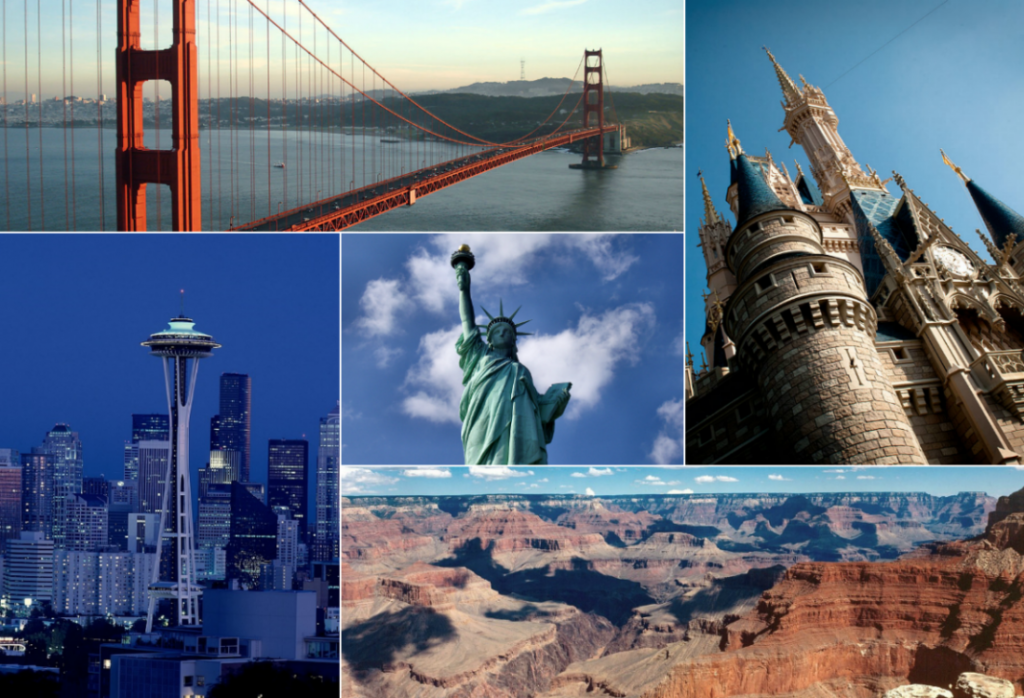
One of the most widely recognized natural landmarks is the Grand Canyon in Arizona, carved by the Colorado River over millions of years. Stretching 277 miles long and over a mile deep, the canyon illustrates the power of geological processes and provides scientists with one of the world’s most visible geological timelines.
Another defining landmark is Yellowstone National Park, the first national park in the world, established in 1872. Yellowstone sits atop a massive volcanic hotspot and contains over half of the world’s active geysers. Features like Old Faithful demonstrate how geothermal energy shapes the landscape.
In the southeastern United States, the Great Smoky Mountains form another iconic natural landmark. Located along the Tennessee–North Carolina border, the park is the most visited national park in the U.S., known for its biodiversity. Scientists estimate that more than 19,000 species have been documented there.
Natural landmarks often share several characteristics:
- Distinct geological formation
- Ecological importance
- Protected conservation status
- Cultural or Indigenous historical significance
These elements transform natural landscapes into places of national identity.
Historic Landmarks That Reflect America’s Story
While natural landmarks define geography, historic landmarks tell the story of how the nation evolved.
The Statue of Liberty in New York Harbor remains one of the most powerful symbols of immigration and democracy in the United States. Dedicated in 1886, the statue welcomed millions of immigrants arriving through Ellis Island during the late 19th and early 20th centuries.
Similarly, Independence Hall in Philadelphia represents the birthplace of American democracy. It was within this building that the Declaration of Independence (1776) and the U.S. Constitution (1787) were debated and adopted.
Another historically significant landmark is the Mount Rushmore National Memorial in South Dakota. Sculpted between 1927 and 1941, the granite monument features the faces of four presidents—George Washington, Thomas Jefferson, Theodore Roosevelt, and Abraham Lincoln—representing pivotal eras in American history.
Historic landmarks often serve as living classrooms. Visitors gain context about political development, social movements, and the individuals who shaped national policy.
Engineering Landmarks That Changed the Landscape
Not all landmarks were created by nature or historical events. Some were built through large-scale engineering that permanently reshaped the American environment.
The Golden Gate Bridge in San Francisco, completed in 1937, remains one of the most recognizable suspension bridges in the world. At the time of construction, it held the record for the longest main span of any suspension bridge.
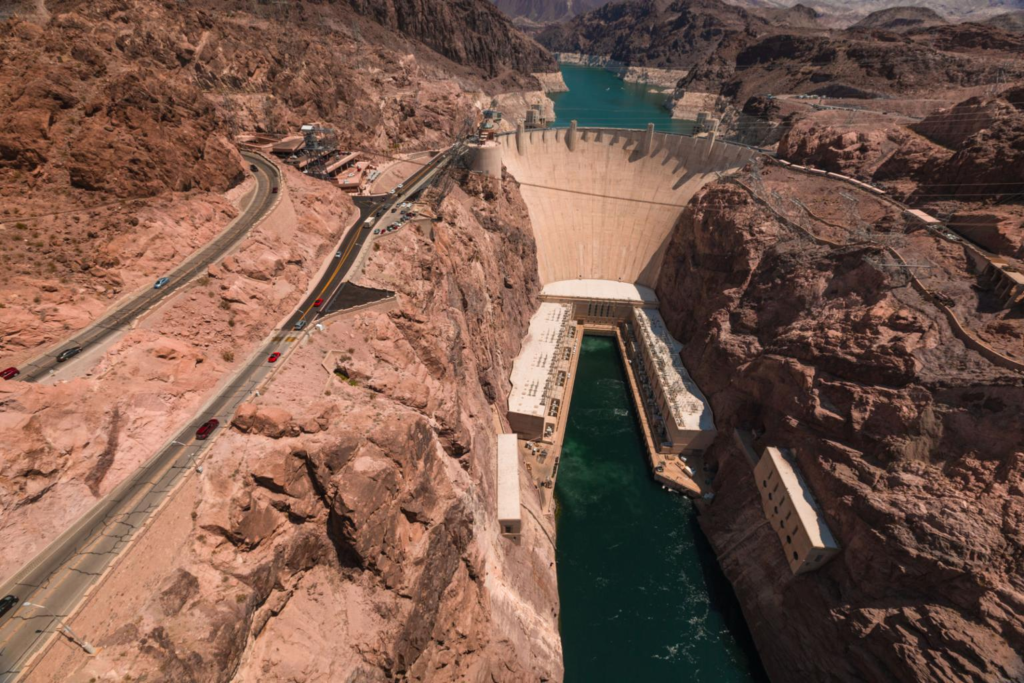
Another landmark is the Hoover Dam, located on the Colorado River between Nevada and Arizona. Completed in 1936, the dam created Lake Mead, the largest reservoir in the United States by capacity. The project provided hydroelectric power, irrigation, and flood control for multiple states.
Engineering landmarks illustrate how infrastructure influences both the environment and economic development.
Examples include:
- Bridges that connect previously isolated regions
- Dams that generate renewable energy
- Towers and monuments that shape city skylines
- Transportation systems that redefine mobility
These structures highlight the intersection between innovation and geography.
Cultural Landscapes and National Identity
Certain landmarks hold cultural importance that extends beyond their physical appearance. They represent shared national values and collective memory.
The National Mall in Washington, D.C. serves as a symbolic center of American democracy. The Mall contains several landmarks including the Lincoln Memorial, Washington Monument, and the Martin Luther King Jr. Memorial.
Similarly, the Gateway Arch in St. Louis commemorates westward expansion. Completed in 1965, the stainless-steel monument stands 630 feet tall, making it the tallest arch in the world.
These locations often host civic gatherings, educational programs, and national commemorations, reinforcing their role as cultural landmarks.
Cultural landmarks typically represent:
- Key moments in national history
- Shared democratic values
- Civil rights milestones
- Regional identity and heritage
They function as spaces where historical reflection and modern civic life intersect.
How Landmarks Influence Tourism and Local Economies
Landmarks also play a major role in economic development. Tourism related to historic sites and national parks supports local communities across the United States.
According to the National Park Service Visitor Spending Effects Report, visitors to national parks generated over $26 billion in spending in gateway communities in 2022, supporting more than 375,000 jobs.
Local economies benefit in several ways:
- Hotels and lodging services
- Restaurants and retail businesses
- Outdoor recreation guides
- Transportation and tour operators
For example, towns surrounding Zion National Park in Utah have experienced significant economic growth due to increased tourism over the past decade.
Landmarks therefore serve both cultural and economic roles.

The Role of Conservation and Preservation
Protecting landmarks requires long-term stewardship. Natural landscapes face threats from climate change, overcrowding, and environmental degradation. Historic landmarks require restoration and ongoing maintenance.
Several federal agencies manage landmark preservation, including:
- National Park Service (NPS)
- U.S. Forest Service
- Bureau of Land Management
- National Trust for Historic Preservation
Preservation strategies include controlled visitor access, restoration projects, and environmental monitoring.
For example, restoration efforts at Independence Hall focus on preserving original 18th-century materials while accommodating modern visitors.
Similarly, conservation programs in Yellowstone monitor wildlife populations and geothermal activity to maintain ecological balance.
These efforts ensure landmarks remain accessible for future generations.
How Americans Experience Landmarks Today
Today’s travelers interact with landmarks in ways that combine recreation, education, and digital technology.
Many national parks now provide:
- Mobile visitor guides
- Augmented reality exhibits
- Virtual tours
- Interactive museum installations
These tools help visitors understand the historical and environmental context of each landmark.
For instance, digital interpretation programs at Gettysburg National Military Park allow visitors to visualize Civil War battle movements using GPS-based mobile guides.
Technology enhances the visitor experience without replacing the value of physically exploring these sites.
Frequently Asked Questions
1. What qualifies a place as a landmark in the United States?
A landmark typically has historical, cultural, architectural, or natural significance recognized by federal, state, or local authorities.
2. What is the difference between a national park and a national landmark?
National parks protect natural landscapes, while national landmarks usually highlight historic or cultural sites.
3. How many national historic landmarks are in the United States?
There are over 2,600 National Historic Landmarks, according to the National Park Service.
4. Which landmark receives the most visitors annually?
The Great Smoky Mountains National Park consistently ranks as the most visited national park.
5. Are all American landmarks federally protected?
No. Some landmarks are protected at the state or local level, while others are privately owned.
6. Why are American landmarks important for education?
They provide real-world context for historical events, environmental science, and cultural heritage.
7. How does climate change affect natural landmarks?
Rising temperatures, erosion, wildfires, and changing ecosystems can significantly impact protected landscapes.
8. Can private property become a national landmark?
Yes, if it meets criteria for historical significance and is approved by preservation authorities.
9. How are landmarks maintained?
Maintenance may involve restoration, structural monitoring, conservation programs, and controlled visitor access.
10. What is the newest national park in the United States?
New River Gorge National Park and Preserve in West Virginia was designated a national park in 2020.
Reading the American Landscape Through Its Landmarks
Landmarks across the United States offer a lens through which the nation’s geography, history, and cultural values become visible. Whether carved by rivers, built through engineering, or preserved for historical memory, these sites shape the way Americans understand their environment.
Visiting these places provides more than scenic experiences. It offers insight into how landscapes influence national identity, economic development, and environmental stewardship. Each landmark contributes a chapter to the larger story of the American landscape.
Quick Landscape Insights
- Natural landmarks reveal millions of years of geological history
- Historic landmarks connect visitors to defining moments in American democracy
- Engineering landmarks showcase innovation and infrastructure development
- Cultural landmarks reinforce shared national identity
- Tourism around landmarks supports local economies
- Conservation efforts ensure long-term preservation
- Technology is changing how visitors experience historic and natural sites