
Summary
America’s most recognizable landmarks are more than tourist destinations—they are physical records of the nation’s history, innovation, and cultural identity. From the Statue of Liberty’s immigrant welcome to the engineering achievement of the Golden Gate Bridge, these sites reveal how architecture, politics, and geography shaped the United States. Understanding their stories offers deeper meaning for travelers, students, and anyone exploring American history.
Why Landmarks Matter in American Culture
Across the United States, landmarks serve as visual symbols of national identity. Some represent defining historical moments, while others demonstrate engineering achievements or natural beauty. Together they create a shared cultural landscape that millions of Americans recognize instantly.
According to the U.S. National Park Service, more than 330 million people visit national parks and historic sites each year, many of them drawn to famous landmarks. These places are not only travel destinations—they help Americans connect with events that shaped the country.
Many iconic landmarks gained prominence because they represent one of three things:
- Historical turning points
- Engineering or architectural breakthroughs
- Natural landscapes unique to the United States
Understanding the story behind each landmark adds meaning beyond the postcard image.
The Statue of Liberty: A Symbol of Welcome
Standing in New York Harbor since 1886, the Statue of Liberty remains one of the most recognized monuments in the world. But its story began in France.
French historian Édouard de Laboulaye proposed the statue as a gift celebrating the alliance between France and the United States during the American Revolution. Sculptor Frédéric Auguste Bartholdi designed the statue, while engineer Gustave Eiffel—later famous for the Eiffel Tower—created its internal iron framework.
For millions of immigrants arriving through Ellis Island between 1892 and 1954, the statue represented hope and opportunity. Many described seeing it for the first time as a defining emotional moment.
Key facts about the Statue of Liberty:
- Height from ground to torch: 305 feet
- Dedicated: October 28, 1886
- Original copper color turned green due to natural oxidation
Today the monument remains a powerful representation of American ideals such as freedom and democracy.

The Golden Gate Bridge: Engineering Against the Odds
When the Golden Gate Bridge opened in 1937, it was the longest suspension bridge in the world. At the time, many engineers believed building a bridge across the Golden Gate strait—known for strong currents, dense fog, and powerful winds—would be impossible.
Chief engineer Joseph Strauss, along with structural engineers Leon Moisseiff and Charles Ellis, developed an innovative suspension design capable of spanning the 1.7-mile channel.
The bridge transformed transportation in Northern California. Before its construction, the only way to travel between San Francisco and Marin County was by ferry.
Notable details include:
- Main span length: 4,200 feet
- Estimated cost in 1937: $35 million
- Signature color: International Orange, chosen for visibility in fog
Today the Golden Gate Bridge carries more than 40 million vehicles per year, according to the Golden Gate Bridge Highway and Transportation District.
Mount Rushmore: Presidential Legacy in Stone
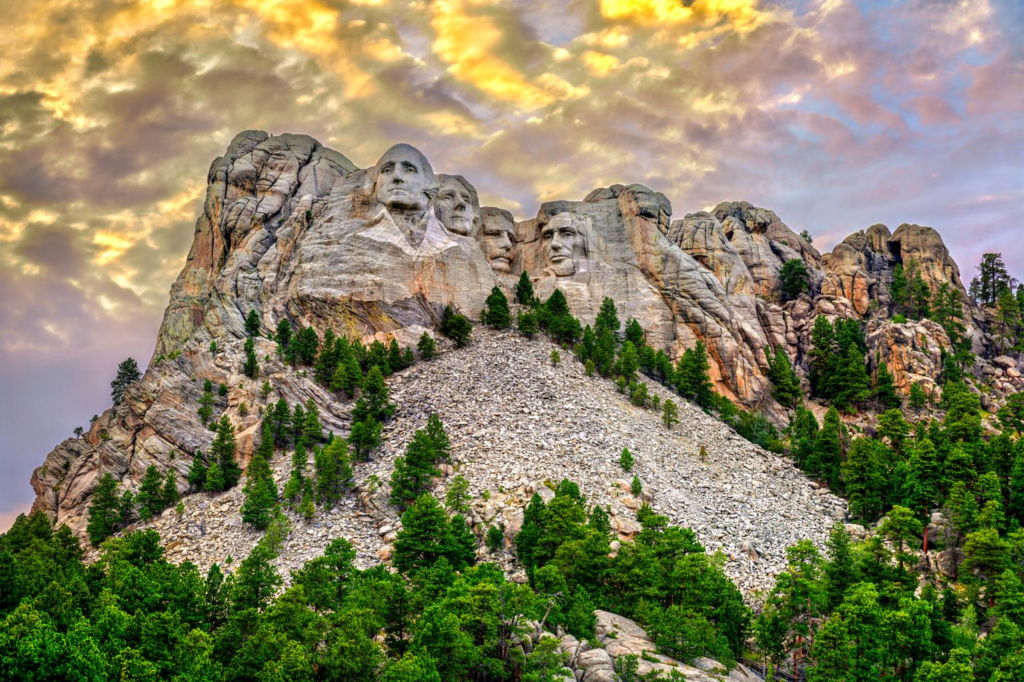
Carved into South Dakota’s Black Hills, Mount Rushmore features the faces of four U.S. presidents: George Washington, Thomas Jefferson, Theodore Roosevelt, and Abraham Lincoln.
Sculptor Gutzon Borglum began the project in 1927, intending to create a monument that celebrated the country’s founding and growth. The carving required 14 years of work and involved hundreds of workers using dynamite and precision drilling.
Each face measures about 60 feet tall, making the monument visible from miles away.
Mount Rushmore represents four key periods in American history:
- George Washington – Founding of the nation
- Thomas Jefferson – Expansion through the Louisiana Purchase
- Abraham Lincoln – Preservation of the Union during the Civil War
- Theodore Roosevelt – Industrial development and conservation policies
The monument attracts roughly two million visitors annually, according to the National Park Service.
The Grand Canyon: Nature’s Monument
Not all iconic American landmarks are man-made. The Grand Canyon stands as one of the most dramatic natural landscapes in the world.
Located in northern Arizona, the canyon was carved by the Colorado River over millions of years. Geologists estimate the canyon exposes nearly two billion years of Earth’s geological history.
President Theodore Roosevelt recognized its significance early in the 20th century, helping establish protections that eventually led to the creation of Grand Canyon National Park in 1919.
Important features of the Grand Canyon include:
- Length: 277 miles
- Width: up to 18 miles
- Depth: over one mile
Today it remains one of the most visited national parks in the United States, welcoming nearly five million visitors each year.
The Lincoln Memorial: Architecture and American Ideals
The Lincoln Memorial in Washington, D.C., serves as both a monument and a gathering place for historic moments.
Completed in 1922, the memorial honors President Abraham Lincoln and reflects the design of a Greek temple. Architect Henry Bacon intended the structure to symbolize democratic ideals rooted in classical civilization.
Inside the memorial sits a 19-foot marble statue of Lincoln, sculpted by Daniel Chester French.
The site has hosted several defining moments in American civil rights history, including:
- Martin Luther King Jr.’s “I Have a Dream” speech in 1963
- Numerous civil rights demonstrations
- National commemorations and public gatherings
These events transformed the memorial from a tribute to Lincoln into a broader symbol of equality and justice.
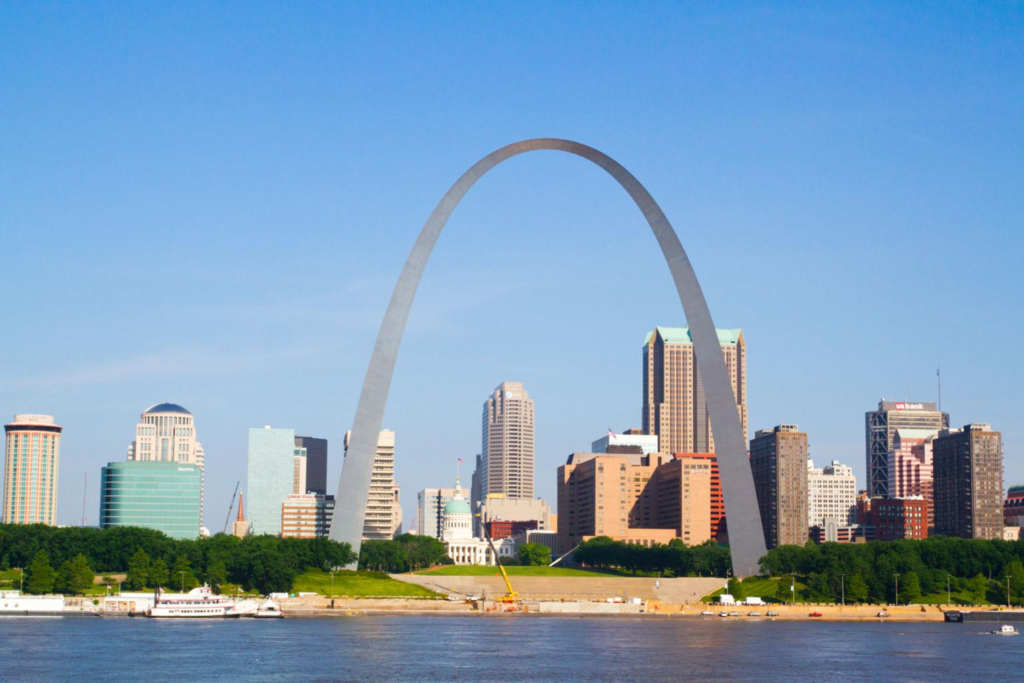
The Gateway Arch: A Monument to Westward Expansion
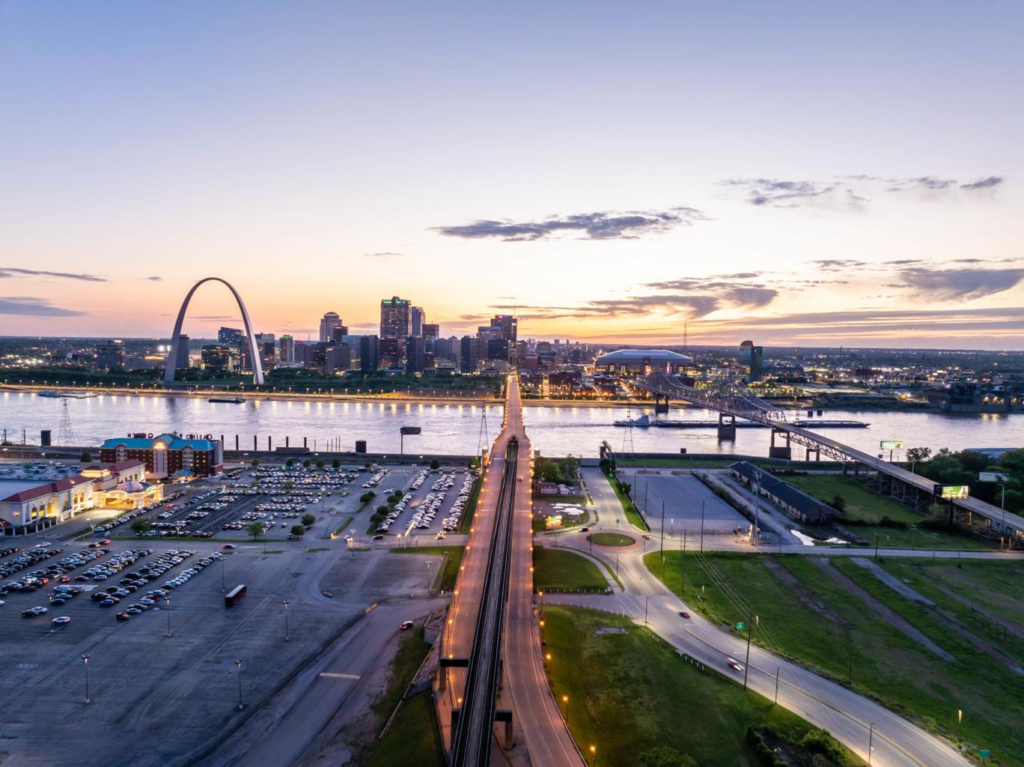
St. Louis’s Gateway Arch represents the expansion of the United States into the western frontier.
Designed by architect Eero Saarinen, the stainless-steel arch opened in 1965 and forms the centerpiece of Gateway Arch National Park.
The structure commemorates the role of St. Louis as the launching point for explorers, traders, and settlers heading west during the 19th century.
Key features include:
- Height: 630 feet
- Shape: weighted catenary curve
- Material: stainless steel exterior
Visitors can ride a unique tram system inside the arch to an observation deck offering views of the Mississippi River and downtown St. Louis.
Why These Landmarks Continue to Capture Attention
Landmarks remain relevant because they combine storytelling with physical presence. Seeing these places in person often creates a stronger connection than reading about them in textbooks.
Travel experts frequently note that iconic landmarks share several characteristics:
- Strong historical narrative
- Distinct visual identity
- Connection to national values or achievements
- Accessibility to the public
These elements help landmarks maintain cultural importance across generations.
How to Experience These Landmarks More Meaningfully
Visiting famous sites can be more rewarding when travelers look beyond the photo opportunity. Historical context often transforms the experience.
Consider these approaches:
- Read the historical background before visiting
- Use ranger-led tours at national parks and monuments
- Visit museums connected to the landmark
- Explore lesser-known viewpoints or surrounding neighborhoods
For example, visitors to the Statue of Liberty often combine the trip with the Ellis Island Immigration Museum, which provides insight into immigrant history.
Similarly, travelers at Mount Rushmore can explore nearby sites such as the Crazy Horse Memorial and the Black Hills region to understand the broader cultural landscape.
Frequently Asked Questions
1. What is the most visited landmark in the United States?
The Lincoln Memorial is often cited as the most visited historic landmark, receiving roughly seven million visitors annually, according to the National Park Service.
2. Why was the Statue of Liberty built?
The statue was a gift from France celebrating the United States’ independence and democratic ideals, dedicated in 1886.
3. How long did it take to build the Golden Gate Bridge?
Construction lasted four years, from 1933 to 1937.
4. Can visitors climb Mount Rushmore?
Visitors cannot climb the monument itself, but several trails and viewing platforms provide close views of the sculptures.
5. Why is the Grand Canyon considered geologically important?
The canyon reveals rock layers spanning nearly two billion years, offering scientists insight into Earth’s geological history.
6. What does the Gateway Arch symbolize?
It commemorates America’s westward expansion and the role of St. Louis as the starting point for many explorers and pioneers.
7. Why does the Statue of Liberty appear green?
The copper surface oxidized over time, forming a protective green patina.
8. Who designed the Lincoln Memorial?
Architect Henry Bacon designed the memorial, inspired by classical Greek temples.
9. When did Mount Rushmore become a national memorial?
Mount Rushmore was officially designated a national memorial in 1925, before construction began.
10. What is the best time to visit the Grand Canyon?
Spring and fall generally offer the most comfortable weather and fewer crowds compared with peak summer months.
When Landmarks Become Living History
The most powerful landmarks are those that continue to evolve in meaning. The Lincoln Memorial became a focal point for civil rights movements. The Statue of Liberty remains a symbol of immigration debates and national identity. Even natural landmarks like the Grand Canyon now serve as reminders of conservation efforts.
These sites endure because they reflect the stories Americans continue to tell about themselves—stories of exploration, innovation, freedom, and resilience.
Visiting them provides more than scenic views. It offers perspective on how the past continues to shape the present.
Key Insights at a Glance
- American landmarks often represent major historical milestones or engineering achievements
- The Statue of Liberty symbolizes immigration and democratic ideals
- The Golden Gate Bridge demonstrates groundbreaking 20th-century engineering
- Mount Rushmore reflects key presidential leadership moments
- The Grand Canyon highlights the power of natural geological forces
- The Lincoln Memorial became central to the civil rights movement
- The Gateway Arch commemorates westward expansion
- Understanding context enriches any visit to these famous sites