

Summary
American heritage is rooted in centuries of ideas, conflicts, compromises, and civic experimentation. From colonial resistance to constitutional governance, the nation’s values—liberty, self-government, equality, and civic responsibility—emerged through real historical events. Understanding how these principles developed helps Americans interpret modern debates, strengthen democratic participation, and appreciate how historical experiences continue shaping national identity.
Understanding What “American Heritage” Actually Means
When people refer to American heritage, they are usually describing a shared set of cultural ideals shaped by historical experiences. These values didn’t appear fully formed in the late eighteenth century. Instead, they evolved through political struggles, economic change, philosophical debate, and social movements spanning more than 250 years.
The roots of many American ideals trace back to European Enlightenment thinking, colonial self-governance, and religious traditions emphasizing moral responsibility. Philosophers like John Locke influenced colonial leaders with arguments that legitimate governments derive power from the consent of the governed.
But heritage is not simply about intellectual influence. It also reflects lived experience. Colonists practiced local governance through assemblies and town meetings long before independence. Those experiences built expectations that citizens should participate directly in shaping public life.
By the time tensions escalated with Britain in the 1760s and 1770s, colonists had already developed a strong political culture centered on representation and local autonomy.
The Revolutionary Era and the Birth of Foundational Ideals
The turning point came during the American Revolution. Between 1775 and 1783, colonial resistance evolved into a war for independence that reshaped political thinking across the Atlantic world.
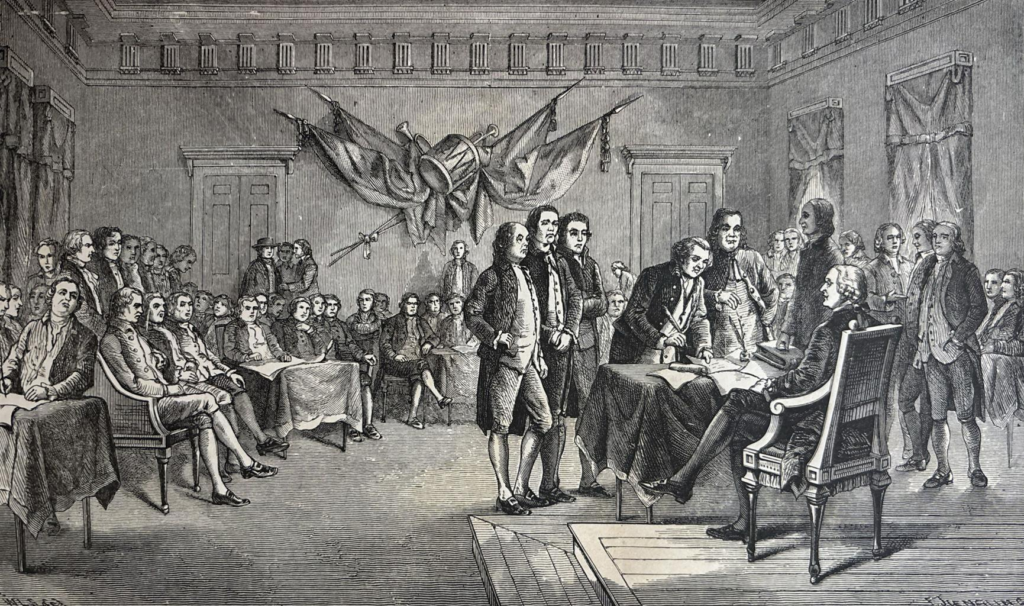
In 1776, the Continental Congress adopted the United States Declaration of Independence, drafted primarily by Thomas Jefferson. The document articulated principles that still anchor American civic identity today: that all people possess natural rights and that governments exist to protect those rights.
This statement was revolutionary not only politically but philosophically. It rejected the traditional European assumption that monarchs ruled by divine authority.
Yet the new nation quickly faced a difficult challenge: turning ideals into workable governance.
From Loose Confederation to Constitutional Government
After independence, the United States initially operated under the Articles of Confederation. The system intentionally created a weak national government to prevent centralized power from resembling the British monarchy.
However, the arrangement proved ineffective. Congress struggled to collect taxes, regulate commerce, or resolve disputes among states.
These difficulties prompted delegates to gather in 1787 at the Constitutional Convention in Philadelphia. The result was the United States Constitution—a document that carefully balanced federal authority with state power.
The Constitution introduced several structural ideas that became core elements of American political heritage:
- Separation of powers between legislative, executive, and judicial branches
- Checks and balances preventing any branch from dominating government
- Federalism, dividing authority between national and state governments
- Popular sovereignty, grounding legitimacy in citizen participation
In 1791, the addition of the United States Bill of Rights further defined individual freedoms, including speech, religion, and due process.
These provisions reflected both philosophical ideas and real historical fears about concentrated power.
The Long Struggle to Expand the Promise of Equality
While founding documents spoke about equality, American society initially excluded many people from those rights. Enslaved Africans, Indigenous communities, and women were largely outside the political system.
The contradiction between ideals and reality became one of the most important forces shaping American history.
The issue came to a head during the American Civil War (1861–1865). The conflict ultimately led to the abolition of slavery through the Thirteenth Amendment to the United States Constitution.
Following the war, Congress passed constitutional amendments intended to secure citizenship and voting rights. Yet these rights were unevenly enforced for decades.
During the twentieth century, the Civil Rights Movement pushed the country closer to fulfilling its founding principles. Leaders such as Martin Luther King Jr. emphasized that the nation’s founding ideals already contained the moral argument for equality.
This pattern—expanding rights through civic activism—became a defining feature of American heritage.
How Immigration Shaped American Identity
Another essential part of American heritage is immigration. The United States has repeatedly absorbed new populations that reshaped the country culturally, economically, and politically.
According to the U.S. Census Bureau, more than 45 million immigrants lived in the United States in 2022, representing roughly 14 percent of the population.
But immigration has influenced American society since the earliest colonial period.
Successive waves of newcomers brought new languages, traditions, and skills:
- German and Irish immigrants in the nineteenth century reshaped labor markets and urban culture
- Southern and Eastern Europeans arrived in large numbers between 1880 and 1924
- Asian immigration expanded significantly after policy reforms in 1965
- Latin American migration has become a major demographic force in recent decades
These movements continually challenged Americans to redefine what national identity means. Rather than erasing earlier traditions, immigration layered new cultural experiences onto existing ones.
The Role of Civic Participation in American Tradition
One of the most distinctive aspects of American heritage is its emphasis on civic participation.
From early town meetings in New England to modern voter initiatives, the idea that citizens should actively influence government remains central to American culture.
Participation takes many forms:
- Voting in local, state, and national elections
- Serving on juries
- Volunteering in community organizations
- Engaging in public debate and advocacy
The nonprofit sector alone includes more than 1.5 million organizations, according to the National Center for Charitable Statistics. These groups provide services ranging from disaster relief to education and healthcare.
This level of civic engagement reflects a deeply rooted belief that democracy depends on active citizens.
Cultural Symbols That Reinforce National Values
American heritage is also expressed through widely recognized symbols and public rituals.
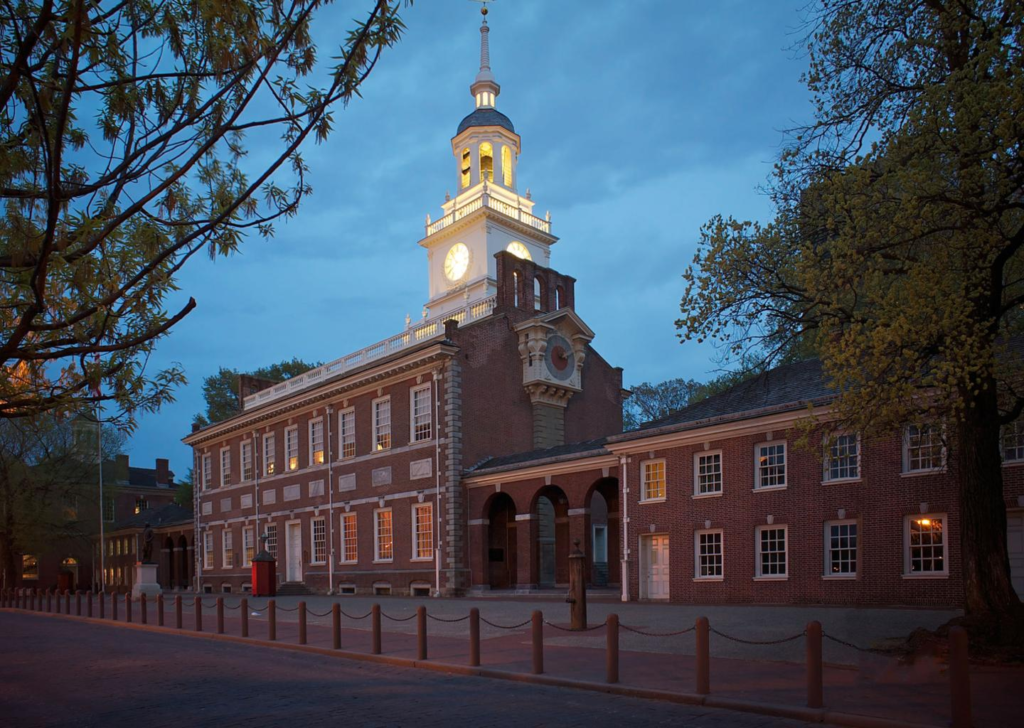
Landmarks such as the Statue of Liberty and the Independence Hall represent historical turning points and ideals. National holidays like Independence Day commemorate the founding moment of political independence.
Public education has also played an important role in transmitting historical memory. Schools commonly teach the founding documents, major historical events, and civic responsibilities.
These shared experiences help maintain continuity between generations.
Why Historical Context Matters for Modern Americans
Understanding the origins of American values offers practical benefits for citizens today.
Political debates often revolve around interpretations of foundational principles. Questions about free speech, federal authority, or civil rights frequently reference constitutional traditions.
Historical awareness provides important context when evaluating such discussions.
For example, debates about federal power can be traced back to disagreements between early leaders such as Alexander Hamilton and Thomas Jefferson. Understanding their perspectives clarifies why tensions between national and state authority persist today.
Similarly, modern civil rights discussions connect directly to the legacy of Reconstruction and the Civil Rights Movement.
Recognizing these historical threads helps citizens participate more thoughtfully in contemporary public life.

Frequently Asked Questions
What does “American heritage” actually refer to?
American heritage refers to the collective traditions, historical experiences, cultural influences, and political ideals that have shaped the United States over time.
Why are the founding documents still important today?
Documents like the Constitution and Bill of Rights provide the legal framework for American government and protect individual freedoms.
How did Enlightenment philosophy influence the United States?
Enlightenment thinkers argued for natural rights and government by consent, ideas that strongly influenced American revolutionary leaders.
Did the founders intend American values to evolve?
Yes. Many founders expected future generations to reinterpret and expand constitutional principles through amendments and civic participation.
Why is the Civil War central to American heritage?
The Civil War resolved the issue of slavery and redefined citizenship and federal authority in ways that still influence American law.
How has immigration shaped American culture?
Immigration has continuously introduced new cultural traditions, economic skills, and demographic diversity.
What role does civic participation play in American identity?
Active citizen involvement—voting, volunteering, advocacy—has long been considered essential for maintaining democratic institutions.
Are American values universally agreed upon?
No. Different groups interpret ideals like liberty, equality, and federalism in different ways, which fuels ongoing political debate.
How do schools preserve American heritage?
Schools teach national history, founding documents, and civic responsibilities to help students understand the country’s political traditions.
Why does historical literacy matter for democracy?
Citizens who understand historical context are better equipped to evaluate political claims and participate constructively in civic life.
The Ongoing Conversation Between Past and Present
American heritage is not a static set of traditions preserved unchanged from the eighteenth century. Instead, it is a continuing conversation between past ideals and present realities.
Each generation revisits the nation’s founding principles—sometimes to defend them, sometimes to reinterpret them. From the Revolutionary era to the Civil Rights Movement and beyond, Americans have repeatedly used history as a reference point for change.
This ongoing dialogue is itself one of the defining characteristics of American identity. The nation’s heritage lives not only in documents and monuments, but also in the active participation of citizens who continue debating what those ideals should mean today.
Key Ideas to Remember
- American heritage developed through historical experience rather than a single founding moment
- Revolutionary ideals emphasized natural rights and government by consent
- The Constitution created a system balancing power across institutions
- Expanding civil rights has been a recurring theme in American history
- Immigration continually reshapes cultural identity
- Civic participation remains central to democratic life
- Historical understanding strengthens informed citizenship