
Many of America’s most photographed landmarks carry complex, often overlooked histories beneath their familiar imagery. From contested land and social movements to engineering challenges and cultural symbolism, these sites reveal deeper narratives that shape national identity. This guide explores 12 iconic U.S. landmarks and the lesser-known stories that offer a more complete understanding of their significance.
Why Iconic Landmarks Deserve a Second Look
Postcard-perfect landmarks often simplify history into a single image. Yet behind those images are layered stories—of conflict, innovation, resilience, and change. According to the National Park Service, historic sites are increasingly interpreted through broader narratives to reflect diverse perspectives and evolving scholarship.
For travelers, students, and lifelong learners, understanding these deeper stories transforms a visit from a visual experience into a meaningful one.
1. Statue of Liberty
Beyond the Symbol of Freedom
Widely recognized as a symbol of liberty, the Statue of Liberty also reflects a more nuanced immigration history. While it welcomed millions arriving via Ellis Island, U.S. immigration policies in the early 20th century imposed strict quotas that excluded many groups.
Visitors today can explore museum exhibits that address both hope and limitation—offering a more balanced perspective on America’s immigration story.
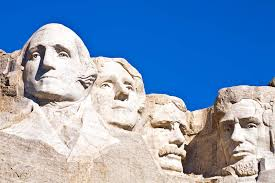
2. Mount Rushmore National Memorial
A Monument and a Contested Landscape
Mount Rushmore is often viewed as a tribute to presidential leadership, but it is also located on land sacred to the Lakota Sioux. The site has become a focal point for discussions about Indigenous rights and historical representation.
Modern interpretive programs increasingly acknowledge this context, encouraging visitors to consider multiple perspectives.
3. Alcatraz Island
More Than a Former Prison
Known for its high-security prison, Alcatraz also played a key role in Native American activism. The 1969 occupation by Indigenous activists brought national attention to treaty rights and sovereignty issues.
Today, exhibits highlight this chapter alongside its penal history, offering a broader understanding of its cultural significance.
4. Golden Gate Bridge
Engineering Triumph with Human Stories
The Golden Gate Bridge represents engineering excellence, but its construction involved significant risks. Workers faced dangerous conditions, and safety innovations—like the use of a safety net—saved lives while setting new industry standards.
This human dimension adds depth to what is often seen purely as an architectural icon.
5. Central Park
A Designed Landscape with Displaced Communities
Central Park is celebrated as an urban oasis, yet its creation in the 1850s required the displacement of Seneca Village, a predominantly African American community.
Recent efforts have brought greater attention to this history through signage and public programs, helping visitors understand the park’s full story.
6. Lincoln Memorial
A Stage for Civil Rights
While the Lincoln Memorial honors President Abraham Lincoln, it has also served as a powerful site for civil rights activism. Martin Luther King Jr. delivered his “I Have a Dream” speech here in 1963.
The landmark continues to symbolize both historical leadership and ongoing struggles for equality.
7. Times Square
From Decline to Reinvention
Today’s Times Square is known for bright lights and tourism, but it experienced significant economic decline and crime in the 1970s and 1980s. Its transformation into a commercial and cultural hub reflects broader urban redevelopment trends.
This evolution highlights how landmarks can change dramatically over time.
8. Hoover Dam
Infrastructure and the Great Depression
Built during the Great Depression, Hoover Dam provided jobs to thousands of workers and became a symbol of federal investment in infrastructure. However, the project also involved harsh working conditions and labor disputes.
Understanding this context adds depth to its role in American economic history.
9. Ellis Island
Gateway and Gatekeeper
Ellis Island processed over 12 million immigrants, making it a central part of American identity. Yet not all arrivals were admitted—many faced medical inspections and legal scrutiny.
This dual role as both gateway and gatekeeper is essential to understanding its legacy.
10. The White House
Symbol of Power and Labor History
The White House represents the presidency, but its construction involved enslaved labor. This aspect of its history is now more widely acknowledged in public tours and educational materials.
Recognizing this history provides a fuller picture of the nation’s early development.
11. Route 66
The Road That Shaped Mobility
Route 66 is often romanticized as a symbol of freedom and travel. However, it also reflects patterns of migration, economic change, and racial segregation, particularly during the Dust Bowl and Jim Crow eras.
Travelers today can explore museums and preserved sections that tell these stories.
12. 9/11 Memorial & Museum
Memory, Loss, and Resilience
The 9/11 Memorial honors those lost in the September 11 attacks while also documenting the broader impact on American society. Its design encourages reflection, while exhibits provide historical context.
It stands as a modern example of how landmarks can address recent history with sensitivity and depth.
What These Stories Reveal About American History
Looking beyond surface-level interpretations reveals patterns that connect these landmarks:
- Many sites reflect both achievement and conflict
- Historical narratives evolve as new perspectives emerge
- Public memory is shaped by how landmarks are interpreted
- Preservation increasingly includes inclusive storytelling
These insights help visitors engage more thoughtfully with the places they visit.
How to Experience Landmarks More Meaningfully
To gain deeper insight during visits, consider the following approaches:
- Read interpretive signage and museum exhibits carefully
- Take guided tours that provide historical context
- Research the site’s history before visiting
- Reflect on whose stories are included—and whose are not
- Explore nearby museums or cultural centers for additional perspectives
These practices can turn a routine visit into a more informed and memorable experience.
Frequently Asked Questions
1. Why do landmarks have deeper stories than what’s commonly known?
Because public narratives often simplify complex histories for broader audiences.
2. Are these deeper stories officially recognized?
Many are now included in museum exhibits and educational programs.
3. How can I learn more when visiting a landmark?
Use guided tours, audio guides, and official visitor resources.
4. Do all landmarks have controversial histories?
Not all, but many involve complex social, political, or cultural contexts.
5. Why are interpretations of landmarks changing?
New research and social awareness are expanding historical narratives.
6. Can understanding these stories change the visitor experience?
Yes. It provides a more complete and meaningful perspective.
7. Are these stories taught in schools?
Some are, but many are explored in greater depth at the sites themselves.
8. How do landmarks reflect social change?
They evolve in meaning as society reexamines the past.
9. Is it important to acknowledge difficult histories?
Yes. It promotes a more accurate and inclusive understanding.
10. Can landmarks influence current social discussions?
Yes. They often serve as reference points in public discourse.
Seeing Beyond the Surface: Why Context Matters
Iconic landmarks are more than visual symbols—they are entry points into complex histories that continue to shape American society. By looking beyond the postcard image, visitors can better understand the challenges, achievements, and contradictions that define the nation.
These deeper stories do not diminish the significance of landmarks; they enhance it by providing context and meaning. Engaging with this complexity allows for a more informed and thoughtful connection to history.
What to Remember When Visiting Iconic Sites
- Every landmark has multiple layers of history
- Public narratives may not reflect the full story
- Context enhances understanding and appreciation
- Inclusive storytelling is reshaping how history is presented
- Thoughtful engagement leads to more meaningful experiences