Summary
America’s most famous landmarks are often seen as symbols of freedom, innovation, and national pride—but many carry unexpected stories behind their creation. From monuments nearly scrapped due to funding shortages to engineering feats built under extreme conditions, these sites reveal fascinating layers of U.S. history that travelers rarely hear about during a typical visit.
Why Famous Landmarks Often Hide Unexpected Stories
The United States is home to hundreds of iconic landmarks—structures, monuments, bridges, and natural wonders that attract millions of visitors every year. According to the U.S. National Park Service, more than 300 million people visit national parks and historic sites annually, many of which include some of the country’s most recognizable landmarks.
Yet the stories we typically hear about these places are simplified versions of their history. Political disputes, financial struggles, engineering risks, and cultural turning points often shaped these landmarks in ways that remain largely unknown to visitors.
For travelers, history enthusiasts, and students alike, understanding these hidden narratives transforms a sightseeing stop into a deeper experience. Below are 15 famous U.S. landmarks and the surprising histories behind them.
1. Statue of Liberty (New York)
The Statue of Liberty is widely known as a gift from France symbolizing freedom and democracy. However, few people realize how close the project came to failure.
While France funded the statue itself, the United States had to pay for the pedestal. By the 1880s, the pedestal project stalled due to a lack of funds. Newspaper publisher Joseph Pulitzer launched a fundraising campaign through his paper, The New York World, encouraging everyday Americans to donate small amounts.
More than 120,000 people contributed, many donating less than one dollar. Their contributions ultimately allowed the pedestal to be completed.
Another surprising detail: the statue was originally intended to celebrate the abolition of slavery. Early designs even included broken chains in Liberty’s hand. The final version kept chains only at her feet, making the symbolism less obvious.
Today the statue welcomes more than 4 million visitors per year.
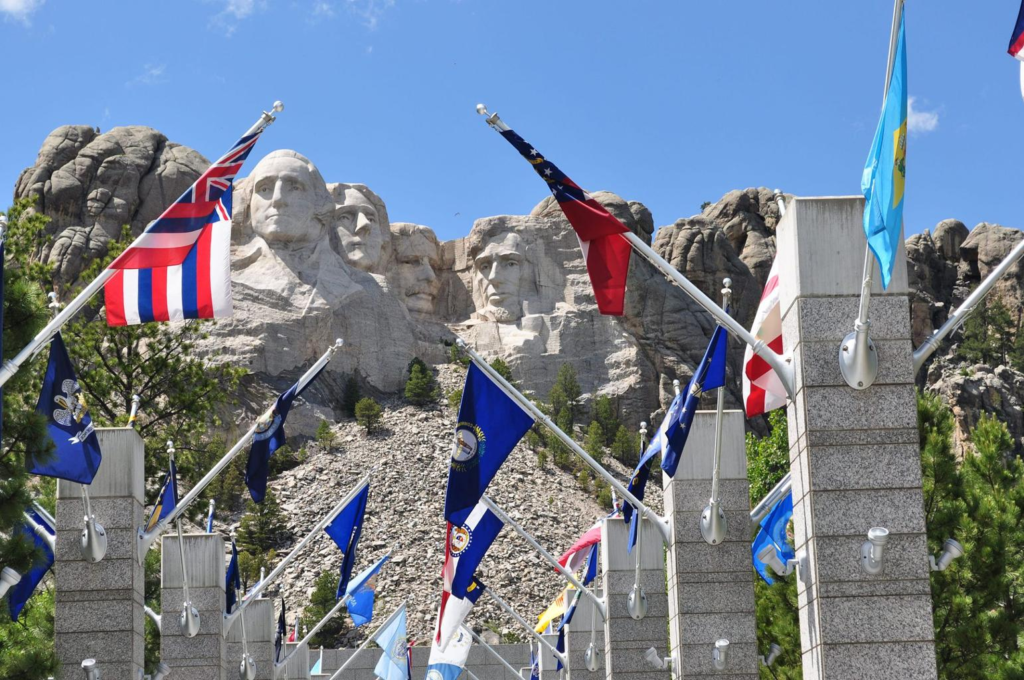
2. Mount Rushmore (South Dakota)
Mount Rushmore features the faces of four U.S. presidents carved into the Black Hills: George Washington, Thomas Jefferson, Theodore Roosevelt, and Abraham Lincoln.
What many visitors don’t realize is that the project originally envisioned something much larger.
Sculptor Gutzon Borglum planned full upper-body carvings and a massive inscription known as the “Hall of Records,” intended to preserve key historical documents. Funding shortages and Borglum’s death in 1941 ended these plans before they were completed.
Another lesser-known fact: the monument was partly designed to attract tourism to South Dakota during the early 20th century.
Despite controversies surrounding the monument’s location on land sacred to the Lakota Sioux, Mount Rushmore remains one of the most visited attractions in the Midwest.
3. Golden Gate Bridge (San Francisco)
When construction began on the Golden Gate Bridge in 1933, many engineers believed the project was impossible.
The strait connecting San Francisco to Marin County had:
- Powerful tidal currents
- Strong Pacific winds
- Frequent dense fog
The bridge’s chief engineer, Joseph Strauss, developed innovative safety measures during construction. One of the most notable was a large safety net placed beneath the bridge.
The net saved 19 workers, who later formed a group called the “Halfway to Hell Club.”
At the time of completion in 1937, the Golden Gate Bridge was the longest suspension bridge in the world, stretching 4,200 feet between towers.
4. The White House (Washington, D.C.)
The White House is among the most recognized buildings on Earth, yet its history includes several unexpected chapters.
Construction began in 1792, but the building was partially destroyed during the War of 1812 when British forces set fire to Washington, D.C.
After the fire, workers rebuilt and painted the exterior white to cover burn marks. Although the building had been whitewashed before, the reconstruction reinforced the name “White House,” which became official in 1901 under President Theodore Roosevelt.
The building has undergone numerous renovations, including a major structural rebuild between 1948 and 1952, when President Harry Truman discovered the residence was close to collapsing.
5. The Hollywood Sign (Los Angeles)
Today the Hollywood Sign represents the global film industry. However, it began as a real estate advertisement.
When it was erected in 1923, the sign actually read:
“HOLLYWOODLAND.”
It promoted a housing development in the hills above Los Angeles and was only meant to stand for 18 months.
As the film industry grew, the sign became a cultural symbol. The final four letters were removed in 1949 during renovations organized by the Hollywood Chamber of Commerce.
The sign nearly collapsed in the 1970s due to neglect before a major restoration project replaced each letter entirely.
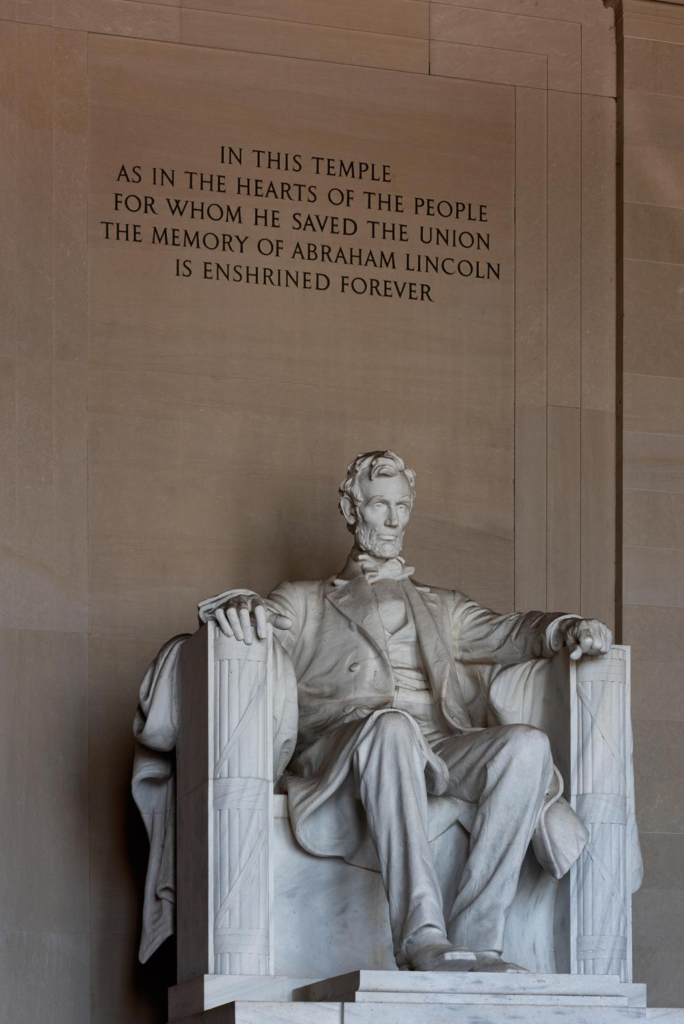
6. Lincoln Memorial (Washington, D.C.)
The Lincoln Memorial is often associated with the Civil Rights Movement—particularly Martin Luther King Jr.’s “I Have a Dream” speech delivered there in 1963.
However, the monument itself reflects complex political compromises.
Some Southern politicians opposed honoring Abraham Lincoln because of his role in ending slavery. To gain support for the project in the early 1900s, designers emphasized Lincoln’s role in preserving the Union rather than his abolitionist legacy.
The seated Lincoln statue inside the memorial weighs 175 tons and was carved from Georgia marble.
7. Alcatraz Island (San Francisco)
Alcatraz is best known as a federal prison housing criminals like Al Capone and Robert Stroud, the “Birdman of Alcatraz.”
Before becoming a prison, however, the island served as:
- A military fort
- A military prison
- A West Coast defense installation
When the federal penitentiary opened in 1934, it was designed to hold the most dangerous prisoners in the country.
Running the prison was extremely expensive—nearly three times the cost of other federal prisons—because all supplies had to be transported by boat.
It closed in 1963 due to high operating costs.
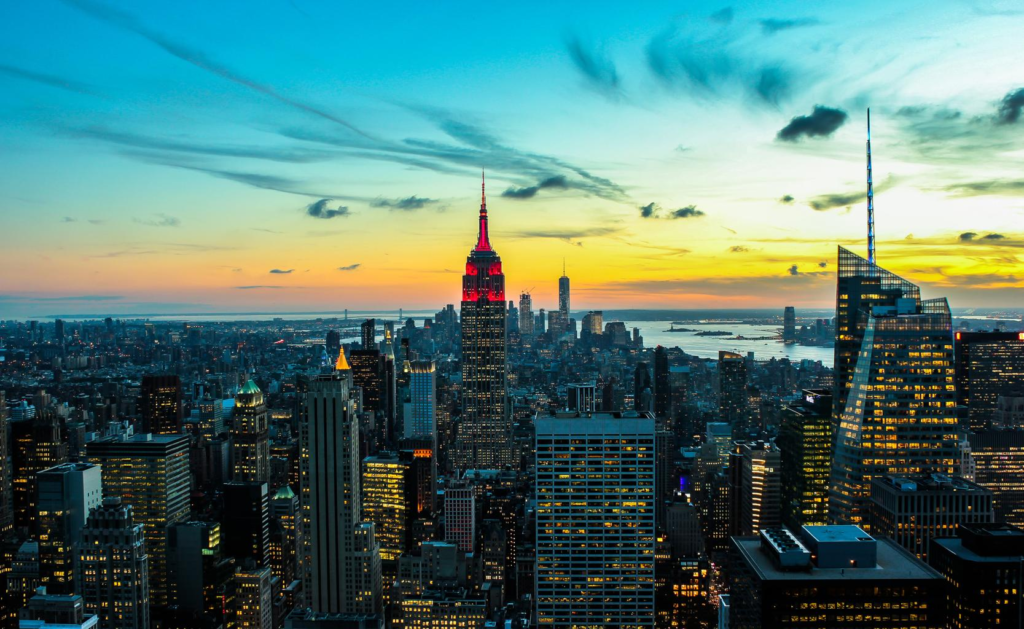
8. Empire State Building (New York City)
When the Empire State Building opened in 1931, it was the tallest building in the world. But its early years were surprisingly difficult.
Because it opened during the Great Depression, the building struggled to attract tenants. Many floors sat empty for years.
New Yorkers jokingly called it the “Empty State Building.”
The building eventually became profitable in the 1950s and is now one of the most visited skyscrapers in the world, drawing roughly 4 million visitors annually to its observation decks.
9. Gateway Arch (St. Louis)
The Gateway Arch commemorates the westward expansion of the United States.
The stainless-steel structure stands 630 feet tall, making it the tallest monument in the U.S.
What many visitors don’t know is that the project faced decades of delays. The design by architect Eero Saarinen won a competition in 1947, but construction did not begin until 1963 due to funding and logistical issues.
Engineers also had to solve a unique challenge: ensuring both sides of the arch met perfectly at the top during construction.
The final gap when the two legs joined was less than 1/64 of an inch.
10. Independence Hall (Philadelphia)
Independence Hall is where both the Declaration of Independence and the U.S. Constitution were debated and adopted.
However, the building itself was never meant to become such a historic symbol.
Originally constructed in the 1730s as the Pennsylvania State House, it served as a colonial government building.
The Continental Congress used it simply because it was the largest meeting space available in Philadelphia at the time.
Today it is part of Independence National Historical Park, which receives millions of visitors annually.
11. Hoover Dam (Nevada/Arizona)
The Hoover Dam remains one of the most significant engineering projects in American history.
Built during the Great Depression between 1931 and 1936, the project employed thousands of workers at a time when jobs were scarce.
The dam:
- Generates hydroelectric power for multiple states
- Controls flooding of the Colorado River
- Provides water for millions of people
During construction, workers endured temperatures exceeding 120°F (49°C) in the canyon.
Despite dangerous conditions, the project was completed two years ahead of schedule.
12. Grand Central Terminal (New York City)
Grand Central Terminal is often mistaken for a train station. Technically, it’s a terminal, meaning trains both begin and end their routes there.
When it opened in 1913, it represented a major innovation in urban design. Engineers moved train tracks underground, allowing city streets to be built above them.
Another famous feature is the astronomical ceiling in the main concourse. Interestingly, the star map is backward, which historians believe was an intentional artistic choice.
13. Yellowstone Old Faithful Geyser (Wyoming)
Old Faithful is one of the most predictable geysers in the world.
It erupts roughly every 90 minutes, which is why it became famous among early park visitors.
However, early scientists worried geothermal activity in the park might decrease due to earthquakes or environmental changes.
Instead, Old Faithful continues to erupt thousands of times per year and remains one of the most photographed natural landmarks in America.
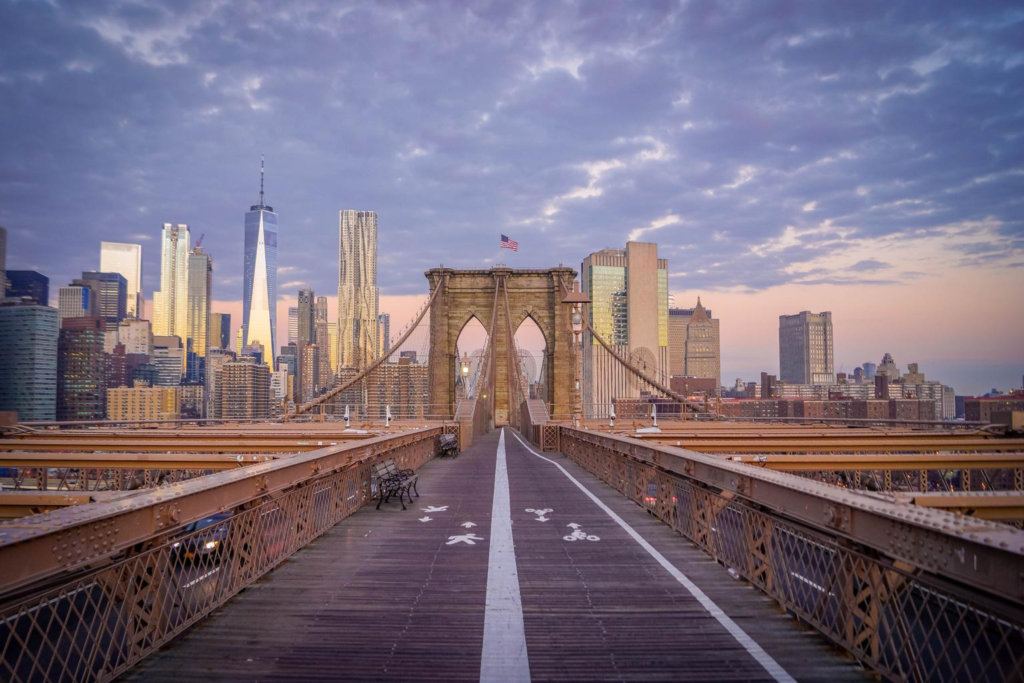
14. Brooklyn Bridge (New York City)
The Brooklyn Bridge, completed in 1883, was one of the most ambitious engineering projects of its time.
After the bridge’s designer John A. Roebling died during construction, his son Washington Roebling took over as chief engineer. He later became severely ill from decompression sickness, leaving his wife Emily Warren Roebling to act as the project’s on-site coordinator.
She delivered instructions to engineers and helped ensure the bridge’s completion.
Her role is now widely recognized as critical to the project’s success.
15. Space Needle (Seattle)
Built for the 1962 World’s Fair, the Space Needle quickly became Seattle’s defining landmark.
Originally expected to stand only during the fair, public support ensured its preservation.
The tower stands 605 feet tall and was designed to withstand:
- 200 mph winds
- Major earthquakes
Today it attracts over one million visitors annually.
Frequently Asked Questions
What is the most visited landmark in the United States?
The Statue of Liberty and the National Mall monuments in Washington, D.C., rank among the most visited landmarks, attracting millions of tourists each year.
Why was the Hollywood Sign originally built?
It was built in 1923 as an advertisement for a real estate development called “Hollywoodland.”
How long did it take to build the Golden Gate Bridge?
Construction took four years, from 1933 to 1937.
Why is Mount Rushmore controversial?
The monument is located in the Black Hills, land considered sacred by the Lakota Sioux and historically disputed through treaties.
Was the Empire State Building profitable when it opened?
No. Many offices remained empty during the Great Depression.
What was Alcatraz before it was a prison?
It served as a military fort and military prison before becoming a federal penitentiary.
Why does Grand Central Terminal’s ceiling appear backward?
Historians believe the astronomical design intentionally shows the stars from a divine perspective rather than Earth’s view.
How tall is the Gateway Arch?
The Gateway Arch stands 630 feet tall, making it the tallest monument in the United States.
Why is Old Faithful so famous?
It erupts with remarkable regularity compared to most geysers.
Who helped complete the Brooklyn Bridge?
Emily Warren Roebling played a crucial leadership role after her husband became ill.
Tracing the Hidden Stories Behind America’s Most Recognizable Landmarks
The landmarks Americans recognize instantly—from the Statue of Liberty to the Golden Gate Bridge—are more than tourist attractions. They represent decades of engineering innovation, political negotiation, public support, and sometimes sheer persistence.
Understanding the unexpected stories behind these sites adds depth to every visit and highlights the complex history that shaped the modern United States.
Key Historical Insights at a Glance
- Many famous landmarks nearly failed due to funding shortages
- Several were built primarily to boost tourism or development
- Major engineering innovations were pioneered during their construction
- Women and lesser-known contributors played vital roles in key projects
- Economic crises like the Great Depression shaped multiple landmark projects
- Natural landmarks became symbols through scientific curiosity and tourism